
MGS Insights
The Control Tower
For enquiries on articles, speaking opportunities and general inspiration with industry data trends — write to us!
 FinanceSumitomo's Strategic Asset Shifts: A Conceptual Framework for Capital Efficiency
 Data InsightsThe Evolving WMS: From Warehouse Core to Supply Chain Nerve Center
 OperationsAI's Quiet Revolution: Beyond Job Cuts to Supply Chain Structure Transformation
 FinanceStrategic Liquidity: Unlocking Business Value from Investment Portfolios
 FinanceNavigating the Headwinds: Strategic Responses to Surging Treasury Yields and Energy Costs
 IndustrySailing Towards Sustainability: Maersk's Wind Pilot and the Future of Supply Chain Visibility
 FinanceCapitalizing on Potential: Strategic Value Creation for a Cash-Rich, Pre-Revenue Enterprise
 Data InsightsBridging the Gaps: Why Supply Chain's 'Operating System' is the New Imperative
 FinanceNavigating Energy Volatility: Strategic Imperatives for Business Resilience
 FinanceUnlocking Value: The Strategic Imperative of Integrated Equity Compensation Management

Black Sea Drone Attack: Escalating Geopolitical Risks and Maritime Trade Disruption
A recent drone attack on merchant vessels in the Black Sea underscores the escalating geopolitical risks impacting global supply chains. This incident highlights critical vulnerabilities in maritime routes, vessel operations, and the broader trade landscape, demanding enhanced visibility and proactive risk mitigation strategies.

Ethanol Bunkering: A New Horizon for Sustainable Maritime Logistics

Panama Canal Drought: Navigating the Supply Chain Bottleneck
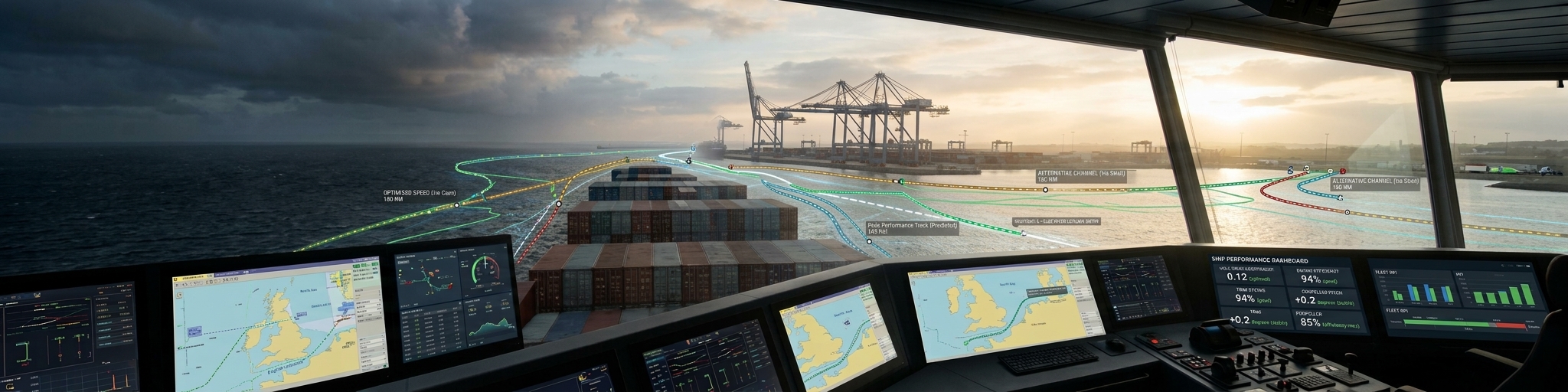
Navigating Logistics Disruptions: Why Proactive Multimodal Intelligence is No Longer Optional

When Typhoon Recovery Becomes the Real Risk: How MG Ship’s Predictive AI Stabilises Global Supply Chains

From “Where Is It?” to “What’s Next?”: How MG Ship Helps Brands Cut Logistics Cost, De-Risk Operations, and Focus on Expansion

Cainiao's Mexico Expansion: A Catalyst for E-commerce Logistics in Latin America

More from the control tower

Beyond Tracking: Real-Time Logistics Data Powers Predictive Execution
project44's evolution towards a real-time execution-intelligence layer marks a pivotal shift in supply chain management. This brief analyzes how prediction, exceptions, and automation will reshape global logistics, impact financial performance, and how a control tower like MGS becomes central to navigating this new era.

Agentic AI: The Next Frontier in Autonomous Supply Chain Execution
The logistics industry is witnessing a pivotal shift as agentic AI moves beyond conversational interfaces to actively execute complex, end-to-end supply chain processes. This development promises to redefine global trade by enabling autonomous, real-time decision-making and action across diverse applications and organizations, fundamentally altering how goods flow, costs are managed, and resilience is built.

Beyond the Model: Why AI's Supply Chain Transformation Demands a Robust Architectural Foundation
AI promises to revolutionize supply chains, but its true power remains untapped without a strong underlying architecture. This brief explores how authoritative context, governed tools, and seamless integration are critical for unlocking AI's potential in global trade.

Geopolitical Volatility: Navigating the Shifting Tides of Global Cargo Movement
Recent maritime security incidents, including a deadly hijacking in the Gulf of Aden, are forcing global trade to reroute, driving up costs and emphasizing the critical need for real-time supply chain visibility to mitigate widespread disruption.

Navigating Turbulent Waters: Geopolitical Sanctions and Their Ripple Effect on Global Cargo Movement
Recent sanctions targeting specific vessels, including LNG tankers and bunkering ships, underscore the increasing impact of geopolitical events on the intricate web of global supply chains. This brief analyzes the cascading consequences for shipping routes, fuel supply, operational costs, and overall supply chain stability, highlighting the critical role of real-time visibility in mitigating disruption.

Digital Threats, Physical Disruptions: Unpacking the Oil Tanker Cyber Breach
An unprecedented cyberattack on an oil supertanker's propulsion system near the Texas coast reveals a critical new dimension of supply chain vulnerability. This incident underscores the growing physical risks posed by digital threats to global cargo movement, impacting critical maritime lanes, port facilities, and downstream logistics. Shippers must now integrate cyber resilience into their supply chain strategies, leveraging advanced visibility platforms to mitigate risks and ensure continuity.

Bab el-Mandeb Strait Under Contention: Geopolitical Shifts Threaten Global Shipping
The recent claim of control over the Bab el-Mandeb Strait by Saudi-backed forces, amidst ongoing conflict, signals a critical geopolitical shift with profound implications for global supply chains. This analysis explores the potential disruptions to key shipping lanes, port facilities, and transportation modes, offering strategic insights for shippers navigating this volatile maritime choke point.

Scaling Smart: The Financial and Operational Imperatives for Sustainable Growth
True business scaling demands converting growth into value without proportional increases in cost, complexity, risk, or management effort. This brief explores the critical financial and operational levers for achieving sustainable, efficient expansion.

Stellantis's Strategic Turnaround: Navigating Towards 2027 Cash Flow Positivity
An analysis of Stellantis's reconfirmed 2026 guidance and its critical plan to achieve cash flow positive status by 2027, exploring the underlying financial and operational imperatives for business leaders.