
Freight Costs Outpace Volume Growth as Logistics AI Investment Rises
Despite improving freight activity, transportation costs are climbing faster than shipment volumes, creating a challenging environment for shippers. Ocean carriers report stronger earnings, while logistics providers are heavily investing in AI and automation to combat rising operating costs and enhance network efficiency as the industry looks to 2027.
The Unsettling Disparity Between Freight Costs and Shipment Volumes
The global supply chain is currently navigating a complex economic landscape where the cost of moving goods is increasing at a rate that surpasses the growth in actual shipment volumes. This divergence presents a significant financial challenge for shippers worldwide. While the industry anticipates improving freight activity as it approaches 2027, the underlying pressure to control operating costs remains intense. This scenario suggests that the market is not simply experiencing a surge in demand that naturally drives up prices; rather, other factors are contributing to the elevated cost structure. These could include persistent labor shortages, rising fuel prices, increased regulatory compliance expenses, or a rebalancing of capacity that favors carriers. For shippers, this means that even as their sales volumes might recover, their profitability could be eroded by disproportionately higher logistics expenses. The financial strain extends beyond direct freight charges, impacting inventory holding costs due to potential delays or the need for larger safety stocks, and ultimately influencing consumer prices as businesses pass on these increased operational burdens.
This dynamic also affects global supply chain flows. When transportation costs become a more dominant factor, companies may re-evaluate their sourcing strategies, potentially favoring nearer-shore production or consolidating shipments to achieve better economies of scale. This could lead to a shift in traditional trade routes or a reduction in the frequency of smaller, more agile shipments, impacting the flexibility that many supply chains have sought to build in recent years. The drive for efficiency becomes paramount, pushing companies to scrutinize every link in their network for cost-saving opportunities. The current environment, characterized by rising costs despite improving activity, underscores a fundamental shift in market power or structural costs within the logistics sector, demanding a strategic response from all participants.
Ocean Carriers Bolster Earnings Amidst Industry-Wide Cost Pressures
In contrast to the broader challenge of rising freight costs for shippers, ocean carriers are reporting stronger earnings. This indicates a successful navigation of the current market conditions, likely through a combination of effective capacity management, strategic rate setting, and potentially, a more favorable supply-demand balance in specific trade lanes. The ability of carriers to maintain or increase profitability while overall transportation costs are rising faster than volumes suggests that they have either been able to pass on their own increased operating expenses to customers, or they are benefiting from a market structure that allows for premium pricing. This financial strength provides carriers with the capital to invest in fleet modernization, decarbonization efforts, and, significantly, in technological advancements that promise future efficiencies.
For the global supply chain, the financial health of ocean carriers is a double-edged sword. On one hand, robust earnings enable investment in infrastructure and services, which can ultimately lead to a more reliable and efficient global shipping network. On the other hand, it highlights the cost burden being absorbed by shippers, potentially leading to competitive disadvantages for businesses operating on tighter margins. The financial implications are clear: shippers face higher expenditures, while carriers consolidate their financial positions. This disparity can influence long-term contract negotiations, pushing shippers to seek more stable and predictable pricing mechanisms, or to explore alternative shipping methods and partnerships. The market dynamics reveal a supply side that has regained some pricing power, a situation that will likely persist as long as the underlying cost pressures on transportation remain elevated.
AI and Automation: Logistics Providers' Strategic Investment for Efficiency
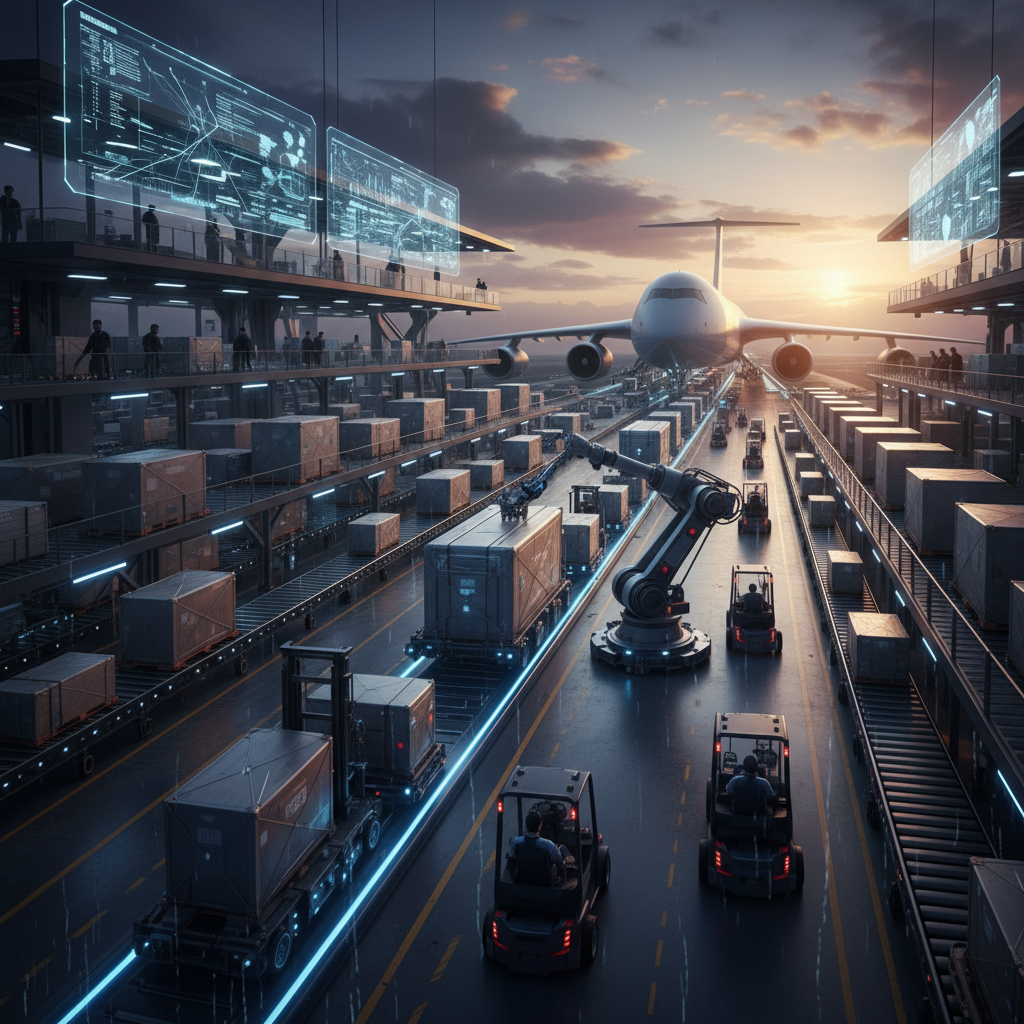
Logistics providers are responding to the dual pressures of rising operating costs and the need for improved network efficiency by significantly expanding their investments in artificial intelligence (AI) and automation. This strategic pivot is a direct acknowledgment that traditional methods of cost control are no longer sufficient in the current economic climate. AI and automation offer the potential to optimize various aspects of supply chain operations, from warehouse management and inventory forecasting to route planning and last-mile delivery. By leveraging these technologies, providers aim to reduce manual labor, minimize errors, enhance throughput, and make more data-driven decisions, all of which contribute to a more streamlined and cost-effective operation.
The impact on the global supply chain will be substantial. Increased automation in warehouses, for example, can lead to faster processing times, reduced labor costs, and improved accuracy in order picking and packing. AI-driven analytics can optimize freight consolidation, predict demand fluctuations with greater precision, and identify the most efficient routes, thereby reducing fuel consumption and transit times. While the initial investment in these technologies can be substantial, the long-term return on investment is expected to be significant, helping to mitigate the ongoing pressure from rising transportation costs. This shift towards technology-driven efficiency will likely reshape the competitive landscape, favoring providers who can effectively integrate and scale these advanced solutions. For shippers, this could translate into more reliable service, greater transparency, and potentially, more stable pricing in the future, as providers gain better control over their operational expenditures. The industry's push into AI and automation is not merely about incremental gains; it represents a fundamental re-engineering of how goods are moved and managed globally, with the goal of building more resilient and cost-effective supply chains for 2027 and beyond.
Technology-Driven Efficiency Becomes the New Cost Control
The current environment, marked by rising freight costs despite improving activity, signals a fundamental shift where traditional cost-cutting measures are being augmented by strategic technological investments. The industry's push into AI and automation by logistics providers is a direct response to this, aiming to build more efficient and predictable supply chains.
This verdict could prove wrong if the underlying structural costs, such as energy prices or labor shortages, continue to escalate at a pace that even advanced AI and automation cannot offset, or if the adoption and integration of these technologies prove slower and more complex than anticipated, delaying their promised efficiency gains.
Source: Logistics Viewpoints — https://logisticsviewpoints.com/2026/11/17/freight-costs-rise-as-warehouse-ai-advances-supply-chain-logistics-news-of-the-week/