
Russia Expands Black Sea Targeting to Ships with Past Ukraine Port Calls
New intelligence indicates Russia's maritime targeting in the Black Sea now includes vessels based on previous visits to Ukrainian ports, regardless of their current voyage. This strategic shift, mirroring tactics seen in the Red Sea, significantly elevates risk for shippers and carriers, impacting global supply chains and financial costs.
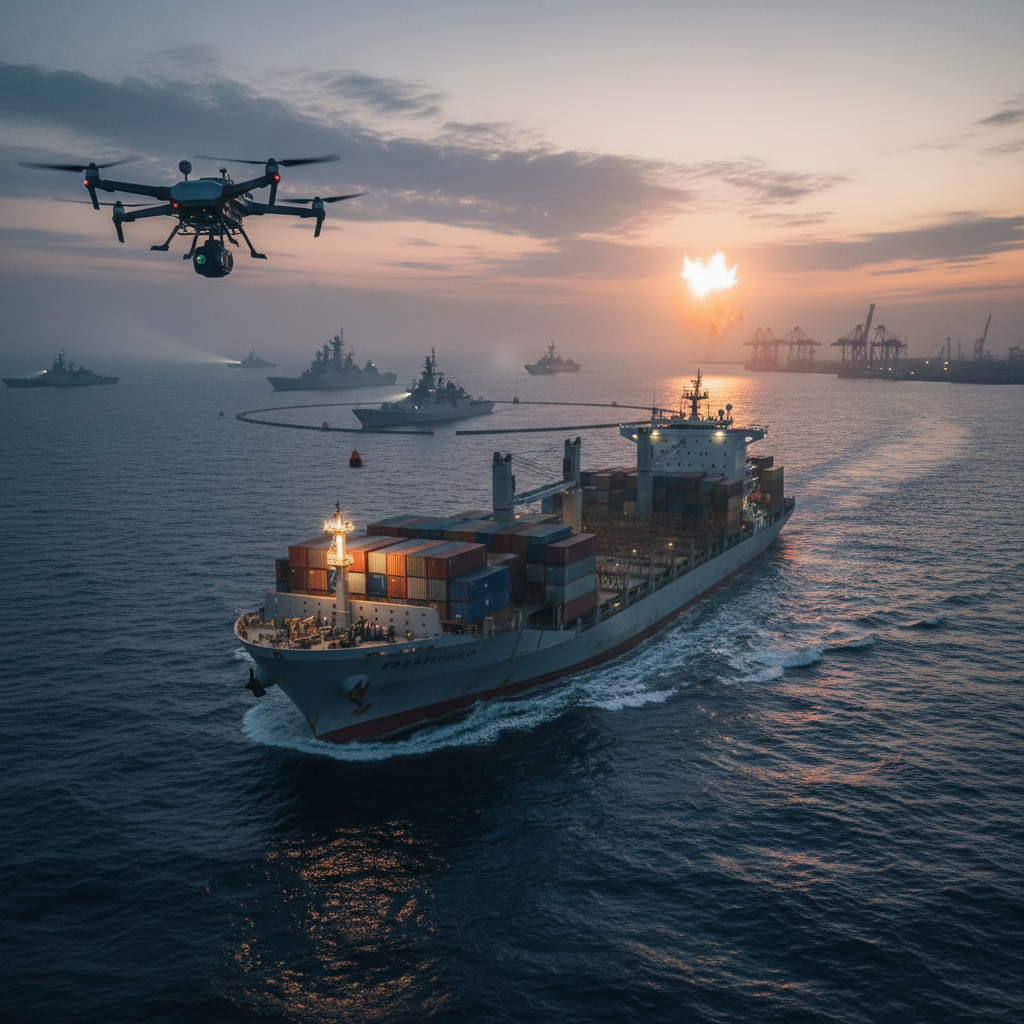
Black Sea Targeting Expands Beyond Current Ukraine Voyages
The operational environment in the Black Sea has undergone a significant shift, with new intelligence indicating an expansion of Russia's maritime targeting campaign. Previously, the primary concern for vessels in the region revolved around current voyages to or from Ukrainian ports. However, the updated assessment reveals that merchant ships could now be targeted based on their past visits to Ukrainian ports, even if their current itinerary has no connection to Ukraine. This development broadens the scope of potential targets considerably, introducing a new layer of complexity for maritime operations.
This strategic adjustment by Russia mirrors tactics employed earlier by the Houthis in the Red Sea, where vessel affiliation or past port calls became criteria for targeting. For shippers and forwarders, this means that a vessel's history, not just its immediate destination, becomes a critical factor in risk assessment for any Black Sea transit. A ship that delivered cargo to Odesa two years ago, for instance, could now be considered a potential target on a completely unrelated voyage between, say, Istanbul and Constanta. This redefines the concept of 'safe passage' within the Black Sea, as the threat is no longer confined to specific conflict zones or current cargo destinations but extends to a broader historical footprint of a vessel. The implications for vessel owners and operators are substantial, requiring a re-evaluation of fleet deployment and risk mitigation strategies across their entire Black Sea operations.
Increased Insurance Premiums and Operational Costs for Black Sea Routes
The expanded targeting criteria directly translate into heightened financial exposure for all stakeholders involved in Black Sea shipping. The most immediate and tangible impact will be on insurance premiums. War risk insurance, already elevated for the region, is expected to see further increases as underwriters adjust their risk models to account for the broader pool of potential targets. This rise in premiums directly increases the operational costs for carriers, which will inevitably be passed on to shippers through higher freight rates or surcharges. The cost of protecting vessels, including potential requirements for enhanced security measures or even armed guards, will also contribute to the overall financial burden.
Beyond direct insurance and security costs, the perceived risk will likely lead to a reduction in available vessel capacity for Black Sea routes. Some shipowners may choose to avoid the region entirely to mitigate risk to their assets and crew, leading to fewer vessels willing to call at Black Sea ports. This reduction in supply, coupled with continued demand for certain commodities, will exert upward pressure on freight rates. Furthermore, the potential for delays due to increased security checks, rerouting, or even incidents, adds to the financial strain through demurrage charges, disrupted schedules, and potential cargo damage or loss. The financial viability of certain trade lanes within the Black Sea could be challenged, prompting a re-evaluation of sourcing and distribution strategies by businesses reliant on these routes.
Supply Chain Re-evaluation Amid Heightened Black Sea Risk
The expansion of targeting criteria in the Black Sea necessitates a comprehensive re-evaluation of global supply chain flows, routes, and operational resilience. Shippers who previously relied on Black Sea routes for commodities like grain, steel, or other bulk goods must now contend with a significantly more volatile environment. The increased risk and associated costs may compel businesses to seek alternative transportation corridors, even if these options are longer, more expensive, or less efficient. This could involve shifting cargo to rail or road networks where feasible, or rerouting maritime traffic through entirely different sea lanes, potentially increasing transit times and carbon footprints.
Such diversions can lead to congestion at alternative ports and border crossings, creating new bottlenecks in the global logistics network. For instance, if grain exports from Ukraine face further impediments, global food supply chains could experience additional pressure, affecting commodity prices and availability in importing nations. Supply chain managers must now integrate this expanded Black Sea risk into their strategic planning, focusing on diversification of routes, carriers, and even sourcing locations. The ability to access and interpret real-time maritime intelligence becomes even more crucial for making informed decisions about vessel selection, route planning, and contingency measures. The goal is to build more robust supply chains that can absorb disruptions from such geopolitical developments, minimizing impact on delivery schedules and overall business continuity.
Black Sea Risk Redefines Maritime Operations
The expanded targeting criteria in the Black Sea fundamentally alters risk assessment for all vessels operating in the region, demanding immediate strategic adjustments from supply chain stakeholders.
- Watch for any further official statements or warnings from maritime security agencies regarding specific targeting criteria.
- Monitor changes in war risk insurance premiums for Black Sea voyages over the next quarter.
- Observe reported incidents of vessels being targeted based solely on past Ukrainian port calls.
- Track shifts in vessel traffic patterns or port calls in Black Sea terminals, indicating route diversions.
Source: Splash247 — https://splash247.com/previous-ukraine-port-calls-could-put-ships-in-black-sea-firing-line/