
Geopolitical Tensions Force Widespread Rerouting and Elevated Costs for Global Cargo
Geopolitical events are reshaping global cargo movement, forcing extensive rerouting, increasing transit times, and driving up operational costs across air, sea, and land. Shippers and forwarders face heightened risks at critical chokepoints, alongside the complexities of evolving tariffs and sanctions.
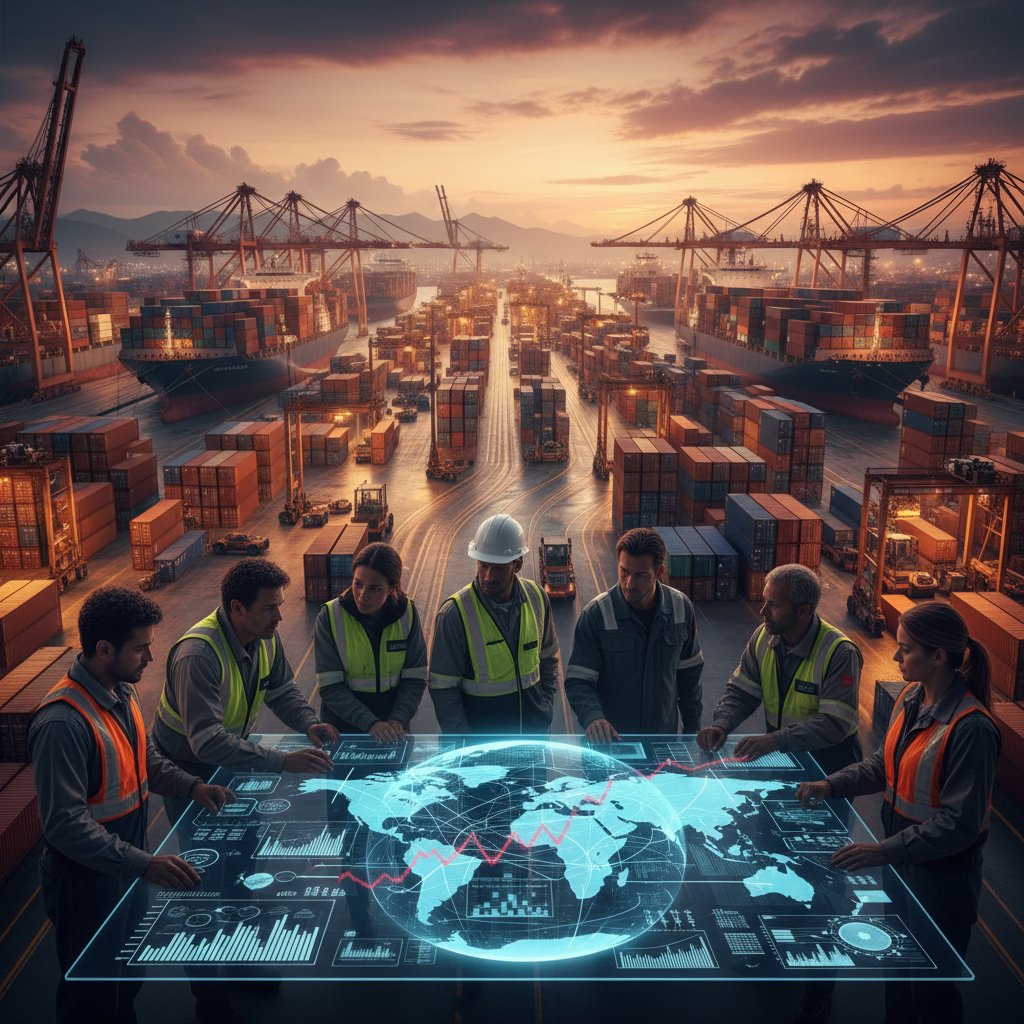
Geopolitical events are no longer isolated incidents but persistent forces fundamentally altering the mechanics of global trade. Shippers, forwarders, and supply-chain managers are contending with a new reality where established routes, predictable transit times, and stable cost structures are subject to sudden and significant disruption. The focus must shift from reactive problem-solving to proactive adaptation, understanding that these disruptions are consequences, not anomalies.
Red Sea Rerouting Elevates Asia-Europe Shipping Costs and Transit Times
Recent security challenges in the Red Sea have compelled a significant portion of container and tanker traffic to divert around the Cape of Good Hope. This rerouting adds approximately 10-14 days to transit times for voyages between Asia and Europe, depending on the specific origin and destination. The extended journey consumes considerably more fuel, directly increasing operational costs for carriers. These additional costs are inevitably passed on to shippers through surcharges, impacting the landed cost of goods. Furthermore, the longer voyages absorb vessel capacity, leading to tighter availability and potentially higher freight rates across other trade lanes as carriers reposition assets. Insurance premiums for vessels transiting or even approaching the affected region have surged, reflecting the elevated risk profile. This situation not only delays deliveries but also complicates inventory management for businesses reliant on just-in-time supply chains, forcing adjustments to lead times and safety stock levels. The concentration of global maritime traffic through narrow straits and canals, such as the Bab el-Mandeb, exposes the vulnerability of these critical chokepoints to regional instability, demonstrating how localized events can have global trade repercussions.
Ukraine Conflict Restricts Black Sea and Eurasian Air Corridors
The ongoing conflict in Ukraine continues to exert a profound influence on cargo movement, particularly across the Black Sea and Eurasian airspace. Access to key Black Sea ports remains volatile, impacting the export of essential commodities like grain and fertilizers. While some shipping corridors have been established, their operational stability is subject to constant threat, leading to unpredictable delays and increased insurance costs for vessels operating in the region. Beyond maritime routes, the closure of airspace over Ukraine, Russia, and Belarus has necessitated extensive rerouting for air cargo flights connecting Europe and Asia. Passenger and cargo aircraft must now fly longer, more circuitous paths, adding hours to flight times and significantly increasing fuel consumption. This translates into higher air freight rates and reduced overall air cargo capacity on these vital East-West routes. The disruption extends to overland rail networks, particularly those connecting China to Europe, which previously offered a faster alternative to sea freight. Geopolitical tensions have complicated cross-border movements and increased security concerns, making these routes less reliable and more costly for certain types of cargo. The cumulative effect is a fragmented and more expensive logistics network for goods moving across the Eurasian landmass.
Tariffs and Sanctions Redraw Global Sourcing Maps
Tariffs and sanctions, often deployed as tools of geopolitical competition, directly alter the economic viability of established trade relationships. The imposition of tariffs on specific goods or from particular origins increases the cost of imports, making them less competitive. This drives businesses to seek alternative sourcing locations, leading to a restructuring of supply chains. For example, tariffs between major trading blocs have prompted companies to diversify manufacturing bases, shifting production to countries not subject to these duties. This often involves significant investment in new facilities and the development of entirely new logistics networks. Sanctions, on the other hand, can completely sever trade ties with targeted countries or entities, prohibiting the movement of certain goods, technologies, or financial transactions. This forces companies to abandon existing suppliers or markets, creating immediate supply gaps or lost sales opportunities. The administrative burden of compliance with complex and evolving sanctions regimes also adds a layer of cost and risk for shippers and financial institutions. The overall consequence is a move away from efficiency-driven, single-source strategies towards more resilient, diversified, but often more expensive and complex, multi-country sourcing models.
Digital Infrastructure Becomes New Geopolitical Chokepoint for Logistics
While often overlooked in discussions of physical cargo, the digital infrastructure underpinning global logistics has emerged as a new, critical chokepoint. Geopolitical competition now extends to subsea cables, data centers, and cloud infrastructure, which are the backbone of modern supply chain operations. Disruptions to these concentrated points of connection, whether through cyberattacks or physical interference, can halt cargo movement as effectively as a blocked canal. Port operations, customs clearance, inventory management, and freight tracking all rely heavily on robust and secure digital networks. A significant cyberattack on a major port's operating system, for instance, could bring cargo handling to a standstill, creating massive backlogs and delays. Similarly, damage to critical subsea data cables can sever communication links, impairing real-time data exchange essential for efficient logistics. The increasing reliance on cloud-based solutions means that the security and resilience of these digital assets are now directly linked to the physical flow of goods. Geopolitical actors recognize these vulnerabilities, making digital infrastructure a strategic target and a new frontier for supply chain risk.
Proactive Adaptation is the New Standard for Supply Chains
Geopolitical volatility is now a constant, requiring fundamental shifts in how supply chains are designed and managed.
- Diversify sourcing and manufacturing locations to mitigate regional risks and reduce reliance on single chokepoints.
- Implement robust risk assessment frameworks for critical trade lanes and digital infrastructure to identify and prepare for potential disruptions.
- Invest in real-time visibility and alternative routing capabilities to enable agile response and minimize transit time impacts.
- Review insurance coverage and contractual terms to account for increased geopolitical risk premiums and potential liabilities from extended transit or lost cargo.
Source: Atlantic Council — https://www.atlanticcouncil.org/in-depth-research-reports/issue-brief/the-foresight-brief-chokepoints-past-present-and-future/