
Merchant Shipping Attacks Elevate Risk in Six Global Waterways
Geopolitical events are making oceans more dangerous, with common attacks on merchant shipping in six key waterways. This brief analyzes the consequences for trade routes, costs, and supply chain resilience.
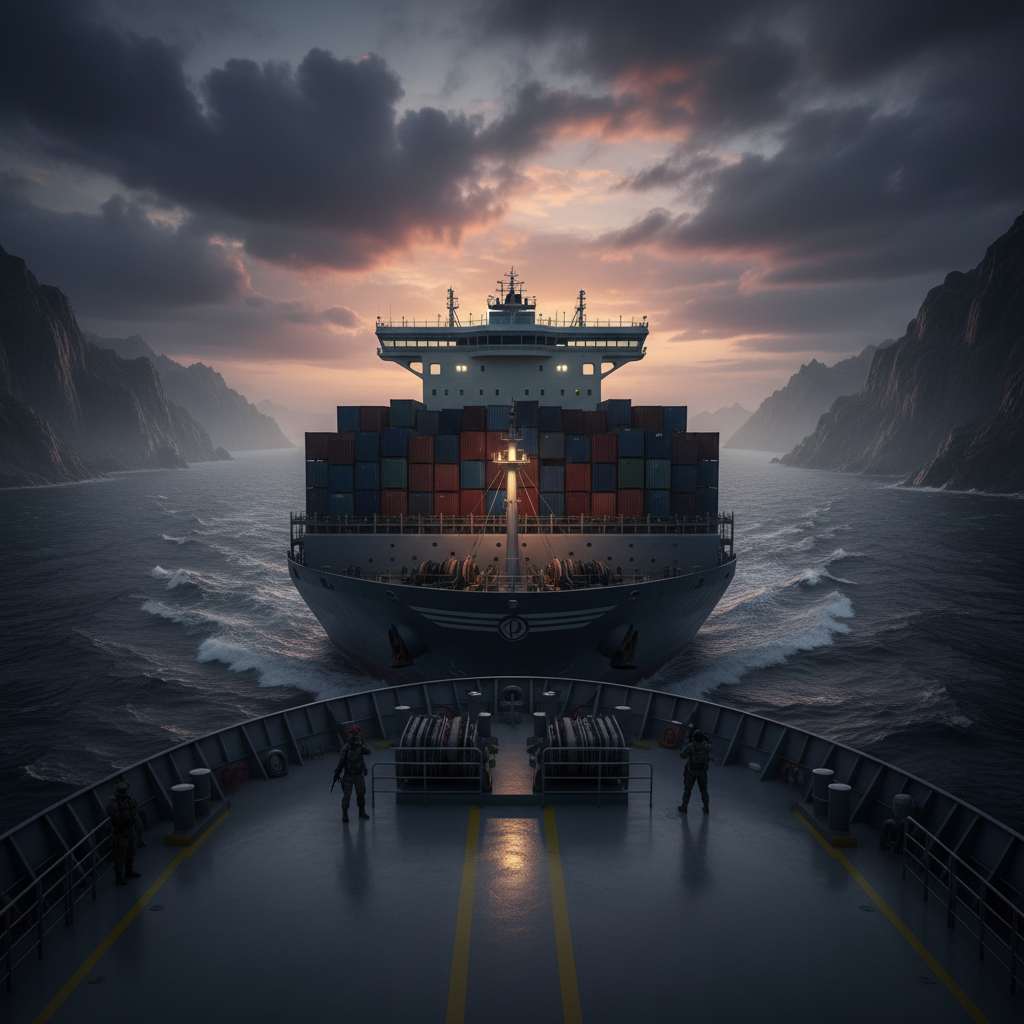
Red Sea Diversions Add Weeks to Asia-Europe Transit
The global maritime trade system faces significant disruption as attacks on civilian merchant shipping become common across several key waterways. The Red Sea, Bab el-Mandeb, and the Strait of Hormuz, all vital chokepoints for East-West trade, are now zones of heightened risk. This situation forces many shipping lines to reroute vessels, particularly those traveling between Asia and Europe. Instead of transiting the Suez Canal via the Red Sea, ships are now frequently taking the longer route around the Cape of Good Hope. This diversion adds thousands of nautical miles to voyages, extending transit times by several weeks. For example, a journey from Shanghai to Rotterdam, which typically takes around 27-30 days via Suez, can now stretch to 40-45 days or more. These extended schedules directly impact inventory management, requiring shippers to hold larger buffer stocks to account for unpredictable arrival times. The increased time at sea also consumes more fuel, adding to operational costs for carriers and ultimately for cargo owners. The predictability of global supply chains, a fundamental element of modern logistics for the past thirty years, is now significantly eroded. This shift also creates ripple effects at destination ports, as vessels arrive in less predictable clusters, potentially leading to congestion and further delays in unloading and onward distribution. The capacity of the global fleet is effectively reduced as ships spend more time at sea, tightening vessel availability and pushing up charter rates. This creates a cascading effect, where delays in one region can impact vessel scheduling and cargo delivery across multiple trade lanes.
Insurance Premiums Soar for Vessels Transiting High-Risk Zones
The direct consequence of increased maritime insecurity is a sharp rise in operational costs, particularly for insurance. War risk premiums for vessels operating in or transiting through areas like the Persian Gulf, the Red Sea, the Bab el-Mandeb, the Black Sea, and the Sea of Azov have escalated dramatically. These premiums are calculated based on the perceived threat level, which has demonstrably increased due to common attacks on merchant shipping. For a single voyage through a designated high-risk area, additional insurance costs can run into hundreds of thousands of dollars, depending on the vessel's value and cargo. This financial burden is passed down the supply chain, contributing to higher freight rates. Beyond insurance, shipowners must also consider enhanced security measures, such as hiring armed guards or investing in defensive equipment, further increasing expenses. The cumulative effect is a substantial increase in the cost of moving goods through these once-routine maritime corridors. This cost pressure affects the competitiveness of goods, potentially leading to price increases for consumers and reduced margins for businesses reliant on these trade routes. Furthermore, the availability of insurance coverage itself can become constrained for certain routes or vessel types, making it difficult or impossible for some operators to secure the necessary protection. This can lead to vessels being idled or forced to take even longer, more circuitous routes, exacerbating the capacity crunch and further driving up costs. The long-term implications include a re-evaluation of risk models by underwriters, potentially leading to sustained higher premiums even if immediate threats subside, as the perception of these waterways as inherently unstable becomes entrenched.
Supply Chain Resilience Tested by Unpredictable Delays
The shift in maritime risk fundamentally challenges established supply chain models. For decades, many industries have optimized for "just-in-time" delivery, minimizing inventory holding costs and relying on efficient, predictable transit. The current environment, characterized by common attacks and forced rerouting, renders this model vulnerable. Companies now face a dilemma: absorb higher costs for faster, riskier routes, or accept longer, more expensive transit times via safer alternatives. The unpredictability of vessel movements, coupled with potential port congestion at alternative hubs, creates a complex planning environment. Manufacturers and retailers must re-evaluate their inventory strategies, potentially moving towards "just-in-case" approaches with larger safety stocks. This requires additional warehouse space and capital tied up in inventory, impacting working capital efficiency. Furthermore, the disruption extends beyond sea freight. Air cargo capacity and rates may see increased demand as businesses seek to expedite urgent shipments that can no longer rely on sea transport. This shift places additional strain on air freight networks, potentially leading to higher air cargo rates and reduced availability for non-urgent goods. The overall effect is a less efficient, more costly, and less reliable global transport network, requiring a strategic re-evaluation of sourcing and distribution networks. Businesses may consider nearshoring or reshoring production to reduce reliance on extended maritime supply lines, or diversifying their supplier base to mitigate risks associated with single-source dependencies in affected regions. The long-term impact could reshape global manufacturing footprints and trade flows, moving away from highly optimized, geographically dispersed models towards more regionalized and robust supply chains.
New Maritime Risk Profile Demands Strategic Adaptation
The era of predictable, low-risk global maritime trade, a constant for the past thirty years, has ended. Businesses must now embed heightened risk and cost into their supply chain planning.
- Monitor the frequency and location of attacks in the Red Sea and Persian Gulf.
- Track changes in war risk insurance premiums for key maritime chokepoints.
- Observe the sustained adoption of longer shipping routes around the Cape of Good Hope.
- Evaluate investments in diversified sourcing and multi-modal transport options by major shippers.
Source: Atlantic Council — https://www.atlanticcouncil.org/in-depth-research-reports/issue-brief/thirty-years-of-progress-lost-at-sea/