
Japan Automakers Pursue Parts Standardization to Boost Efficiency
Japanese automakers are moving to standardize parts and materials, a strategic shift aimed at enhancing operational efficiency, reducing costs, and strengthening supply chains across the industry.
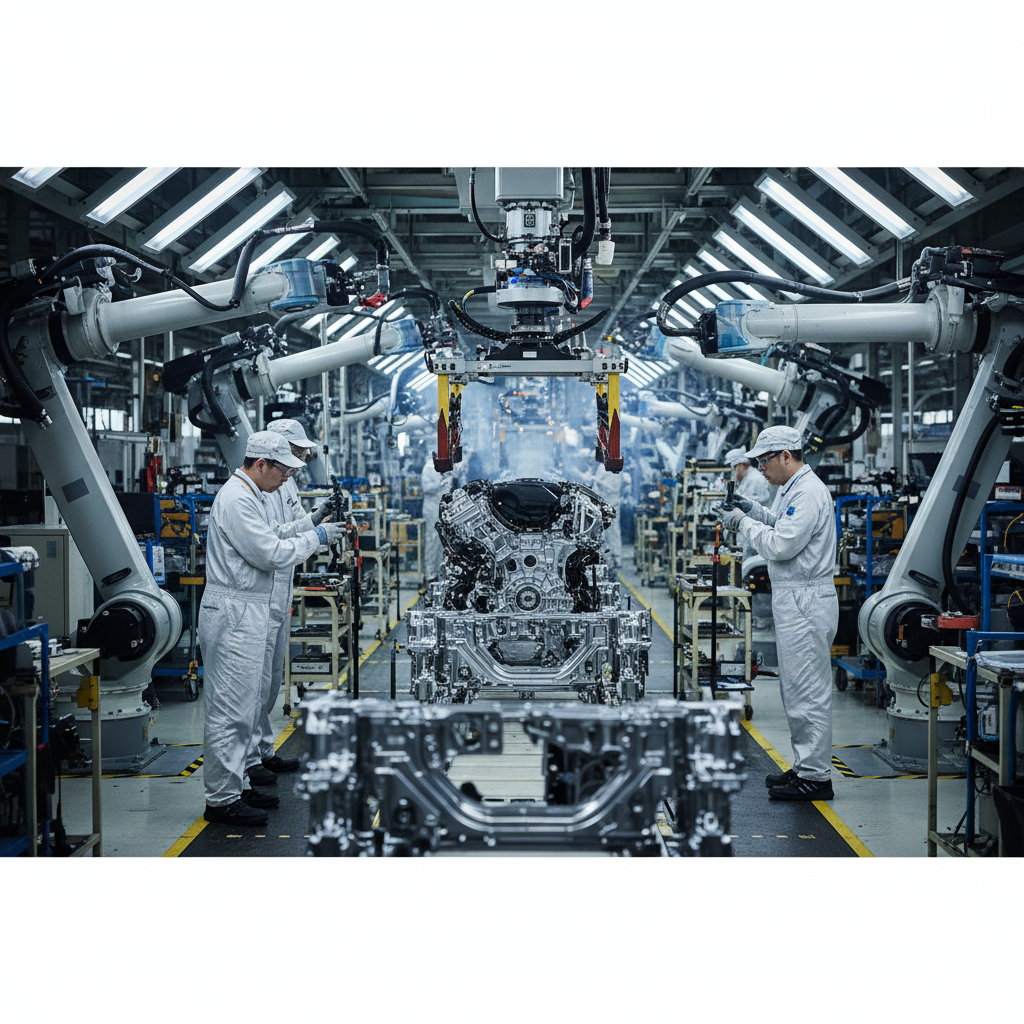
Japan's Automakers Embrace Component Commonality for Efficiency Gains
Japanese automakers are embarking on a concerted effort to standardize parts and materials across their vehicle lines. This initiative represents a fundamental shift in manufacturing strategy, moving away from bespoke components for every model towards a more unified approach. The primary driver behind this move is the pursuit of greater efficiency, a crucial factor in maintaining competitiveness within the global automotive sector. By establishing common specifications for a wider range of components, from engine parts to interior fittings and raw materials, manufacturers aim to streamline their entire operational footprint. This strategic pivot is not merely about incremental improvements; it signals a broader industry-wide commitment to optimizing resource allocation and accelerating production cycles. The implications extend beyond individual companies, potentially reshaping the competitive dynamics and supply chain structures for the entire Japanese automotive industry.
Unifying Parts to Unlock Significant Cost Reductions
The standardization of parts and materials offers a direct pathway to substantial cost reductions across multiple facets of automotive production. Firstly, manufacturing costs stand to decrease through economies of scale. When a single component design can be used across numerous vehicle models, production volumes for that specific part increase dramatically. This allows suppliers to optimize their own manufacturing processes, leading to lower unit costs for the automakers. Secondly, research and development (R&D) expenses can be curtailed. Instead of investing in the design and testing of unique components for each new model variant, R&D efforts can be concentrated on developing advanced, standardized parts that offer broader applicability. This reduces duplication of effort and accelerates innovation cycles for core technologies. Thirdly, inventory holding costs are expected to fall. A reduced number of unique stock-keeping units (SKUs) simplifies inventory management, lowers warehousing requirements, and minimizes the risk of obsolescence for specialized parts. Furthermore, a more predictable demand for standardized components allows for more precise forecasting, reducing buffer stock needs and improving working capital utilization. These combined effects on manufacturing, R&D, and inventory directly contribute to improved financial performance and enhanced profitability.
Standardized Materials Drive Operational Streamlining and Procurement Leverage
The push for standardized parts and materials is set to deliver significant gains in operational efficiency and procurement savings. From an operational perspective, common components simplify assembly line processes. Workers can be trained on fewer variations, reducing errors and speeding up production times. Quality control also becomes more straightforward, as testing protocols can be applied consistently to a smaller set of component types. This simplification leads to a more agile and responsive manufacturing environment. In terms of procurement, standardization provides automakers with considerable leverage. Consolidating demand for common parts allows for larger volume purchases, strengthening negotiation power with suppliers. This can result in more favorable pricing, better payment terms, and improved service level agreements. Moreover, reducing the diversity of parts often means reducing the number of unique suppliers, which simplifies supplier relationship management, lowers administrative overhead, and can foster deeper, more collaborative partnerships with key vendors. A streamlined procurement process, coupled with greater purchasing power, directly translates into lower input costs and a more resilient supply chain, less susceptible to disruptions caused by single-source dependencies for highly specialized components.
Bolstering Market Position Through Production Simplification
Beyond immediate cost and efficiency gains, the standardization initiative positions Japanese automakers to bolster their market standing and long-term growth prospects. By simplifying their product architecture at the component level, companies can achieve greater flexibility in vehicle development. This allows for quicker adaptation to evolving consumer preferences and regulatory requirements, as new models can be brought to market faster by leveraging existing, proven componentry. The ability to share platforms and components across brands or models within a conglomerate also fosters internal synergies, potentially leading to more diverse product offerings at a lower development cost. This strategic approach can free up capital and resources that can then be reinvested into areas like advanced technology, electrification, or autonomous driving, which are crucial for future growth. Ultimately, a more efficient, cost-effective, and agile production system translates into a stronger competitive edge, enabling automakers to offer compelling products while maintaining healthy profit margins in a dynamic global market.
Source: Nikkei Asia — https://asia.nikkei.com/business/automobiles/japan-automakers-to-standardize-parts-materials-for-efficiency