
Global Weather Extremes Drive Cargo Delays Across Key Trade Lanes
Unpredictable weather patterns are increasingly disrupting cargo movement worldwide, impacting major ocean lanes, inland waterways, and air freight operations. Shippers face longer transit times, higher costs, and the need for adaptive logistics strategies.
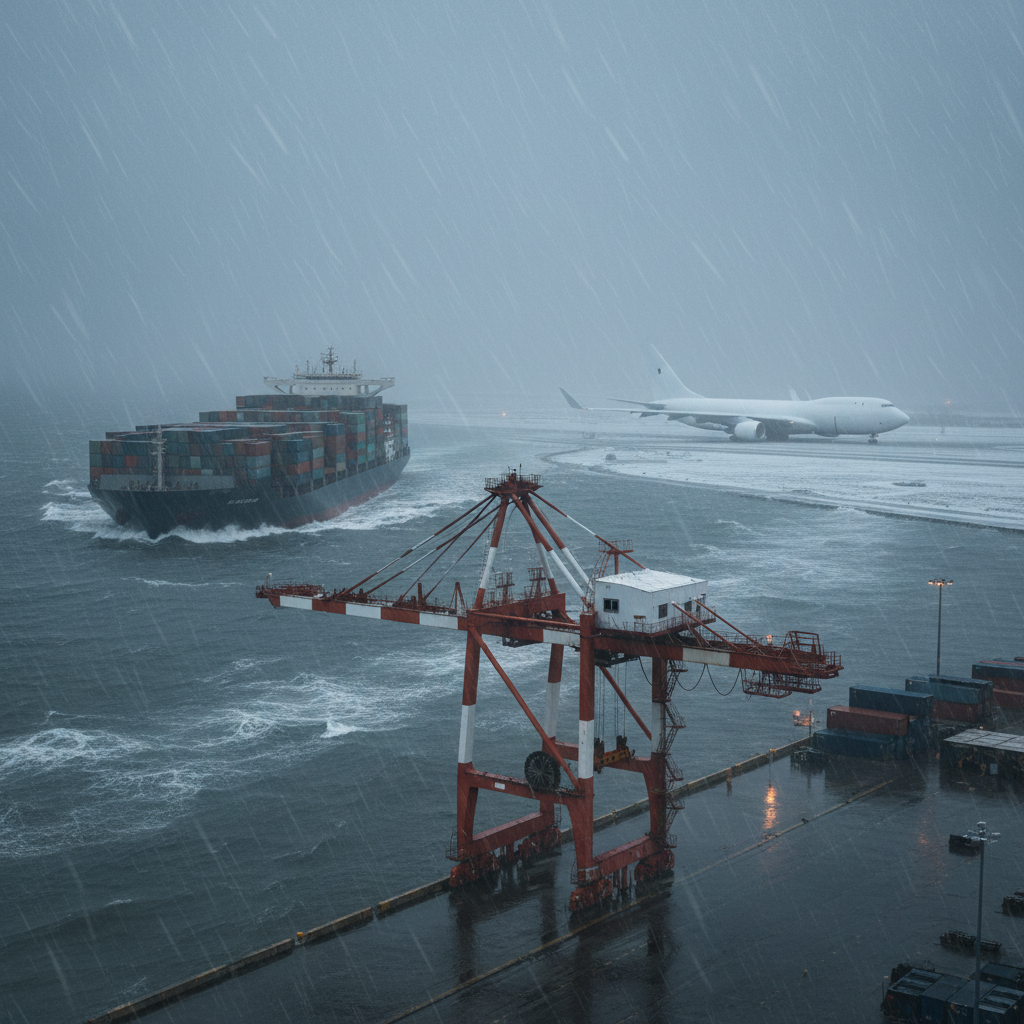
Pacific and Atlantic Storms Reroute Ocean Freight
Ocean freight, the backbone of global trade, faces persistent challenges from intensifying weather events across major shipping lanes. The Pacific Ocean, particularly the Western Pacific, experiences a heightened frequency and intensity of typhoons, leading to widespread disruptions. These powerful storms necessitate vessel diversions, port closures, and significant delays in cargo arrival. Ports in East Asia, including those in China, Japan, and South Korea, are routinely affected, causing backlogs that ripple through the supply chain. Vessels often must slow steam or reroute to avoid the most severe conditions, extending transit times and increasing fuel consumption. This directly impacts inventory management for shippers relying on just-in-time deliveries.
Similarly, the Atlantic hurricane season continues to pose a substantial threat to shipping in the Caribbean, the Gulf of Mexico, and along the U.S. East Coast. Hurricanes can force the closure of major ports like Houston, New Orleans, and Miami, halting operations for days. Beyond immediate closures, the aftermath often involves damaged port infrastructure, restricted access, and congestion as facilities attempt to clear backlogs. Winter storms in the North Atlantic also contribute to delays, with high seas and strong winds slowing trans-Atlantic crossings and impacting European port schedules. These weather-induced delays create a domino effect, pushing back subsequent vessel calls and disrupting carefully planned logistics networks.
European Waterways and North American Rail Face Hydrological Extremes
Inland transportation networks are equally vulnerable to weather volatility, with European waterways and North American rail systems experiencing distinct but equally disruptive challenges. Europe's extensive river network, particularly the Rhine and Danube, is frequently impacted by extreme hydrological conditions. Prolonged droughts lead to critically low water levels, restricting the draft of barges and forcing operators to carry reduced loads or seek alternative transport modes. This reduction in capacity on a cost-effective mode like barge transport pushes cargo onto already strained road and rail networks, increasing costs and transit times for goods moving through the continent's industrial heartland.
Conversely, periods of intense rainfall and snowmelt can cause severe flooding, rendering sections of these waterways impassable. Bridges may become too low for vessels to pass, or currents too strong for safe navigation. This unpredictability makes long-term planning difficult for industries reliant on inland shipping for bulk commodities and finished goods. In North America, rail operations contend with both extreme cold and heat. Winter blizzards and ice storms can freeze switches, reduce locomotive efficiency, and necessitate speed restrictions, leading to substantial delays across vast networks. During summer, extreme heat can cause rail tracks to buckle, forcing further speed reductions or even temporary line closures to prevent derailments. These conditions affect the movement of everything from agricultural products to manufactured goods, creating bottlenecks at key intermodal hubs and delaying deliveries to final destinations.
Air Cargo and Road Transport Grapple with Localized Weather Events
Air cargo, while often seen as a premium, time-sensitive option, is not immune to weather-related disruptions. Airports worldwide frequently experience operational challenges due to localized weather phenomena such as dense fog, heavy snowfall, strong crosswinds, and thunderstorms. Fog can reduce visibility to levels below safe operating minimums, leading to flight delays, diversions, or outright cancellations. Major cargo hubs like Memphis, Louisville, and Frankfurt can see significant backlogs accumulate rapidly when weather grounds flights. Snow and ice require extensive de-icing procedures and runway clearing, adding to turnaround times and causing cascading delays across global air freight networks. Strong winds can make landings and takeoffs hazardous, further limiting airport capacity.
Road transport, the final leg for most cargo, faces its own set of weather-induced obstacles. Heavy snowfall and ice can close major highways, particularly in mountainous regions or during severe winter storms, stranding trucks and delaying deliveries. Flash floods can render roads impassable, damage infrastructure, and create hazardous driving conditions. Extreme heat can lead to tire blowouts and engine overheating, especially for long-haul vehicles, necessitating unscheduled stops and extending transit times. These localized disruptions, while sometimes smaller in scale than ocean or rail issues, are pervasive and directly impact the last-mile delivery, which is often the most time-sensitive part of the supply chain. Shippers must account for these variables when planning delivery windows and managing customer expectations.
Proactive Strategies for Shippers to Mitigate Weather Risks
Shippers can adopt several proactive measures to build resilience against weather-induced cargo disruptions. A fundamental step involves diversifying transportation modes and routes. Relying on a single lane or mode increases vulnerability; having pre-arranged alternative options, such as shifting from ocean to air for urgent shipments or from barge to rail/road for inland European movements, can provide flexibility. Building buffer stock at strategic locations can also cushion the impact of delays, ensuring production lines or retail shelves do not run empty during periods of disruption. This requires careful inventory planning and a clear understanding of lead time variability.
Leveraging advanced forecasting tools and real-time data is another important strategy. While weather itself is unpredictable, its potential impact can be better anticipated with detailed meteorological forecasts integrated into logistics planning. This allows for earlier decision-making regarding rerouting or holding shipments. Furthermore, fostering strong relationships with multiple carriers and logistics partners provides access to a broader network and more options during times of crisis. Collaborative planning and clear communication channels with these partners are essential for quickly adapting to changing conditions. Finally, reviewing and updating cargo insurance policies to ensure adequate coverage for weather-related delays, damage, and rerouting costs is a prudent financial measure. These combined approaches help shippers maintain supply chain continuity and minimize financial exposure in an increasingly volatile climate.
Source: The Maritime Executive — https://maritime-executive.com/article/u-s-naval-blockade-now-covers-vessels-that-load-iranian-cargo-at-sea