
Ukrainian Drones Damage Kerch Strait Bridge Road and Rail Link
Ukrainian drones have damaged the Kerch Strait Bridge, a critical road and rail link connecting Russia and Crimea. This incident immediately disrupts cargo movement across the strait, impacting both land and sea logistics for the region. Shippers must now contend with rerouted freight, increased transit times, and heightened operational risks in the Black Sea.
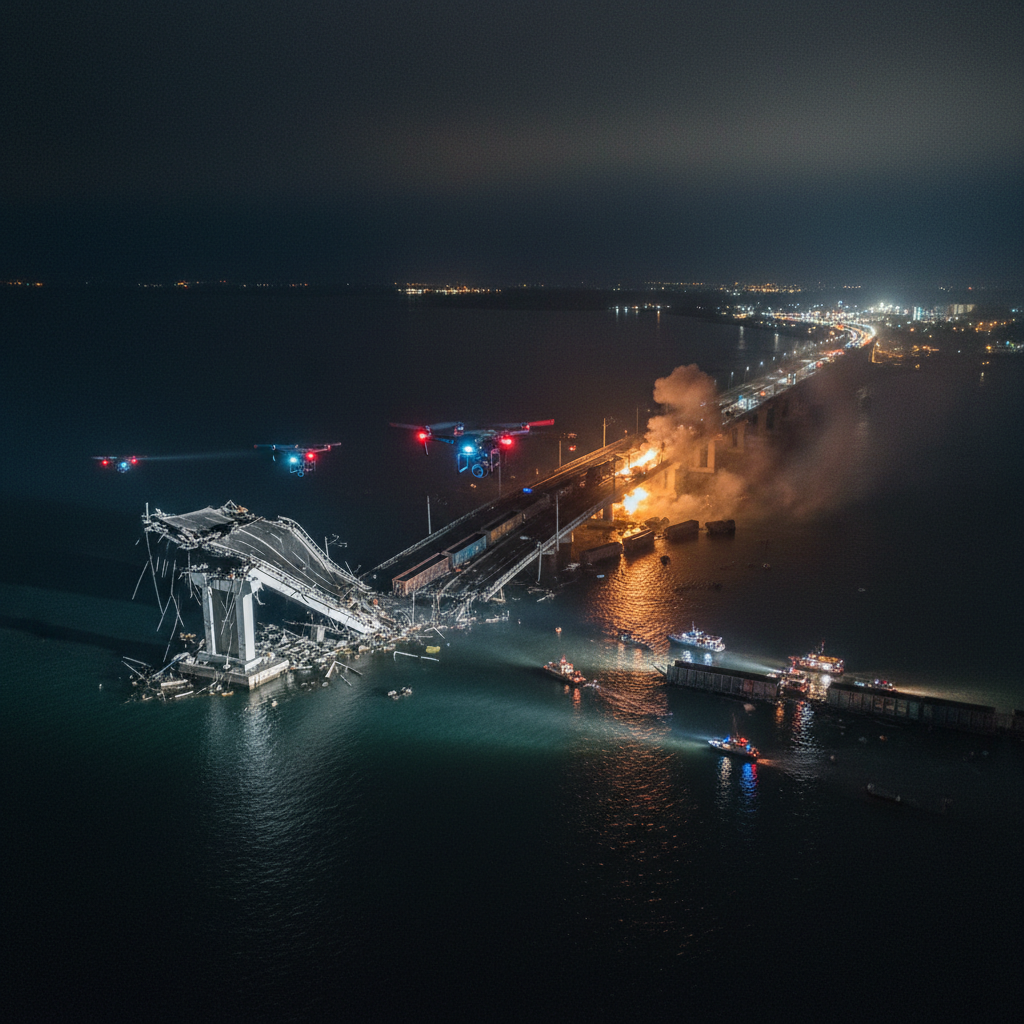
Kerch Bridge Damage Severely Impacts Crimean Supply Lines
Overnight Sunday, Ukrainian drones struck and damaged the road trestle navigation span of the Kerch Strait Bridge. This Russian-built structure serves as a vital road and rail connection between the Taman Peninsula in Russia and the Kerch Peninsula in Crimea. The damage immediately compromises a primary logistics artery for the region, directly affecting the movement of goods and materials into and out of Crimea. The bridge's dual functionality means both road and rail cargo flows are now severely constrained or halted, forcing an immediate re-evaluation of supply routes for any entity relying on this corridor. The incident introduces a new layer of uncertainty and operational complexity for supply chain managers operating in or through the Black Sea basin.
The Kerch Strait Bridge has been a strategic asset for Russia, facilitating military and civilian logistics to Crimea since its completion. Its damage creates an immediate bottleneck for land-based transport. Road freight, which previously utilized the bridge for direct access, will now face significant diversions. Similarly, rail cargo, a key mode for bulk goods and heavy equipment, will experience substantial delays or require complete rerouting. This disruption extends beyond military supplies, affecting commercial goods, construction materials, and agricultural products destined for or originating from Crimea. The immediate consequence is a reduction in transport capacity and an increase in the time and cost associated with moving goods in the area.
Black Sea Shipping Faces Heightened Risk and Diversion Pressures
The damage to the navigation span of the Kerch Strait Bridge carries direct implications for maritime operations in the Black Sea. While the immediate impact on vessel passage through the strait itself will depend on the extent of the damage and subsequent repair efforts, the incident significantly elevates the perceived risk for commercial shipping in the broader region. The Kerch Strait is a narrow, strategically important waterway connecting the Sea of Azov to the Black Sea. Any disruption or perceived threat in this area can lead to increased insurance premiums for vessels operating in the Black Sea, a common reaction to heightened geopolitical tensions.
Forwarders and shippers utilizing Black Sea routes, particularly those with destinations or origins near the Sea of Azov, will likely face longer transit times as vessels may opt for alternative, safer, but more circuitous paths. The incident reinforces the need for robust risk assessment for all maritime movements in the region. Ports in Crimea, such as Kerch and Sevastopol, and Russian ports like Novorossiysk and Taman, which serve as key logistical hubs, will experience ripple effects. Increased pressure on alternative ports and land routes will likely lead to congestion and further delays, impacting vessel schedules and port turnaround times. The incident underscores the fragility of supply lines in conflict zones and the need for contingency planning that accounts for sudden infrastructure damage.
Rail and Road Cargo Rerouted, Increasing Transit Times and Costs
With the Kerch Strait Bridge's road and rail links compromised, cargo previously moving across it must find alternative pathways. For road transport, this primarily means rerouting through occupied Ukrainian territories, which presents its own set of security risks, infrastructure challenges, and longer distances. The existing road networks in these areas may not be designed to handle the increased volume of heavy commercial traffic, leading to accelerated wear and tear, congestion, and slower transit speeds. This directly translates into higher fuel consumption, increased labor costs for drivers, and extended delivery schedules.
Rail cargo faces similar challenges. The bridge was a direct rail connection, and its damage necessitates the use of alternative rail lines, if available, or a complete modal shift to road or sea for parts of the journey. Such shifts are complex, requiring additional transshipment points, specialized equipment, and increased handling, all of which add to both cost and time. The capacity of alternative rail lines may also be limited, creating bottlenecks and further delays. Shippers must anticipate a substantial increase in lead times for goods moving to and from Crimea, alongside a significant rise in transportation expenses due to the longer distances, increased risks, and potential for modal conversions.
Shippers Must Re-evaluate Black Sea Logistics Strategies
In light of the Kerch Strait Bridge damage, shippers and supply chain managers must immediately review their exposure and implement adaptive strategies. The first step involves a comprehensive assessment of all cargo currently in transit or planned for movement via the Kerch Strait or through the Black Sea region. Diversifying transport modes and routes becomes a critical priority. For goods previously reliant on the bridge, exploring multimodal solutions that combine sea freight to alternative Russian ports (like Novorossiysk) with subsequent road or rail transport inland, or vice-versa, may be necessary.
Engaging closely with freight forwarders and logistics providers is crucial to understand available alternative routes, their associated costs, and revised transit times. Shippers should also factor in potential increases in insurance premiums for Black Sea maritime operations and consider enhanced security measures for land routes through conflict-affected areas. Maintaining flexible inventory levels and communicating proactively with customers about potential delays will help mitigate the commercial impact. This incident serves as a stark reminder of the need for resilient supply chain planning, particularly in regions subject to geopolitical instability, emphasizing the importance of contingency plans that can be activated swiftly in response to sudden disruptions.
Crimean Logistics Face Prolonged Instability
The damage to the Kerch Strait Bridge represents a significant blow to the logistical stability of Crimea. The immediate disruption to road and rail links will force costly and time-consuming rerouting, while the heightened risk perception will affect Black Sea shipping. Shippers must prepare for sustained operational challenges, including increased costs, extended transit times, and the need for continuous adaptation of their supply chain strategies in a volatile environment. The incident confirms that critical infrastructure in conflict zones remains a primary target, ensuring long-term uncertainty for regional cargo movement.
Source: The Maritime Executive — https://maritime-executive.com/article/ukrainian-drone-damages-navigation-span-of-kerch-strait-bridge