
MGS Insights
The Control Tower
For enquiries on articles, speaking opportunities and general inspiration with industry data trends — write to us!
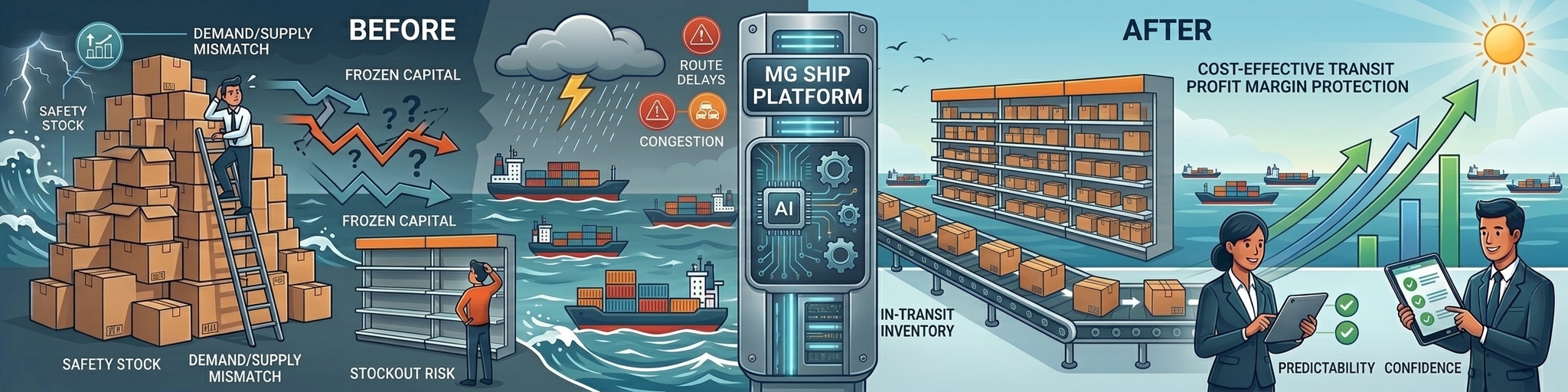 OperationsFrom PepsiCo's Profit Squeeze to Retail Resilience: How MG Ship Helps Retailers Balance Supply and Demand Before They Ship
 Ethanol Bunkering: A New Horizon for Sustainable Maritime Logistics
 WeatherPanama Canal Drought: Navigating the Supply Chain Bottleneck
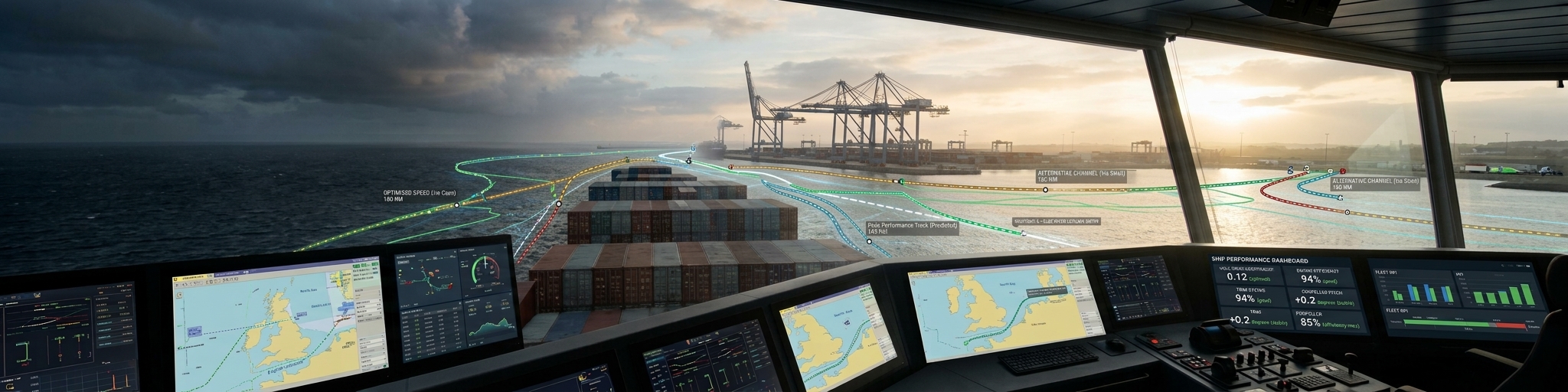 IndustryNavigating Logistics Disruptions: Why Proactive Multimodal Intelligence is No Longer Optional
 OperationsWhen Typhoon Recovery Becomes the Real Risk: How MG Ship’s Predictive AI Stabilises Global Supply Chains
 OperationsFrom “Where Is It?” to “What’s Next?”: How MG Ship Helps Brands Cut Logistics Cost, De-Risk Operations, and Focus on Expansion
 IndustryCainiao's Mexico Expansion: A Catalyst for E-commerce Logistics in Latin America
 FinanceSumitomo's Strategic Asset Shifts: A Conceptual Framework for Capital Efficiency
 Data InsightsThe Evolving WMS: From Warehouse Core to Supply Chain Nerve Center
 OperationsAI's Quiet Revolution: Beyond Job Cuts to Supply Chain Structure Transformation

Navigating Turbulent Waters: Geopolitical Disruptions and the Future of Cargo Movement
Geopolitical events are fundamentally reshaping global trade routes, impacting everything from maritime lanes to air corridors. This brief explores the operational and economic consequences for cargo movement, highlighting how real-time visibility platforms are crucial for navigating unprecedented uncertainty.

AI-Powered Logistics Innovation: Honouring Industry Trailblazers Reimagining Global Trade

Protecting Life-Critical Healthcare Supply Chains Before Disruption Reaches the Patient

Predictive Logistics and Carrier Performance: How Retailers Can Turn Freight Volatility Into a Competitive Advantage

See the Wave. Then Ride It. MG Ship: Where Disruption Becomes Your Competitive Advantage.

Future-Proof Your Supply Chain: MG Ship Helps Shippers Stay Ahead of Geopolitical and Trade Disruption

When Confidence Meets Capability: Turning Supply-Chain Resilience Into Measurable Action

More from the control tower

Navigating the Storm: Global Port Protests and Supply Chain Resilience
A historic coordinated protest by dockworkers across 113 ports and 22 countries is creating significant ripples throughout global supply chains. This analysis explores the operational, financial, and strategic implications for shippers and carriers, highlighting how advanced visibility platforms like MGS become critical tools for navigating widespread disruption.

The Hidden Constraint: Unpacking the Supply Chain's Exception Backlog
Unresolved supply chain exceptions are creating a hidden backlog, hindering global trade flows and driving up costs. This brief explores the operational and financial impact of this overlooked constraint and how a visibility control tower like MGS provides real-time insights and automation to transform reactive problem-solving into proactive efficiency.

The Evolution of TMS: Navigating Global Supply Chains with Intelligent Execution
The future of Transportation Management Systems is not their obsolescence, but a profound transformation. This brief explores how a shift towards continuous, connected, and intelligent execution will reshape global logistics, impacting flows, finances, and operational resilience.

Weathering the Storm: Navigating Climate-Driven Disruptions in Global Oil Supply Chains
As climate volatility intensifies, critical energy supply routes, particularly those originating from major oil export hubs, face increasing threats from severe weather events. This brief examines how meteorological phenomena impact key maritime lanes and port operations, and offers strategies for shippers to enhance resilience through advanced visibility platforms.

Weathering the Storm: Navigating Supply Chain Disruptions in an Era of Climate Volatility
Unpredictable weather patterns are increasingly challenging global cargo movement. This brief explores how extreme weather impacts critical lanes, facilities, and modes, and outlines proactive strategies shippers can employ to maintain resilience and visibility.

RIL's Q2 Outlook: Unpacking Financial and Operational Value Drivers
Reliance Industries is poised for robust Q2 earnings, with an anticipated 15-17% year-on-year EBITDA growth. This surge is primarily fueled by a strong recovery in its oil-to-chemicals (O2C) business, driven by factors like stronger refining margins, increased throughput, and a weaker rupee. This brief analyzes the core financial and operational levers contributing to this positive outlook.

ESAF Small Finance Bank's Q2 Turnaround: A Deep Dive into Financial and Operational Value Drivers
ESAF Small Finance Bank's recent Q2 performance, marked by a significant profit reversal, offers crucial insights into the interplay of strategic financial management and operational excellence. This analysis dissects the core levers—from margin enhancement and asset quality improvements to robust growth in core banking activities—that propelled this remarkable turnaround.

Profit Plunge: Lessons in Cost Control and Operational Resilience from Ambuja Cements
Ambuja Cements' Q2 FY27 results, revealing a 90% profit decline despite flat revenue, offer critical insights for business leaders. This brief analyzes the impact of rising costs on profitability, cash flow, and operational efficiency, emphasizing the urgent need for strategic cost reduction and procurement savings.

Scan Global's OIA Acquisition: Navigating a Consolidated Logistics Landscape
Scan Global's 'largest-ever investment' in acquiring OIA Global signals a significant shift in the freight forwarding sector. This brief analyzes the implications for global supply chain flows, financial dynamics, and how advanced visibility platforms like MGS are crucial for navigating such strategic consolidations.