
See the Wave. Then Ride It. MG Ship: Where Disruption Becomes Your Competitive Advantage.
Disruption is now structural. MG Ship turns supply chain volatility into a competitive advantage through AI-driven predictive logistics, smart carrier selection, dynamic route optimization, and proactive risk management for maximum resilience.
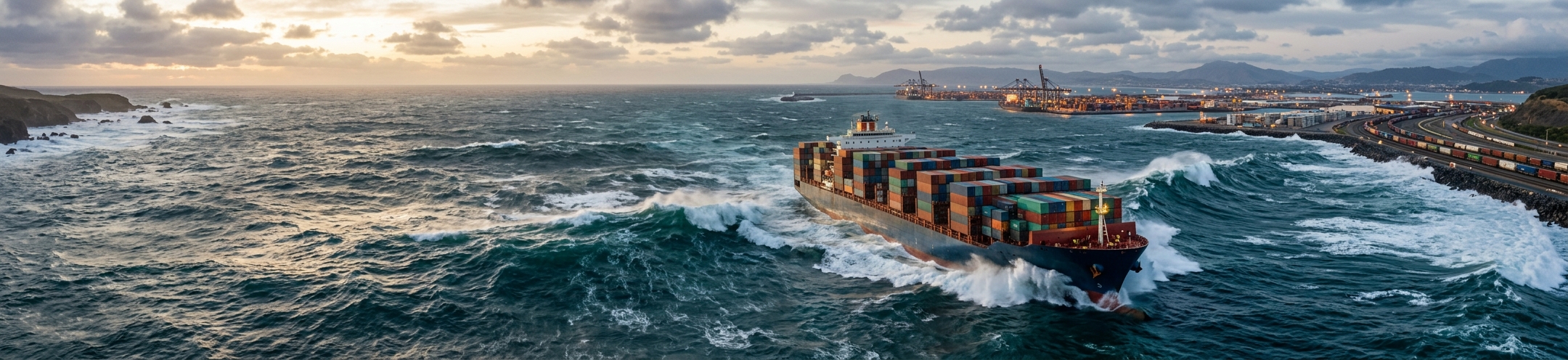
The World Economic Forum says disruption is now structural, not episodic. MG Ship turns that reality into your competitive edge—with predictive logistics, smart carrier selection and dynamic route optimisation.
For decades, supply chains were engineered for one thing: cost. Concentrated suppliers. Lean inventories. The cheapest route, every time.
The World Economic Forum's latest analysis draws the line: that model is now fragile. In the Global Risks Report 2026, half of global leaders expect turbulence over the next two years—driven by geopolitical confrontation, accelerating technology change and climate volatility. Disruption is no longer an event you recover from. It is the operating environment. The WEF's prescription is clear: see the wave—detect weak signals early, and act before disruption escalates. Build agility, resilience and optionality. Turn visibility into a competitive differentiator.
At MG Ship, that's not a strategy memo. It's what our platform does, every day.
From reacting to anticipating: predictive logistics
The WEF notes that AI is becoming operational infrastructure—not back-office analytics, but real-time visibility and decision-making at the core of supply chains. MG Ship's predictive logistics engine operationalises that shift. Our models continuously monitor carrier performance, port congestion, weather patterns and geopolitical risk indicators, flagging anomalies before they become delays. You can simulate disruptions and see the impact on your network before it happens, so you act on insight rather than urgency. And because contingency plans are pre-approved, they trigger automatically when risk thresholds are crossed. The result is simple: you stop managing yesterday's disruption and start engineering around tomorrow's.
Carrier optimisation: resilience through optionality
The WEF's second priority—agility, resilience and optionality—lives or dies on carrier strategy. Concentration is efficient until it isn't. MG Ship's carrier optimisation continuously evaluates your carrier mix against cost, reliability, capacity and risk exposure, and recommends rebalancing before a single lane fails. You diversify critical dependencies, maintain alternative pathways, and activate them instantly when conditions shift.
Route optimisation: agility, priced correctly
Cost-first routing is a fair-weather strategy. MG Ship's route optimisation engine balances total landed cost against speed, emissions and risk, dynamically rerouting around congestion, climate events and geopolitical flashpoints while protecting service levels and margin. Where the traditional model asks what's cheapest today, MG Ship asks what's most resilient for the next 90 days—and answers with data.
The numbers back the shift
The WEF reports that 60% more leaders now view resilience and agility as core to competitive advantage than five years ago, and 74% see resilience as a growth driver rather than only risk management. The message is unmistakable: logistics is no longer a cost centre. It's a growth asset.
Your executive agenda, delivered
The WEF's practical agenda for logistics leaders is to map multi-tier exposure, diversify critical dependencies, invest in AI-enabled visibility and scenario planning, and build pre-approved alternative routes. MG Ship delivers all four in one platform. Predictive logistics with weak-signal detection answers the call for visibility and early response. Dynamic carrier optimisation and carrier-mix rebalancing deliver agility and optionality. Route optimisation that balances cost, speed, risk and emissions turns resilience into growth. And executive dashboards connect logistics performance directly to margin, service and growth strategy—so supply chain leads beyond its own function.
See the wave. Then ride it.
The winners in this new era won't be the leanest networks, they'll be the most adaptable ones. The organizations that detect change early, reconfigure quickly, and hold service and margin through uncertainty. That's the competitive advantage the WEF is describing. It's the one MG Ship is built to deliver.
Turn disruption into your edge. Talk to MG Ship about predictive logistics, carrier and route optimisation today.
Source: https://www.weforum.org/stories/supply-chains-and-transportation/supply-chain-disruption-resilience