
Navigating the Storm: Global Port Protests and Supply Chain Resilience
A historic coordinated protest by dockworkers across 113 ports and 22 countries is creating significant ripples throughout global supply chains. This analysis explores the operational, financial, and strategic implications for shippers and carriers, highlighting how advanced visibility platforms like MGS become critical tools for navigating widespread disruption.
How this impacts the global supply chain
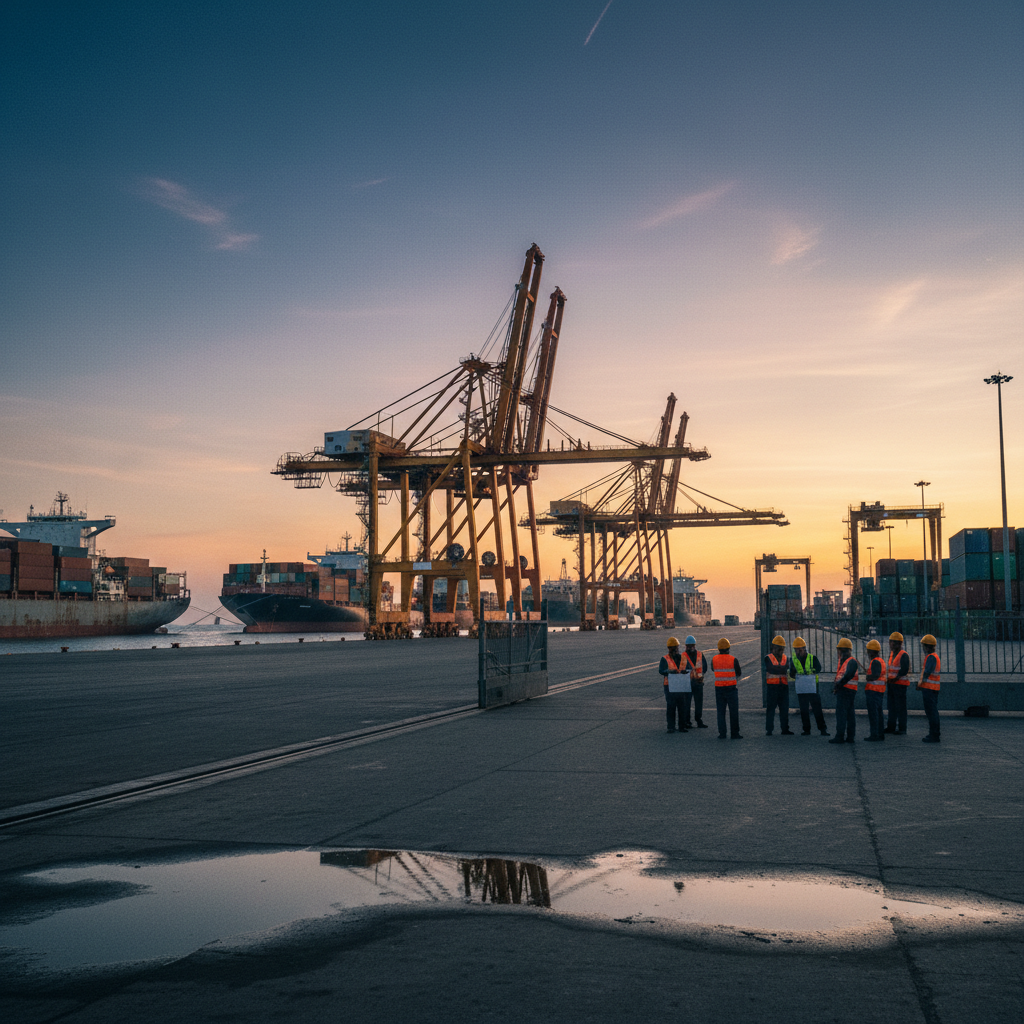
The coordinated dockworker action across 113 ports will severely impede global cargo movement. Goods destined for or departing from these locations will experience significant delays, creating a cascading effect across the interconnected shipping network. Vessels may be forced to wait, divert, or skip calls, leading to unpredictable transit times and increased operational complexities. Major shipping routes relying on these 113 ports for transshipment or final delivery will be disrupted. While carriers might attempt rerouting to unaffected ports, this risks creating new congestion points, extending voyages, and increasing fuel consumption, given the broad geographical impact across 22 countries. The immediate consequence is a drastic reduction in effective port handling capacity. With more than 25 unions staging strikes and demonstrations, the ability to load, unload, and process cargo will be curtailed or halted. This creates backlogs of vessels and accumulating containers, exacerbating the capacity crunch. Inland logistics, including trucking and rail, will also suffer as goods cannot move efficiently. Day-to-day port operations, from vessel berthing to customs clearance, will be severely hampered. This widespread, coordinated mobilization, described as one of the largest in history, underscores the potential for prolonged operational paralysis across a significant portion of the global maritime network.
Global financial impact
Businesses relying on the 113 affected ports face substantial financial pressures. Increased freight costs are inevitable as carriers contend with higher operational expenses and reduced capacity. Demurrage and detention charges will mount for idle containers and vessels. Inventory holding costs will rise due to goods stuck in transit, leading to potential stockouts and lost sales for retailers and manufacturers. Penalties for delayed deliveries and higher cargo insurance premiums will further impact profitability. Shipping lines will incur significant additional costs, including increased fuel consumption from extended voyages or vessel idling. Demurrage payments to port authorities and potential penalties for missed schedules will add to their financial burden, alongside costs for repositioning stranded empty containers. Revenue streams could also be impacted by cancelled port calls or reduced cargo volumes. The widespread nature of this action across 22 countries, involving more than 25 unions, suggests a significant blow to global trade flows. This disruption can fuel inflationary pressures as logistics costs rise and supply becomes constrained. Economies heavily reliant on maritime trade could see a slowdown in activity, and the uncertainty created by such a large-scale labor action may erode business confidence, potentially reducing investment in international trade.
How MGS can help navigate today's global trade environment
In an environment characterized by widespread and unpredictable disruptions, such as the coordinated dockworker action across 113 ports, a shipment-visibility control tower like MGS becomes an indispensable tool. MGS provides real-time, end-to-end visibility into cargo movement, allowing logistics professionals to pinpoint the exact location and status of every shipment. This immediate insight is crucial when 113 ports are simultaneously affected. Operators can quickly identify which of their shipments are destined for or departing from impacted locations, tracking vessels in real-time to observe queues or revised estimated arrival times due to diversions. MGS empowers proactive decision-making. By consolidating data, the platform flags potential bottlenecks and provides early warnings of impending delays. This allows shippers to consider alternative strategies, such as rerouting cargo to less affected ports, exploring different transport modes, or adjusting inventory plans. For instance, if a vessel is en route to one of the 113 striking ports, MGS immediately highlights this exposure, enabling a swift decision to divert, minimizing demurrage and ensuring supply continuity. The platform also facilitates enhanced communication and collaboration. All stakeholders, from internal teams to external partners, access a single source of truth regarding shipment status. This streamlined information flow is vital during crises, ensuring coordinated responses, managed customer expectations, and effective resource allocation. By providing a comprehensive, real-time overview, MGS transforms reactive problem-solving into proactive risk management, helping businesses navigate complex global trade environments with greater agility.
Demand–supply analysis & improvement
The coordinated dockworker action across 113 ports presents a severe supply-side shock to the global economy. While demand for goods largely remains constant, the ability to move them efficiently through critical maritime gateways is drastically curtailed. This creates an immediate and widespread imbalance where demand outstrips the available logistical capacity. The sheer number of ports involved across 22 countries signifies a systemic constraint on global trade, not just a localized bottleneck. Goods produced and ready for shipment become effectively unavailable, leading to artificial scarcity and contributing to inflationary pressures. This disruption also impacts the flow of raw materials and intermediate goods, creating ripple effects upstream and downstream in manufacturing. To mitigate such widespread supply constraints, several improvement levers are critical. Firstly, diversification of sourcing and shipping routes is paramount. Companies concentrating logistics through limited ports or carriers will be disproportionately affected. Spreading risk across multiple gateways offers crucial resilience. Secondly, strategic inventory management becomes vital. While lean models minimize costs, events like this underscore the value of maintaining buffer stocks for critical components or finished goods, allowing businesses to absorb short-term shocks. Finally, enhanced data analytics and predictive capabilities, often integrated within platforms like MGS, play a crucial role. By analyzing real-time port status and historical data, businesses can better anticipate impacts and pre-emptively adjust strategies, moving from reactive crisis management to proactive resilience. The involvement of more than 25 unions highlights the need for sophisticated, data-driven approaches to navigate such complex labor actions.
ROI-focused resilience
Investing in supply chain resilience, particularly against widespread disruptions like the coordinated dockworker action across 113 ports, offers a clear return on investment. The cost of inaction or inadequate preparation during such events far outweighs the upfront investment in robust strategies. Quantifiable risks include: Lost revenue from stockouts, potentially millions for larger enterprises, especially for time-sensitive goods. Production line stoppages due to lack of components, costing hundreds of thousands per day in lost output. Demurrage and detention charges for stranded containers and vessels, quickly accumulating to tens of thousands per shipment, per week. Exorbitant expedited shipping costs (e.g., air freight) to mitigate delays, often 5-10 times ocean freight. An investment in a shipment-visibility control tower like MGS directly protects against these risks. By providing real-time alerts and comprehensive tracking, MGS enables proactive rerouting of cargo, potentially avoiding weeks of delays and associated demurrage at one of the 113 affected ports. If a single vessel carrying high-value goods avoids a week of delay and significant demurrage, or prevents a production line from shutting down for a day, the ROI of the visibility platform can be immediately realized. Furthermore, maintaining customer commitments and avoiding penalties for late deliveries, which can be substantial, preserves brand reputation and long-term customer relationships. The widespread nature of the protest, involving 25 unions across 22 countries, elevates the probability of encountering these risks, making the ROI of resilience investments, such as advanced visibility and diversified logistics, exceptionally high. It safeguards business continuity and market share in an increasingly volatile global trade landscape.
Source: Splash247 — https://splash247.com/dockworkers-unite-across-113-ports-in-global-anti-war-protest/