
Navigating the Geopolitical Maze: How Global Events Reshape Cargo Movement
Geopolitical shifts, exemplified by evolving sanctions regimes, are fundamentally altering global cargo movement. This brief analyzes the cascading effects on trade routes, airspace, waterways, tariffs, and overall transport logistics, highlighting the critical need for advanced shipment visibility.
Introduction: The Shifting Sands of Global Logistics
The global supply chain landscape is in a constant state of flux, increasingly shaped by geopolitical events that transcend traditional market dynamics. From evolving international relations to strategic policy shifts, these events introduce layers of complexity and risk that directly impact the movement of goods worldwide. The recent discourse around legislative actions, such as the Russia Sanctions Act of 2026 and its implications for existing Russia-related sanctions, underscores a growing trend where political decisions have immediate and profound consequences for trade and transport operations. For supply-chain analysts, understanding these disruptions is paramount, not from a political standpoint, but purely through the lens of their tangible effects on cargo movement, operational costs, and delivery timelines. The imperative for real-time insight and adaptive strategies has never been greater.
Sanctions and Tariffs: Direct Impediments to Trade
Sanctions, whether comprehensive or targeted, act as powerful non-tariff barriers that directly impede the free flow of goods and capital. When new or expanded sanctions are imposed, as suggested by the implications of the Russia Sanctions Act of 2026, they can instantly render existing trade agreements null and void, block financial transactions with specific entities, or prohibit the export and import of certain commodities. For businesses, this translates into immediate challenges: sourcing critical components becomes difficult or impossible, payment processing for international transactions faces increased scrutiny and delays, and compliance costs surge as companies must navigate complex legal frameworks. Tariffs, while different in nature, also serve as economic tools that can drastically alter trade patterns. Imposing higher duties on goods from specific regions makes them less competitive, forcing importers to seek alternative, often more expensive, suppliers or absorb the additional cost, which ultimately impacts consumer prices. Both sanctions and tariffs introduce significant uncertainty, compelling companies to re-evaluate their entire supplier network and market access strategies, often leading to higher operational costs and reduced market efficiency.
Airspace Restrictions: Rerouting the Skies
Geopolitical tensions frequently manifest as restrictions or outright closures of national airspaces, forcing air cargo carriers to undertake significant detours. When key air corridors become inaccessible, flights must be rerouted, often adding thousands of kilometers to journeys that previously took a direct path. This has a direct and substantial impact on air freight operations. Longer flight paths necessitate increased fuel consumption, leading to higher operational costs for airlines and, consequently, higher freight rates for shippers. Furthermore, extended flight times reduce the efficiency of aircraft utilization, as planes spend more time in the air for the same payload, potentially leading to capacity constraints on popular routes. Crew scheduling also becomes more complex due to extended duty hours. For time-sensitive cargo, such as pharmaceuticals, high-tech components, or perishable goods, these delays can compromise product integrity and market value. The ripple effect extends to airport hubs, where altered flight patterns can lead to congestion and schedule disruptions, further exacerbating delays across the air cargo network. A shipment-visibility control tower (MGS) becomes indispensable in such scenarios, offering real-time tracking and predictive analytics to anticipate delays and re-optimize routes, allowing for proactive communication with consignees and mitigating potential losses.
Waterway Disruptions: Navigating Chokepoints and Blockades
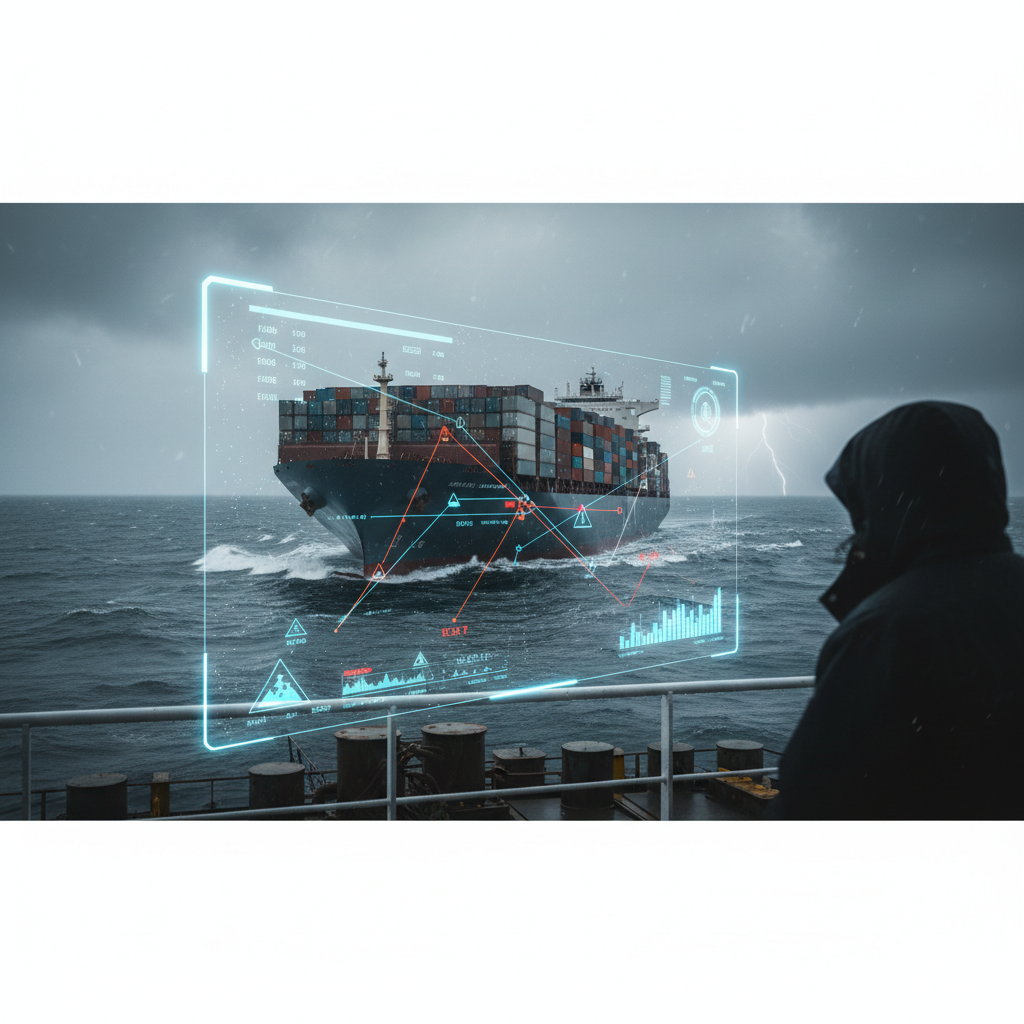
Maritime shipping, the backbone of global trade, is particularly vulnerable to geopolitical events affecting critical waterways and chokepoints. Conflicts or political instability in strategic regions can lead to blockades, increased piracy risks, or even the closure of vital canals and straits. Such disruptions force vessels to undertake significantly longer voyages around continents, adding weeks to transit times and dramatically increasing fuel costs. For instance, rerouting around major canals can add thousands of nautical miles and considerable expenses, impacting the cost-effectiveness of goods shipped. Insurance premiums for vessels traversing high-risk areas skyrocket, further burdening shippers. Port operations can also be severely affected; sanctions may prohibit vessels from certain flags or ownership from docking, leading to congestion at alternative ports or creating 'ghost fleets' operating outside traditional regulatory frameworks. The cumulative effect is a substantial increase in lead times, higher freight rates, and a reduction in the reliability of maritime supply chains. The ability to monitor vessel positions, predict arrival times, and identify alternative port options through an MGS platform is crucial for maintaining continuity and minimizing financial exposure during such maritime disruptions.
Consequences for Global Trade and Transport
The cumulative effect of these geopolitical disruptions is a significant increase in the fragility and cost of global trade and transport. Supply chains, once optimized for efficiency and cost-effectiveness, are now forced to prioritize resilience and adaptability. Increased operational costs, stemming from longer routes, higher fuel consumption, elevated insurance premiums, and compliance overheads, inevitably translate into higher prices for end consumers, fueling inflationary pressures. Extended lead times and unpredictable delivery schedules erode supply chain reliability, making inventory management more challenging and increasing the risk of stockouts or overstocking. Furthermore, the constant need to re-evaluate and reconfigure logistics networks introduces substantial administrative burdens and demands for highly skilled analytical capabilities. Companies are compelled to diversify their sourcing strategies, invest in regional production capabilities, and build buffer stocks, all of which come at a cost. The geopolitical landscape is thus fostering a paradigm shift from 'just-in-time' to 'just-in-case' inventory and logistics models, fundamentally altering the economics of global commerce. Real-time visibility and predictive insights provided by an MGS are critical for navigating this complex environment, enabling businesses to identify risks early, model alternative scenarios, and execute agile responses to maintain operational continuity.
Leveraging Visibility for Resilience
In an era defined by geopolitical volatility, a sophisticated shipment-visibility control tower (MGS) is no longer a luxury but a strategic imperative. By aggregating real-time data from across the entire logistics network – including vessel movements, flight paths, customs clearances, and port statuses – an MGS provides unparalleled transparency into cargo movement. This enables supply-chain analysts to identify potential disruptions caused by airspace closures, waterway blockades, or sanction-related delays before they fully materialize. Predictive analytics can model the impact of rerouting on estimated times of arrival (ETAs) and costs, allowing for proactive decision-making. For instance, if a specific maritime route becomes high-risk due to geopolitical events, the MGS can highlight alternative routes, assess their associated costs and transit times, and facilitate rapid adjustments. Similarly, for air cargo, immediate notification of airspace restrictions allows for swift re-planning. Beyond reactive measures, an MGS fosters long-term resilience by providing data-driven insights into the performance of various routes and carriers under different geopolitical scenarios, informing future network design and risk mitigation strategies. It empowers organizations to maintain control, reduce uncertainty, and ensure the timely, cost-effective delivery of goods even amidst the most challenging global events.
Source: Atlantic Council — https://www.atlanticcouncil.org/insight-impact/in-the-news/nikoladze-quoted-in-washington-monthly-on-the-russia-sanctions-act-of-2026s-implications-for-existing-russia-related-sanctions/