
AI's Quiet Revolution: Beyond Job Cuts to Supply Chain Structure Transformation
Uber's recent restructuring signals a profound shift in logistics: AI is not merely replacing tasks, but fundamentally reshaping the organizational structures that underpin global supply chains. This brief explores the far-reaching implications for efficiency, cost, and operational agility.
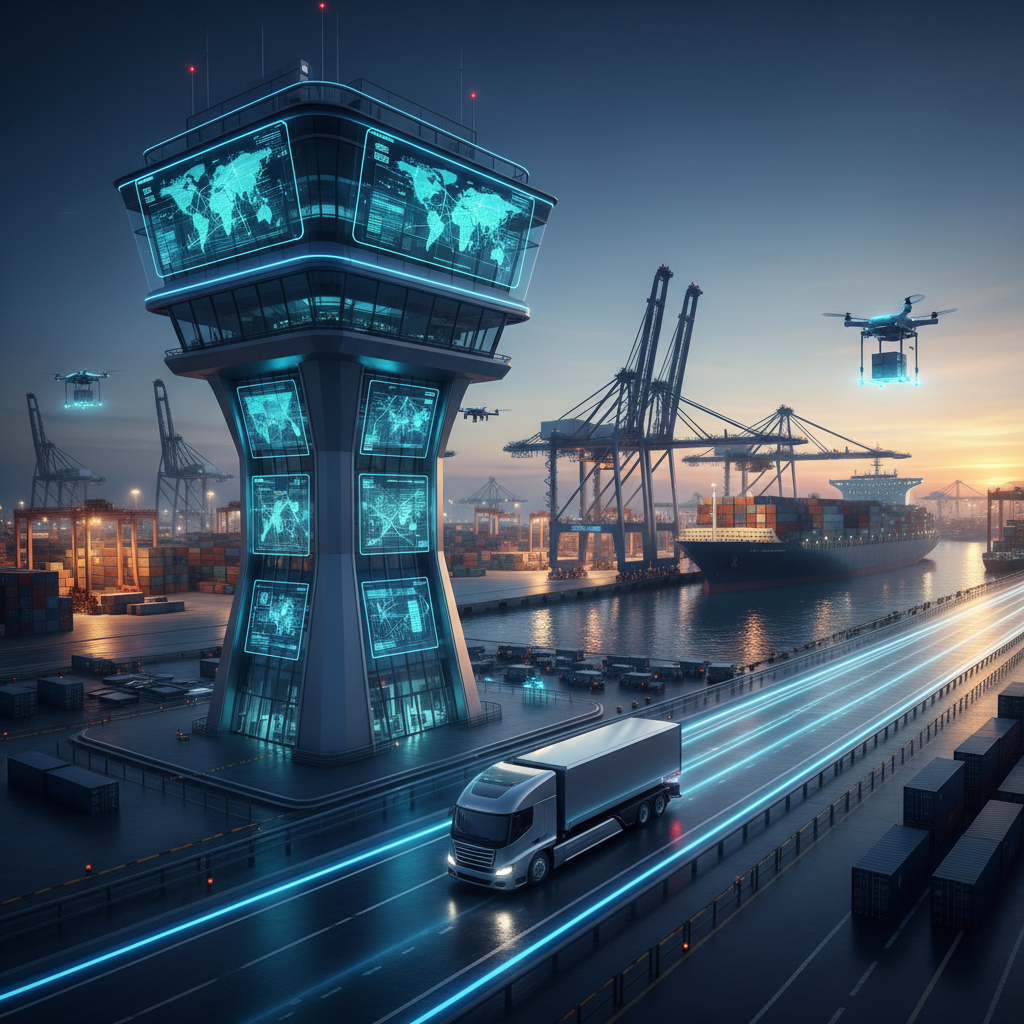
How this impacts the global supply chain
Uber's strategic workforce reduction, while often framed as a typical tech layoff, carries a deeper message for the global supply chain: artificial intelligence is not just automating individual tasks but is beginning to dismantle and reconfigure the very organizational frameworks that have historically managed logistics. This shift profoundly impacts how goods move across the globe, influencing flows, routes, capacity, and overall operations.
Firstly, in terms of flows, AI-driven optimization promises a new era of efficiency. By processing vast datasets on traffic, weather, port congestion, and carrier availability in real-time, AI can dynamically adjust shipment flows to avoid bottlenecks and minimize delays. This translates to more fluid movement of cargo, reducing dwell times at critical junctures and accelerating transit across multimodal networks. The traditional, often rigid, sequential handoffs between different organizational units are being replaced by integrated, AI-orchestrated workflows that span the entire journey.
Secondly, routes are becoming far more dynamic and intelligent. Instead of relying on static, pre-determined routes, AI can continuously evaluate and recommend optimal paths, taking into account unforeseen disruptions or emerging efficiencies. This could mean leveraging less conventional but faster routes, or proactively diverting cargo to avoid areas of high congestion or geopolitical instability. The elimination of organizational layers implies that decisions about routing can be made closer to the data source, with less bureaucratic overhead, leading to faster execution.
Regarding capacity, AI's impact is transformative. By enhancing predictive analytics, AI can forecast demand and supply imbalances with greater accuracy, allowing for more precise allocation of assets – be it container slots on a vessel, space in a warehouse, or truck availability. This leads to significantly improved capacity utilization, reducing wasted space and minimizing instances of empty backhauls. The traditional need for large teams dedicated to capacity planning and negotiation is diminished as AI systems can autonomously match available capacity with demand, optimizing for both cost and speed.
Finally, operations are being streamlined and de-hierarchized. The very organizational structures that Uber is reportedly eliminating are often layers of human coordination, oversight, and manual decision-making. AI is stepping into these roles, providing automated decision support, predictive maintenance scheduling, and real-time operational adjustments. This fosters a more agile and responsive operational environment, where disruptions are anticipated and mitigated with minimal human intervention. The supply chain moves from a command-and-control structure to a more distributed, AI-enabled network where data dictates action, reducing the need for numerous managerial layers.
Global financial impact
The restructuring driven by AI in logistics carries significant financial and cost implications for all stakeholders in global trade: shippers, carriers, and the broader economy.
For shippers, the primary financial benefit comes from reduced logistics costs and improved predictability. AI-driven efficiencies in routing, capacity utilization, and operational streamlining directly translate into lower freight expenditures. Faster, more reliable transit times mean shippers can reduce their reliance on expensive safety stock, leading to optimized inventory holding costs. Furthermore, enhanced visibility and proactive disruption management can significantly cut down on demurrage and detention charges, which often accrue due to unforeseen delays or inefficient port operations. The ability to get products to market faster also provides a competitive edge, potentially boosting revenue and market share.
Carriers stand to gain substantially from optimized asset utilization and reduced operational overhead. AI can ensure that trucks, vessels, and aircraft are filled to optimal capacity, minimizing wasted space and fuel consumption. Automated planning and dispatching reduce the need for large teams of human planners and dispatchers, leading to significant labor cost savings. While the initial investment in AI technology can be substantial, the long-term returns from increased efficiency, reduced operational errors, and improved profitability are compelling. However, this also poses a challenge: smaller carriers who cannot afford the necessary technological investments might struggle to compete, potentially leading to consolidation within the industry.
For trade at large, the widespread adoption of AI in logistics promises a more efficient, resilient, and cost-effective global trading environment. Reduced friction and improved predictability in supply chains can stimulate international trade by making it easier and cheaper to move goods across borders. This can lead to lower consumer prices for imported goods, increased competitiveness for businesses engaged in global commerce, and potentially higher economic growth. The shift away from complex, multi-layered organizational structures towards more direct, AI-managed processes can unlock new levels of efficiency, contributing to overall economic productivity and reducing waste throughout the supply chain ecosystem.
How MGS can help navigate today's global trade environment
In an environment where AI is streamlining organizational structures and demanding real-time, data-driven decision-making, a shipment-visibility control tower like MGS becomes an indispensable tool for operators. MGS directly addresses the challenges and opportunities presented by this AI-driven transformation.
Firstly, the foundation of AI's power is data. As AI takes on more complex roles traditionally handled by human organizational layers, it requires a constant, accurate, and comprehensive feed of information. MGS provides precisely this by aggregating real-time data from diverse sources – carriers, ports, customs, IoT devices, and more – into a single, unified platform. This real-time, consolidated visibility is crucial for AI systems to make informed decisions about routing, capacity, and operational adjustments, effectively acting as the central nervous system for an AI-powered supply chain.
Secondly, with fewer human layers for oversight, the remaining human operators need powerful tools to manage exceptions and disruptions. MGS's proactive disruption management capabilities are invaluable here. By leveraging its comprehensive data, MGS can identify potential delays, deviations, or risks before they escalate. This allows AI-driven systems (or human operators using AI-powered insights) to trigger automated responses, such as re-routing a shipment, adjusting inventory levels, or communicating with affected parties, significantly reducing the impact of unforeseen events. This aligns perfectly with the trend of reducing manual intervention and empowering AI to handle routine and even complex problem-solving.
Furthermore, the rich, standardized, and high-quality data collected and presented by MGS is critical for training and refining AI models. As companies invest in AI for forecasting, optimization, and automation, they need robust datasets to ensure these models are accurate and effective. MGS provides this essential data infrastructure, enabling continuous improvement of AI algorithms that drive efficiency and cost savings across the supply chain.
Finally, by automating data collection, tracking, and communication, MGS inherently reduces the need for manual tasks that often reside within the organizational layers being streamlined by AI. It empowers fewer individuals to manage more complex operations by providing them with actionable insights and automated workflows, thus complementing the broader trend of organizational flattening and efficiency gains driven by artificial intelligence.
Demand–supply analysis & improvement
The implications of AI-driven organizational restructuring, as exemplified by Uber, point directly to significant improvements in demand-supply matching within global logistics. The core insight is that AI's ability to eliminate organizational structures stems from its capacity to manage complexity and make decisions more efficiently than traditional human hierarchies, particularly in balancing demand and supply.
On the demand side, AI significantly enhances forecasting accuracy. By analyzing vast quantities of historical data, market trends, external factors (like weather or economic indicators), and even social media sentiment, AI can predict consumer demand with unprecedented precision. This reduces the guesswork inherent in traditional demand planning, leading to more optimized production schedules and inventory levels. The organizational structures that previously managed these complex forecasting processes, often involving multiple departments and manual data aggregation, become less necessary as AI systems can perform these functions autonomously and with greater fidelity.
Regarding supply, AI optimizes the allocation and movement of goods to meet that forecasted demand. If organizational structures are being eliminated, it's because AI can handle the intricate task of matching available supply (from raw materials to finished products) with demand across a distributed network more effectively. This includes optimizing manufacturing schedules, warehouse placement, and, crucially, the transportation of goods. AI can dynamically adjust supply routes and capacity based on real-time conditions, ensuring that products arrive where and when they are needed, minimizing both stockouts and oversupply.
Concrete improvement levers for businesses seeking to capitalize on this trend include: investing in advanced AI-driven demand forecasting platforms that integrate with sales and marketing data; implementing real-time inventory management systems that leverage AI to optimize stock levels across multiple locations; and deploying AI-powered dynamic routing and capacity allocation platforms for transportation. Furthermore, the organizational improvement lever is to actively assess and streamline internal processes, identifying where AI can replace or significantly reduce the need for hierarchical approvals and manual coordination. This involves a strategic shift towards empowering AI to make operational decisions within defined parameters, allowing human teams to focus on strategic oversight and exception management, rather than day-to-day transactional tasks.
Source: Logistics Viewpoints — https://logisticsviewpoints.com/2026/09/02/ubers-restructuring-shows-where-ai-in-logistics-is-really-going/