
MGS Insights
The Control Tower
For enquiries on articles, speaking opportunities and general inspiration with industry data trends — write to us!
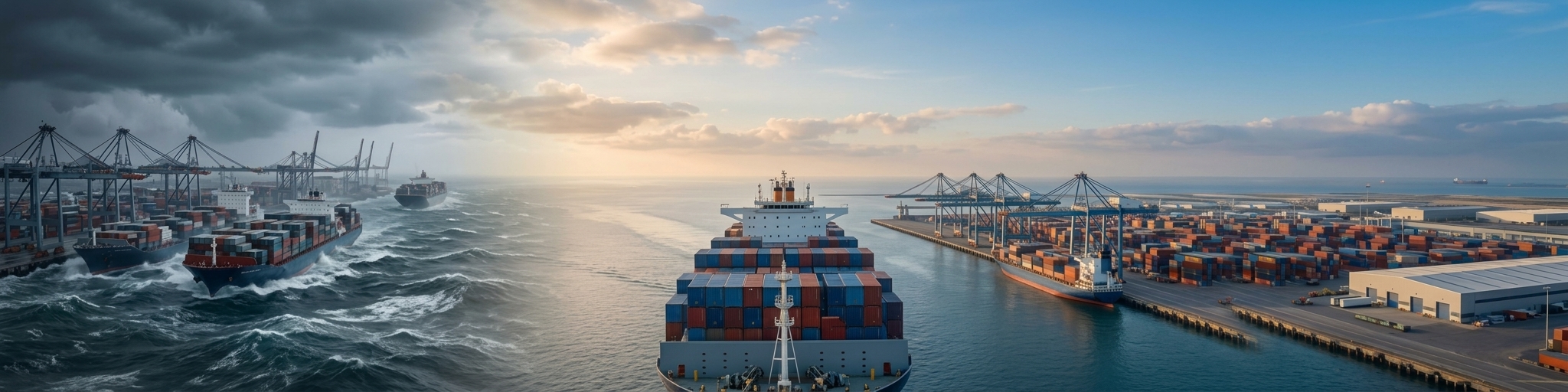 OperationsFrom “Where Is It?” to “What’s Next?”: How MG Ship Helps Brands Cut Logistics Cost, De-Risk Operations, and Focus on Expansion
 IndustryCainiao's Mexico Expansion: A Catalyst for E-commerce Logistics in Latin America
 FinanceSumitomo's Strategic Asset Shifts: A Conceptual Framework for Capital Efficiency
 Data InsightsThe Evolving WMS: From Warehouse Core to Supply Chain Nerve Center
 OperationsAI's Quiet Revolution: Beyond Job Cuts to Supply Chain Structure Transformation
 FinanceStrategic Liquidity: Unlocking Business Value from Investment Portfolios
 FinanceNavigating the Headwinds: Strategic Responses to Surging Treasury Yields and Energy Costs
 IndustrySailing Towards Sustainability: Maersk's Wind Pilot and the Future of Supply Chain Visibility
 FinanceCapitalizing on Potential: Strategic Value Creation for a Cash-Rich, Pre-Revenue Enterprise
 Data InsightsBridging the Gaps: Why Supply Chain's 'Operating System' is the New Imperative

MG Ship: Your Partner in the AI Freight Revolution
AI-related goods, from semiconductors to computing hardware, have replaced e-commerce as the main driver of trans-Pacific air freight. Because high-value AI supply chains demand maximum speed and reliability, MG Ship has introduced an AI-powered logistics module. Featuring dynamic route optimization, predictive carrier scoring, and scenario planning, this technology transforms global trade logistics into a competitive advantage, cutting operational costs by up to twenty-five percent while minimizing delay risks across supply chains.
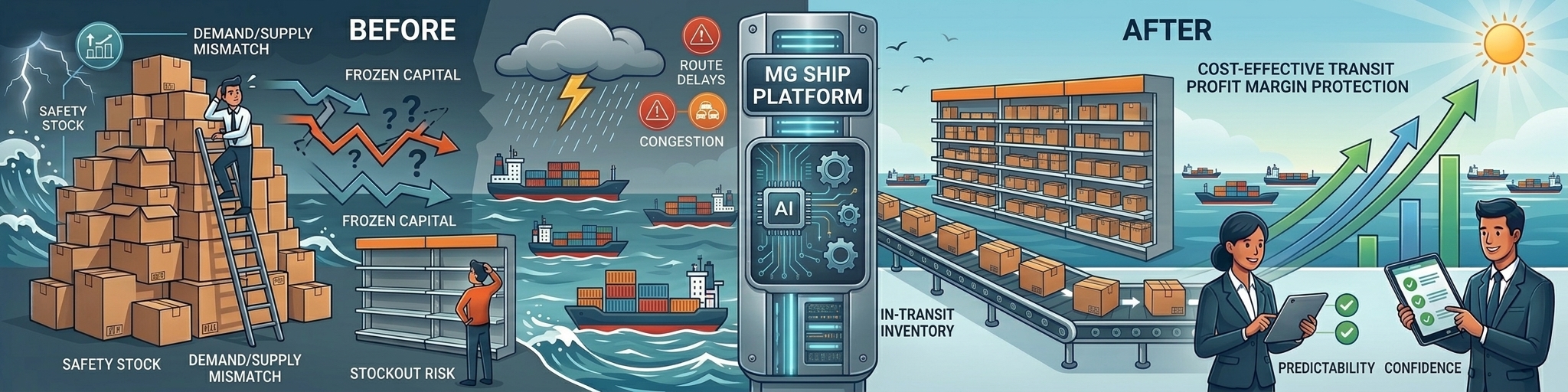
From PepsiCo's Profit Squeeze to Retail Resilience: How MG Ship Helps Retailers Balance Supply and Demand Before They Ship

Navigating the Storm: Geopolitical Tensions Reshaping Global Cargo Movement

Ethanol Bunkering: A New Horizon for Sustainable Maritime Logistics

Panama Canal Drought: Navigating the Supply Chain Bottleneck
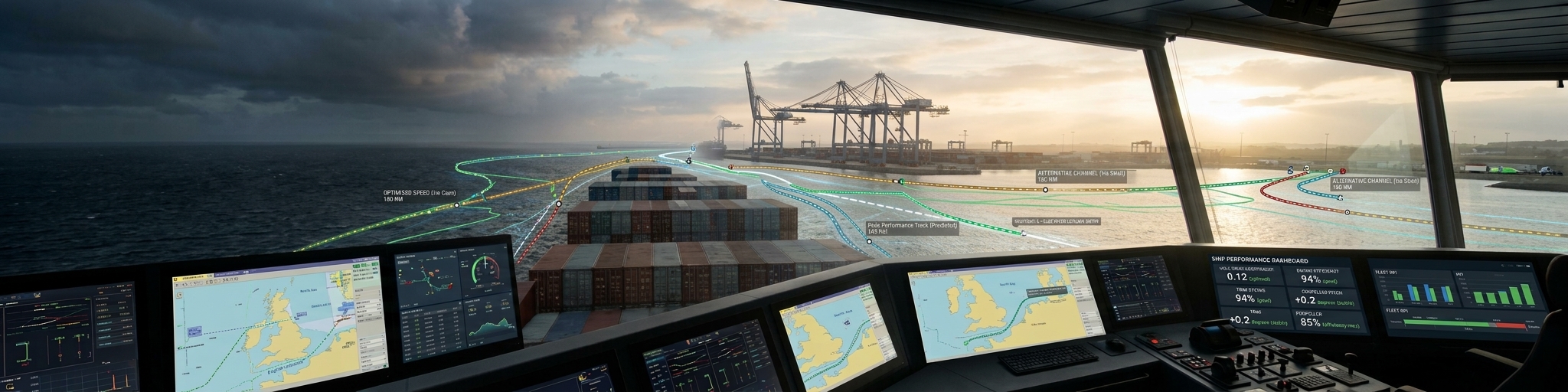
Navigating Logistics Disruptions: Why Proactive Multimodal Intelligence is No Longer Optional

When Typhoon Recovery Becomes the Real Risk: How MG Ship’s Predictive AI Stabilises Global Supply Chains

More from the control tower

Navigating the Q4 Freight Storm: A Control Tower Perspective on Soaring Costs
As Q4 approaches, shippers face unprecedented freight costs driven by structural changes, high fuel prices, and capacity constraints. This brief analyzes the impact on global supply chains and how real-time visibility platforms like MGS offer critical navigation tools.

AI Infrastructure Boom Fuels Global Trade Surge, Outweighing Geopolitical Headwinds
A recent study reveals that the global race to build AI infrastructure is driving an unprecedented surge in goods trade, overcoming the dampening effects of tariffs and geopolitical conflicts. This shift presents both opportunities and challenges for the global supply chain.

From Alerts to Action: The New Era of Supply Chain Risk Management
Supply chain risk management is evolving beyond mere alert generation to focus on actionable operational responses. This shift emphasizes understanding the precise impact of disruptions on products, inventory, and revenue, enabling more effective global trade navigation.

Geopolitical Currents: Navigating Trade Disruptions in a Volatile World
Geopolitical tensions are increasingly reshaping global supply chains. This MGS Insight brief examines how proposed bans, like the one on Russian grain, impact cargo movement, maritime routes, tariffs, and the critical role of shipment visibility in maintaining resilience.

Navigating Perilous Waters: Strait of Hormuz Attacks and the Unfolding Supply Chain Crisis
Recent vessel attacks in the Strait of Hormuz underscore the escalating risks in critical maritime chokepoints. This brief analyzes the immediate and long-term consequences for global cargo movement, from disrupted routes and increased costs to heightened supply chain volatility, and highlights the indispensable role of advanced visibility platforms in mitigating these challenges.

Black Sea Under Siege: Drone Attacks Escalate Maritime Supply Chain Risks
Recent drone attacks in the Black Sea, leading to the loss of life and cargo vessels, highlight a critical escalation of geopolitical risks impacting vital maritime trade lanes. This brief analyzes the immediate and long-term implications for supply chains and outlines strategies for shippers to navigate this volatile environment.

Navigating the Storm: How Weather is Reshaping Global Cargo Flows
Unpredictable weather patterns are increasingly challenging global supply chains, impacting critical lanes, facilities, and transport modes. This brief explores the multifaceted disruptions caused by atmospheric events and outlines proactive strategies shippers can adopt to maintain resilience and continuity.

Strategic Assortment Trimming: A Multi-Dimensional Path to Financial and Operational Excellence
Retailers are strategically reducing product assortments to unlock significant value across cost, cash flow, margin, productivity, and growth. This brief explores how this focused approach drives efficiency and financial health.

Kroger's Strategic Realignment: AI-Driven Efficiency and Cost Reduction
Kroger's decision to cut 37% of its corporate workforce over three years, driven by AI expansion, signals a significant strategic shift focused on operational efficiency, cost reduction, and workforce optimization. This move aims to streamline operations, enhance productivity, and ultimately impact grocery pricing for consumers.