
Navigating Perilous Waters: Strait of Hormuz Attacks and the Unfolding Supply Chain Crisis
Recent vessel attacks in the Strait of Hormuz underscore the escalating risks in critical maritime chokepoints. This brief analyzes the immediate and long-term consequences for global cargo movement, from disrupted routes and increased costs to heightened supply chain volatility, and highlights the indispensable role of advanced visibility platforms in mitigating these challenges.
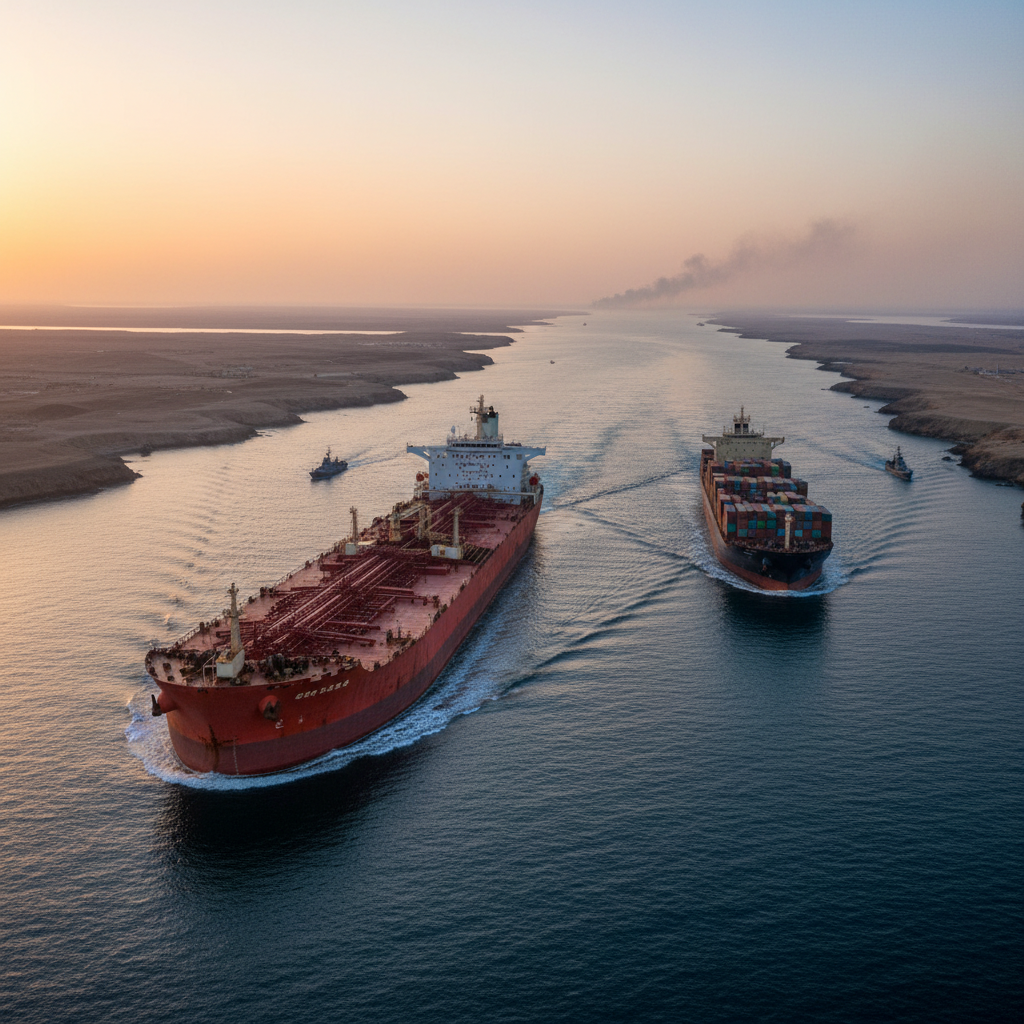
Impact on Shipping Routes and Transit Times
The recent report of four vessel attacks in the Strait of Hormuz, involving three tankers and a container ship, immediately signals a profound disruption to global maritime logistics. The Strait of Hormuz is arguably the world's most critical oil chokepoint, but its importance extends far beyond energy, serving as a vital artery for containerized cargo connecting Asia, the Middle East, and Europe. Attacks in such a strategically significant waterway compel shipping companies to reassess their operational risk profiles, often leading to immediate and costly route diversions.
The most prominent alternative for vessels transiting between Asia and the West is the significantly longer journey around the Cape of Good Hope. This rerouting adds thousands of nautical miles to voyages, directly translating into extended transit times – potentially weeks for some routes. For example, a journey from the Persian Gulf to Europe could see its duration increase by 10-14 days. These delays ripple through the entire supply chain: goods arrive later, impacting inventory levels, manufacturing schedules, and retail replenishment cycles. Perishable goods, time-sensitive components, and just-in-time (JIT) manufacturing models are particularly vulnerable to such protracted delays. Furthermore, longer routes necessitate increased fuel consumption, driving up operational costs for carriers, which are inevitably passed on to shippers through higher freight rates. The presence of a container ship among the attacked vessels underscores that this is not solely an energy sector issue; general cargo, consumer goods, and industrial components are equally exposed to these disruptions, affecting a wide spectrum of industries globally. An MGS shipment-visibility control tower becomes crucial here, offering real-time tracking and predictive analytics to anticipate delays and model the impact of rerouting on estimated arrival times, enabling proactive communication with downstream partners and customers.
Increased Insurance Premiums and Security Costs
Geopolitical instability and direct attacks on commercial shipping in critical maritime zones invariably lead to a sharp escalation in operational costs, most notably through increased insurance premiums and enhanced security measures. Following incidents like the four vessel attacks in the Strait of Hormuz, maritime insurers swiftly designate the affected region as a 'war risk zone' or 'enhanced risk area.' This reclassification triggers substantial surcharges, known as war risk premiums, which are levied on top of standard insurance rates. For vessels, including the three tankers and the container ship mentioned in the report, operating in or even transiting near the Strait of Hormuz, these premiums can add hundreds of thousands of dollars to the cost of a single voyage, depending on the vessel's value and cargo.
Beyond insurance, the perceived threat necessitates a significant uplift in onboard security. This can range from hiring private armed security personnel – a costly endeavor that requires specialized logistical arrangements and compliance with international regulations – to investing in advanced surveillance equipment, hardened safe rooms (citadels), and enhanced crew training for emergency procedures. These additional security protocols, while essential for protecting lives and assets, contribute further to the overall cost of maritime transport. The cumulative effect of higher insurance and security expenses directly impacts the profitability of shipping lines and, by extension, the affordability of goods for consumers. Shippers absorb these costs, either through direct surcharges or embedded within elevated freight rates, ultimately contributing to inflationary pressures across various sectors. For an MGS platform, integrating real-time risk alerts and cost impact analysis can help shippers understand the immediate financial implications of operating in or diverting from high-risk zones, allowing for more informed decision-making regarding route selection and carrier choice.
Supply Chain Volatility and Disruptions
The attacks in the Strait of Hormuz introduce a significant layer of volatility and unpredictability into global supply chains, moving beyond mere delays and cost increases to fundamentally challenge established logistical paradigms. The uncertainty surrounding future incidents in critical chokepoints like Hormuz makes it exceedingly difficult for businesses to forecast lead times, manage inventory efficiently, and maintain consistent production schedules. For industries heavily reliant on global supply chains, such as automotive, electronics, and retail, this volatility can lead to a cascade of disruptions.
Manufacturers might face shortages of critical components, forcing production slowdowns or stoppages. Retailers could experience stockouts of popular products, leading to lost sales and customer dissatisfaction. Energy markets, directly impacted by attacks on tankers, face price spikes and supply concerns, affecting everything from industrial operations to consumer energy costs. The traditional 'just-in-time' inventory management model, which minimizes warehousing costs by relying on precise and timely deliveries, becomes highly vulnerable in such an environment. Companies are increasingly compelled to consider 'just-in-case' strategies, building larger buffer stocks and diversifying sourcing, which in turn ties up capital and increases warehousing expenses. This shift represents a fundamental re-evaluation of supply chain resilience versus efficiency. An MGS control tower provides the critical visibility needed to navigate this volatility. By offering real-time tracking of all four attacked vessels (three tankers and one container ship) and their cargo, alongside predictive analytics for potential disruptions, it allows businesses to identify at-risk shipments, assess the impact on their inventory, and proactively explore alternative sourcing or transportation options. This capability transforms reactive crisis management into proactive risk mitigation, enabling businesses to adapt more swiftly to unforeseen geopolitical events.
Role of Technology (MGS) in Mitigating Disruptions
In an era defined by escalating geopolitical risks and the resulting disruptions to cargo movement, advanced technology platforms like an MGS shipment-visibility control tower are no longer a luxury but an essential tool for maintaining supply chain resilience. The incidents in the Strait of Hormuz, involving four vessels, including tankers and a container ship, vividly illustrate the urgent need for comprehensive, real-time oversight of global logistics.
An MGS platform provides end-to-end visibility across the entire supply chain, from origin to destination. This means not only tracking the precise location of every vessel and container in real-time but also integrating data from various sources – including port operations, weather patterns, and geopolitical risk assessments. When an event like the Strait of Hormuz attacks occurs, an MGS system immediately highlights affected shipments, identifies vessels transiting the high-risk area, and flags potential delays or diversions. This proactive alerting capability allows supply chain managers to understand the immediate impact on their cargo, whether it's on one of the three tankers or the container ship, or simply a vessel in the vicinity.
Beyond mere tracking, an MGS control tower offers powerful analytical capabilities. It can model the impact of rerouting decisions, such as diverting around the Cape of Good Hope, calculating new estimated arrival times, fuel consumption, and associated costs. This enables rapid, data-driven decision-making regarding alternative routes, modes of transport (where feasible), or adjustments to production schedules. Furthermore, by providing a single source of truth for all stakeholders – shippers, carriers, and logistics providers – an MGS platform facilitates seamless communication and collaboration, ensuring everyone operates with the most current information. This transparency is vital for managing customer expectations, negotiating with carriers, and minimizing the financial repercussions of unforeseen disruptions. In essence, an MGS control tower transforms complex, volatile supply chain environments into manageable, visible operations, empowering businesses to respond effectively and maintain continuity amidst geopolitical challenges.
Source: Ship & Bunker — https://shipandbunker.com/news/emea/490909-ukmto-reports-four-vessel-attacks-in-strait-of-hormuz