
Geopolitical Crossroads: Navigating the 'New Normal' of Supply Chain Disruption
Geopolitical events are no longer isolated incidents but a persistent force reshaping global cargo movement. This brief analyzes the profound consequences for maritime routes, airspace, trade policies, and overall supply chain resilience, highlighting the critical role of advanced visibility platforms.
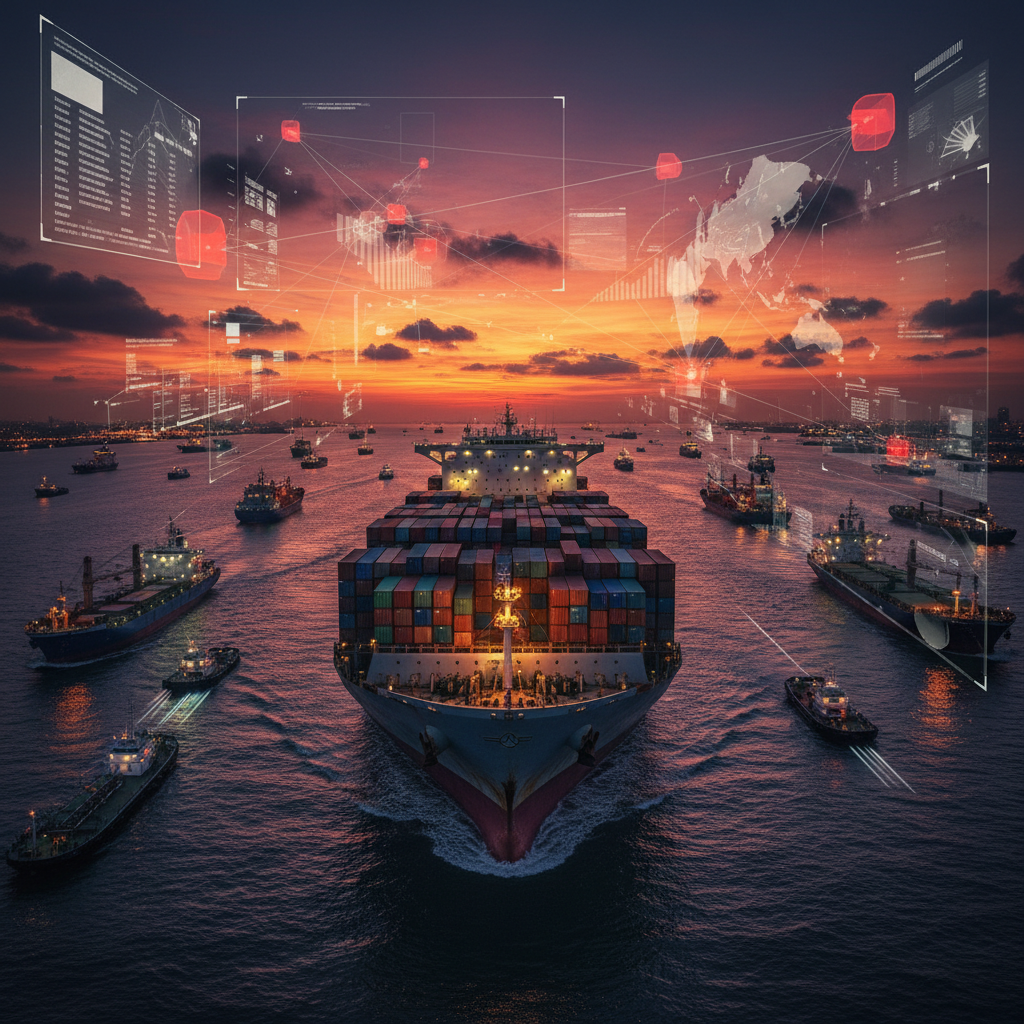
Introduction: The New Normal of Disruption
Global supply chains are currently operating in an era where geopolitical events are not merely episodic disruptions but a foundational, persistent force. The concept of 'Hormuz Disruption,' as highlighted in recent industry discussions, serves as a powerful metaphor for this pervasive instability. It signifies that critical choke points and established trade arteries are increasingly vulnerable, and the ripple effects extend far beyond immediate flashpoints. For logistics professionals, this means moving beyond reactive crisis management to a proactive, strategic posture. The predictability of global trade routes, once a cornerstone of supply chain planning, has given way to an environment of constant flux, demanding unprecedented agility and foresight from shippers, carriers, and logistics providers alike. Understanding these shifts and their tangible consequences for cargo movement — from revised routes to altered trade dynamics — is paramount for maintaining operational continuity and competitive advantage.
Impact on Maritime Routes and Waterways
Geopolitical tensions directly translate into significant alterations for maritime shipping, the backbone of global trade. When key waterways become high-risk zones, carriers are often compelled to reroute vessels, adding thousands of nautical miles and days or even weeks to transit times. This not only inflates fuel consumption and operational costs but also ties up valuable vessel capacity for longer periods, leading to potential equipment shortages and schedule delays across the network. Insurance premiums for voyages through perceived danger zones skyrocket, further increasing freight rates. The cascading effect includes port congestion at alternative hubs, strain on hinterland transportation, and a general slowdown in the velocity of goods. For industries reliant on just-in-time inventory, these extended lead times necessitate a fundamental re-evaluation of stock levels and delivery commitments. A robust shipment-visibility control tower, such as MGS, becomes indispensable here, offering real-time vessel tracking, predictive ETA updates, and alerts for route deviations, enabling swift re-planning and communication with stakeholders.
Airspace Restrictions and Air Cargo
Air cargo, typically reserved for high-value, time-sensitive, or urgent shipments, is equally susceptible to geopolitical turbulence. Conflicts or diplomatic disputes can lead to the sudden closure of vast swathes of airspace, forcing airlines to implement significantly longer flight paths. These diversions increase fuel burn, extend flight durations, and can necessitate additional technical stops, impacting both cost and efficiency. Furthermore, longer routes often mean reduced cargo capacity on individual flights due to increased fuel load requirements, tightening an already constrained market. The economic consequences are substantial, manifesting as higher air freight rates, reduced available capacity, and delayed delivery of critical components or finished goods. Businesses relying on air freight for their global distribution must contend with increased lead times and costs, potentially impacting product launch schedules or the availability of perishable items. An MGS control tower provides crucial real-time flight tracking and alerts for airspace changes, empowering logistics teams to identify alternative air routes or modes of transport and mitigate potential delays.
Tariffs, Sanctions, and Trade Flows
Tariffs and sanctions, often deployed as tools of geopolitical leverage, introduce significant friction into global trade flows. Tariffs directly increase the cost of imported goods, making certain products less competitive or prompting businesses to seek alternative sourcing locations. Sanctions, on the other hand, can outright prohibit trade with specific countries or entities, forcing companies to sever existing supply relationships and reconfigure their entire supply chains. These measures lead to a complex recalculation of landed costs, a re-evaluation of market access, and a push towards diversification of manufacturing bases and supplier networks. The administrative burden of compliance with evolving sanctions regimes is also considerable. The result is often a less optimized, more expensive, and geographically dispersed supply chain, driven by geopolitical necessity rather than purely economic efficiency. MGS platforms can assist by providing granular visibility into goods in transit, helping companies navigate complex customs requirements and adapt to changes in trade policy by identifying impacted shipments and facilitating re-routing or alternative sourcing strategies.
Consequences for Supply Chain Resilience
The cumulative effect of these disruptions is a profound challenge to supply chain resilience. The traditional models of lean, globally optimized supply chains are being tested by an environment characterized by heightened volatility, increased complexity, and systemic risk. Businesses face greater uncertainty in forecasting demand, managing inventory, and guaranteeing delivery timelines. The cost of doing business rises due not only to direct logistical expenses but also to the need for greater redundancy, buffer stocks, and diversified sourcing strategies. The ability to absorb shocks and adapt quickly becomes a critical differentiator. This necessitates a shift towards more robust, agile, and transparent supply chains. A comprehensive shipment-visibility control tower, like MGS, is instrumental in building this resilience. By providing end-to-end visibility, real-time alerts, and data-driven insights, it empowers organizations to anticipate potential disruptions, assess their impact, and execute rapid, informed responses, thereby transforming reactive measures into proactive risk management.
The Role of Technology in Navigating Disruption
In this 'new normal' of geopolitical instability, advanced technology is no longer a luxury but a strategic imperative. A sophisticated shipment-visibility control tower platform, such as MGS, provides the critical intelligence layer needed to navigate complex and rapidly changing logistics landscapes. These platforms aggregate data from multiple sources – carriers, ports, customs, weather, and geopolitical intelligence feeds – to offer a unified, real-time view of all cargo movements. This enables businesses to monitor shipments across all modes, identify potential delays or diversions caused by geopolitical events, and receive proactive alerts. Beyond mere tracking, advanced control towers leverage predictive analytics to forecast potential disruptions and their impact, allowing for scenario planning and the identification of alternative routes or modes before a crisis fully materializes. This level of granular visibility and predictive capability is essential for maintaining operational continuity, managing customer expectations, and making agile, data-backed decisions in a volatile global environment.
Strategic Imperatives for Shippers and Carriers
To thrive amidst ongoing geopolitical disruption, both shippers and carriers must adopt a series of strategic imperatives. Firstly, diversification is key: diversifying sourcing locations, manufacturing footprints, transportation modes, and even carrier partnerships reduces reliance on any single vulnerable point. Secondly, businesses must invest heavily in scenario planning and stress-testing their supply chains against various geopolitical contingencies. This includes identifying critical choke points, assessing alternative routes, and understanding the financial implications of different disruption scenarios. Thirdly, continuous monitoring of the global geopolitical landscape, integrated with real-time supply chain visibility, is non-negotiable. This enables early warning and rapid response. Finally, fostering strong, collaborative relationships with logistics partners and technology providers is vital. By embracing these strategies and leveraging platforms like MGS for unparalleled visibility and control, organizations can transform geopolitical challenges into opportunities for building more resilient, adaptable, and ultimately, more competitive supply chains for the future.
Source: Ship & Bunker — https://shipandbunker.com/news/apac/283037-sibcon2026-hormuz-disruption-is-the-new-normal-and-shipping-should-plan-for-the-next-crisis