
Weather's Shifting Tides: Panama Canal Recovery Offers Reprieve, Highlights Supply Chain Vulnerability
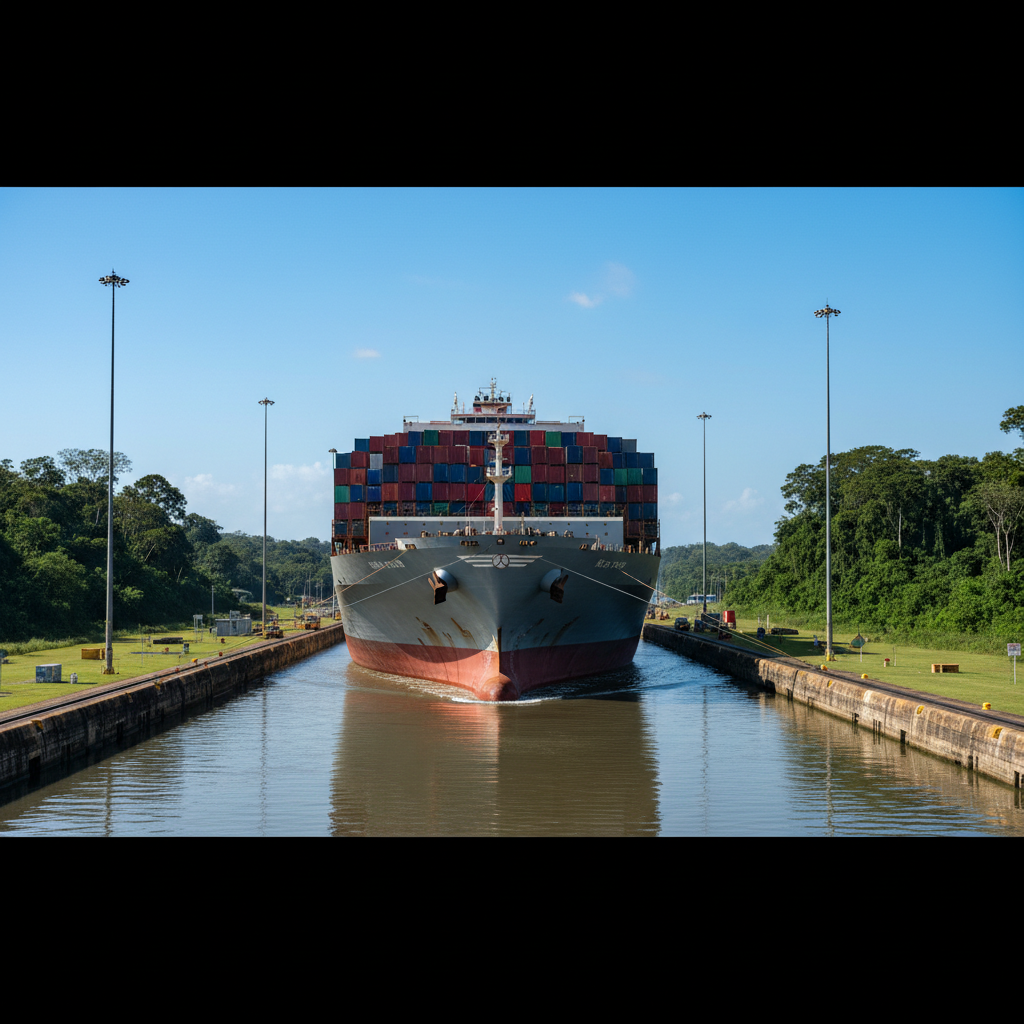
Recent rainfall has eased restrictions at the Panama Canal, improving transit capacity and offering a temporary reprieve for global supply chains. This development underscores the critical impact of weather on key maritime lanes and the ongoing need for robust visibility and adaptive strategies for shippers.
Introduction
Global supply chains are inherently exposed to external factors, with weather events consistently among the most disruptive. From extreme temperatures to severe storms, climatic conditions ripple through the entire logistics ecosystem. The Panama Canal, a vital artery for global trade, recently faced significant operational challenges due to drought. However, a recent shift in weather patterns has brought much-needed relief, offering a crucial window into both the fragility and resilience of our interconnected supply networks. This brief explores how these weather-induced changes impact specific lanes, facilities, and modes, and critically, what proactive steps shippers can take to navigate such volatility.
Impacted Lanes
The Panama Canal serves as a pivotal shortcut, connecting the Pacific and Atlantic oceans and significantly reducing transit times for vessels between Asia and the US East Coast, as well as South America and Europe. Its strategic importance means any disruption has far-reaching consequences across these major trade lanes. For months, severe drought in its watershed led to unprecedented restrictions on vessel draft and daily transits. This forced carriers to either lighten loads, incurring additional costs, or undertake lengthy reroutes around the Cape of Good Hope or through the Suez Canal. Both alternatives dramatically increased transit times, fuel consumption, and expenses, impacting global delivery schedules and inventory levels.
Recent improved rainfall, coupled with the Panama Canal Authority's water-saving initiatives, has allowed for an easing of these restrictions. More vessels can now transit daily with greater draft, carrying more cargo. While this provides immediate relief, it highlights the inherent instability of relying on a single, weather-sensitive choke point. Shippers on these critical lanes must recognize that while immediate pressure has lessened, the long-term threat of climate-induced disruptions remains, necessitating continuous re-evaluation of routing strategies and risk management.
Affected Facilities
The primary facility directly impacted by these weather fluctuations is the Panama Canal itself. As an engineered waterway relying heavily on a complex system of locks and freshwater lakes, its operational capacity is directly tied to water availability. During drought, the Canal Authority implements measures like reducing permissible vessel draft (meaning ships carry less cargo) and limiting daily transits to conserve water. These restrictions diminish the canal's throughput capacity, creating bottlenecks and delays.
For shippers, these operational constraints translate into longer waiting times, potential surcharges, and a general slowdown in goods flow. The recent decision to ease restrictions signifies a direct improvement in the Canal's operational efficiency, allowing smoother traffic and reducing immediate pressure on vessel scheduling. However, the experience serves as a stark reminder that even sophisticated infrastructure can be at the mercy of environmental conditions, necessitating constant monitoring and adaptive planning.
Modes of Transport Affected
The most immediate and significantly impacted mode of transport is ocean freight. Container ships, bulk carriers, and tankers, the backbone of global trade, rely heavily on efficient passage through waterways like the Panama Canal. When the Canal faces restrictions, these vessels are directly affected, leading to delays, increased costs, and capacity constraints due to reduced draft.
Beyond ocean freight, these disruptions have a cascading effect on intermodal transport. Goods destined for inland US locations, typically arriving at East Coast ports via the Panama Canal, experience delays. This impacts the scheduling of rail and truck services from these ports. A delayed vessel means delayed port operations, throwing off inland transportation networks. Shippers then contend with potential demurrage charges, expedited inland shipping costs, and disrupted supply to distribution centers. The recent easing of Canal restrictions will help alleviate some of these downstream intermodal pressures, allowing more predictable scheduling and potentially reducing costly expedited inland transport.
Shipper Strategies for Mitigation
In an era of increasing climate volatility, shippers must adopt proactive and flexible strategies to mitigate the impact of disruptions like those at the Panama Canal.
Firstly, diversification of routes and carriers is paramount. While the Panama Canal offers efficiency, sole reliance exposes supply chains to significant risk. Shippers should explore alternative routes, such as the Suez Canal for Asia-Europe trade, or trans-Pacific routes combined with transcontinental rail for US-bound cargo. Engaging multiple carriers also provides flexibility.
Secondly, strategic inventory management becomes crucial. While lean inventory models offer cost benefits, they can be brittle. Shippers might consider holding slightly higher safety stock for critical components or finished goods transiting vulnerable choke points, balancing this against carrying costs.
Thirdly, enhanced forecasting and planning capabilities are essential. Leveraging historical data and predictive analytics can help anticipate potential disruptions. Understanding seasonal weather patterns or long-term climate forecasts can inform proactive adjustments to shipping schedules or inventory levels.
Crucially, leveraging a shipment-visibility control tower like MGS offers a significant advantage. An MGS platform provides real-time, end-to-end visibility into cargo movements across all modes and geographies. When a disruption like the Panama Canal restrictions occurs, shippers with MGS can immediately:
- Identify impacted shipments and assess new estimated arrival times.
- Enable proactive decision-making to evaluate alternative routes, re-book cargo, or adjust inventory plans.
- Communicate effectively with stakeholders and customers, managing expectations. Without such granular visibility, reacting to sudden changes becomes a reactive, costly, and chaotic exercise.
Finally, fostering strong collaboration with logistics partners – carriers, freight forwarders, and customs brokers – is vital. Open communication and shared data lead to more agile responses and innovative solutions.
Outlook & Future Considerations
The recent easing of restrictions at the Panama Canal, while welcome, should not be viewed as a definitive end to weather-induced challenges. Instead, it serves as a powerful reminder of the increasing volatility climate change introduces into global supply chains. Scientific consensus points to more extreme and unpredictable weather patterns, meaning droughts, severe storms, and other climatic events are likely to become more frequent and intense.
For the Panama Canal, this implies that periods of low water levels and subsequent operational restrictions could become a recurring feature. Shippers and carriers must therefore integrate this long-term perspective into strategic planning. This includes ongoing investment in infrastructure resilience, and for shippers, a continuous focus on building adaptable, diversified, and data-driven supply chain models. The ability to quickly pivot, reroute, and adjust inventory based on real-time information will be the hallmark of resilient supply chains.
Conclusion
The Panama Canal's recent recovery from drought-induced restrictions offers a valuable lesson in the dynamic interplay between global trade and environmental factors. While immediate relief is positive, the episode underscores the inherent fragility of critical logistics arteries to weather variability. Shippers must move beyond reactive measures and embrace comprehensive strategies that include route diversification, intelligent inventory management, and robust technological solutions. A shipment-visibility control tower like MGS is no longer a luxury but a fundamental tool, empowering businesses with real-time insights needed to navigate an increasingly unpredictable world and transform potential disruptions into manageable challenges.
Source: gCaptain — https://gcaptain.com/panama-canal-adds-transit-capacity-as-rainfall-brings-relief/