
Weathering the Storm: Enhancing Supply Chain Visibility Amidst Climatic Disruptions
Unpredictable weather events are a constant challenge for global supply chains, creating delays, reroutes, and significant operational hurdles. This brief examines how climatic factors impact cargo movement across various lanes, facilities, and modes, and outlines proactive strategies for shippers, leveraging advanced visibility platforms to navigate these uncertainties.
The Unpredictable Element in Supply Chains
Global supply chains, intricate networks spanning continents and oceans, are inherently susceptible to a myriad of disruptions. Among these, the unpredictable and often severe impacts of weather stand out as a persistent challenge, creating a complex and frequently opaque operational landscape. Just as geopolitical events can render the maritime picture harder to verify, as seen in recent reports from critical choke points, adverse weather conditions similarly obscure the clear view of cargo movement, leading to delayed reports and uncertainty.
The increasing frequency and intensity of extreme weather phenomena, from tropical storms and dense fog to severe winter conditions and heatwaves, pose a significant threat to the seamless flow of goods. These events don't just cause momentary delays; they can trigger cascading effects across entire logistics networks, impacting schedules, increasing costs, and ultimately affecting customer satisfaction. For supply chain professionals, understanding the multifaceted ways weather disrupts cargo movement is paramount to building resilient and responsive operations. The core challenge lies in transforming an inherently unpredictable element into a manageable risk, demanding heightened visibility and adaptive strategies.
Affected Lanes: Navigating Nature's Fury
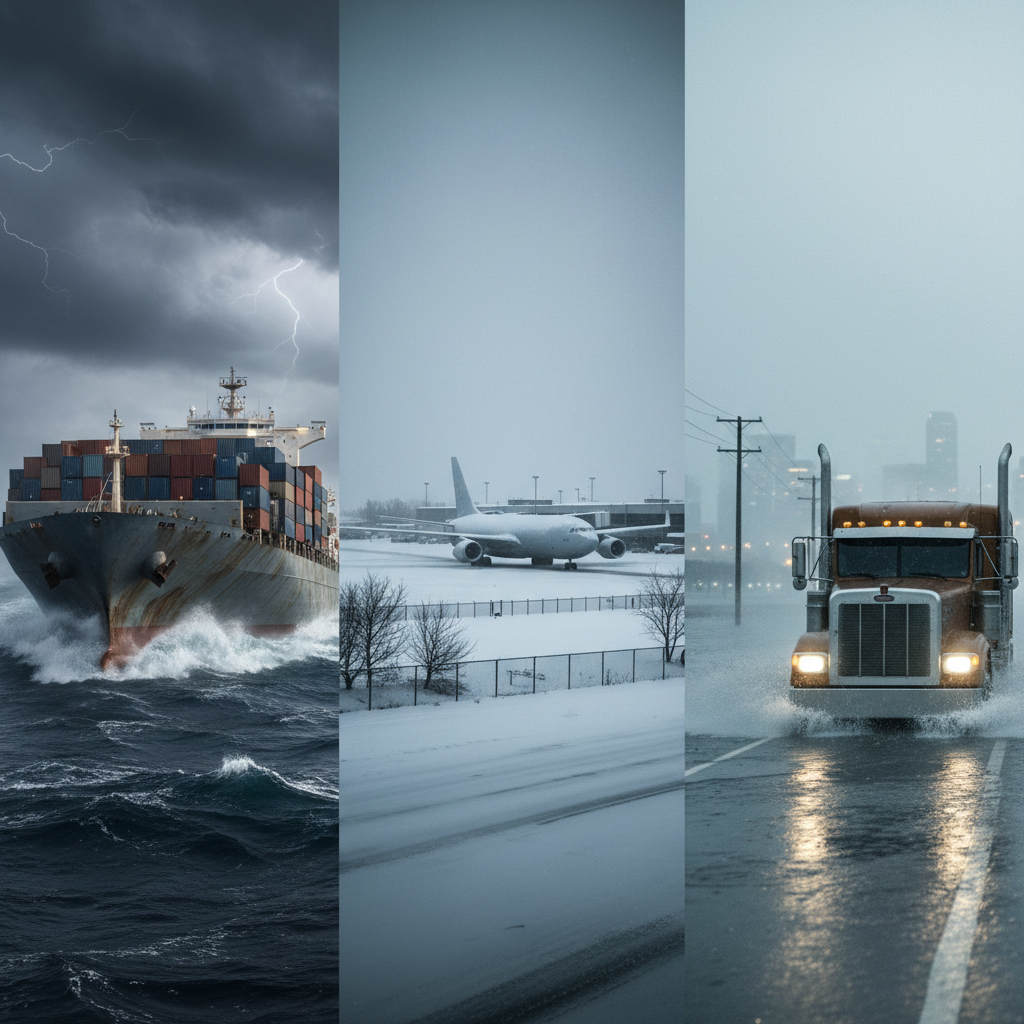
Weather phenomena directly impede the efficiency and safety of transportation lanes across all modes. Maritime shipping, the backbone of global trade, is particularly vulnerable. Ocean routes can be rendered impassable or extremely hazardous by severe storms, high winds, and heavy swells, forcing vessels to reroute, seek shelter, or significantly reduce speed. This leads to extended transit times and off-schedule arrivals. Similarly, dense fog can bring shipping lanes to a standstill, particularly in congested coastal areas and critical waterways, where visibility is essential for safe navigation. Icy conditions in polar regions or during winter months can necessitate icebreaker escorts or completely close routes, adding both cost and delay.
Air cargo lanes are equally susceptible. Thunderstorms, blizzards, and even strong crosswinds can lead to flight cancellations, diversions, or ground stops at airports. Volcanic ash plumes, though rare, can shut down vast swathes of airspace for extended periods. On land, road freight faces disruptions from heavy snowfall, ice, flooding, and high winds, which can close highways, make driving treacherous, and slow down delivery times. Rail networks are not immune; tracks can be damaged by floods, extreme heat can cause rails to buckle, and heavy snow can block lines or reduce train speeds. Each of these impacts on specific lanes underscores the critical need for real-time awareness of weather patterns and their localized effects on transportation arteries.
Impact on Facilities: Port and Terminal Vulnerabilities
Beyond the transit lanes themselves, critical logistics facilities—ports, airports, and distribution centers—are highly exposed to weather-related disruptions. Ports, situated at the interface of land and sea, are especially vulnerable. Tropical storms and hurricanes can necessitate full port closures, halting all vessel movements, cargo handling, and landside operations. High winds can prevent cranes from operating safely, reducing throughput even if the port remains technically open. Flooding, whether from heavy rainfall or storm surges, can inundate terminals, damage infrastructure, and disrupt access roads, paralyzing operations for days or weeks.
Airports face similar challenges. Heavy snow can close runways, leading to extensive flight delays and cancellations. Icing conditions require de-icing procedures, adding time and cost. Extreme heat can affect aircraft performance, sometimes limiting takeoff weight or requiring flight rescheduling. Inland distribution centers and warehouses can suffer from power outages during storms, making automated operations impossible. Flooding can damage inventory and infrastructure, while extreme temperatures can impact temperature-sensitive goods. The operational status of these facilities is a critical data point for shippers, as disruptions here can create bottlenecks that ripple through the entire supply chain, regardless of the status of the transportation lanes leading to them.
Modal Disruptions: Across Sea, Air, and Land
Each transportation mode experiences distinct forms of weather-induced disruption, compounding the complexity for shippers managing multi-modal networks.
Maritime: Vessels face direct impacts from storms, requiring rerouting or sheltering, leading to significant schedule deviations. Port congestion often follows severe weather events as vessels queue for berths, further exacerbating delays. Safety concerns for crew and cargo are paramount, sometimes necessitating cargo securing measures or even jettisoning in extreme conditions.
Air Cargo: Flight cancellations and delays are common during adverse weather, impacting time-sensitive and high-value shipments. Ground operations, including loading and unloading, can be slowed or halted due to lightning, high winds, or heavy precipitation, creating backlogs. Rerouting flights incurs additional fuel costs and can push cargo into less efficient connections.
Road Freight: Trucking operations are frequently hampered by hazardous driving conditions, including black ice, heavy rain, and reduced visibility from fog or snow. Road closures due to flooding, landslides, or fallen trees can force lengthy detours, extending delivery times significantly. Last-mile delivery, in particular, can become nearly impossible in severe local weather, directly impacting customer satisfaction.
Rail: Heavy snowfall can block tracks and switches, while extreme heat can cause thermal expansion of rails, leading to speed restrictions or even track buckling. Flooding can wash out sections of track or compromise bridges, requiring extensive repairs and long-term service interruptions. These modal-specific vulnerabilities highlight the need for a holistic view of the supply chain, allowing for agile adjustments across different transportation methods.
Shipper Strategies: Building Resilience
In the face of pervasive weather-related disruptions, shippers must adopt proactive and adaptive strategies to safeguard their supply chains. The foundation of resilience lies in comprehensive risk assessment and contingency planning. This involves identifying critical lanes and facilities most susceptible to specific weather patterns and developing alternative routes, modes, and warehousing options.
Diversification is a key tactic. Relying on a single lane, carrier, or port increases vulnerability. By utilizing multiple transportation modes and routes, shippers can mitigate the impact of a single point of failure. For instance, if ocean freight is delayed by a storm, having air cargo options for critical components can prevent production halts. Establishing strong communication channels with carriers, logistics partners, and even weather forecasting services ensures timely updates and allows for collaborative decision-making.
Furthermore, shippers should invest in robust inventory management strategies, including safety stock for critical items, to buffer against unexpected delays. However, the most transformative strategy involves leveraging advanced technology. The ability to anticipate, monitor, and react to weather events in real-time is no longer a luxury but a necessity for maintaining supply chain integrity and competitive advantage.
The MGS Advantage: Enhancing Visibility Amidst Uncertainty
This is where an advanced shipment-visibility control tower, like the MGS platform, becomes indispensable. In an environment where the 'maritime picture' can quickly become 'harder to verify' due to weather, MGS provides the clarity needed. Our platform aggregates real-time data from a multitude of sources—vessel AIS, flight trackers, GPS for trucks, port and airport operational status, and sophisticated weather forecasting models.
This comprehensive data stream allows shippers to move beyond reactive responses to proactive management. With MGS, you gain immediate insight into developing weather patterns that could impact your shipments, whether they are at sea, in the air, or on the road. The system can predict potential delays, identify affected lanes and facilities, and even suggest alternative routes or modes before disruptions fully materialize. This capability is crucial for mitigating the financial and reputational damage of unforeseen events.
By providing a single, unified view of all cargo movements against a backdrop of real-time weather intelligence, MGS empowers shippers to make informed decisions rapidly. It facilitates proactive communication with customers and partners, enabling timely adjustments to production schedules, inventory levels, and delivery expectations. In an era where supply chain resilience is paramount, an MGS control tower transforms uncertainty into actionable intelligence, ensuring that even when the elements conspire, your cargo remains visible and your operations remain agile.