
Navigating the New Geopolitical Currents: How Strategic Uncertainty is Reshaping Global Cargo Movement
Global trade corridors are increasingly becoming strategic assets, with geopolitical events disrupting established routes, airspace, and waterways. This brief analyzes the profound consequences for international trade and transport, from rerouting and delays to the complex impact of tariffs and sanctions, and highlights the critical role of real-time visibility in building supply chain resilience.
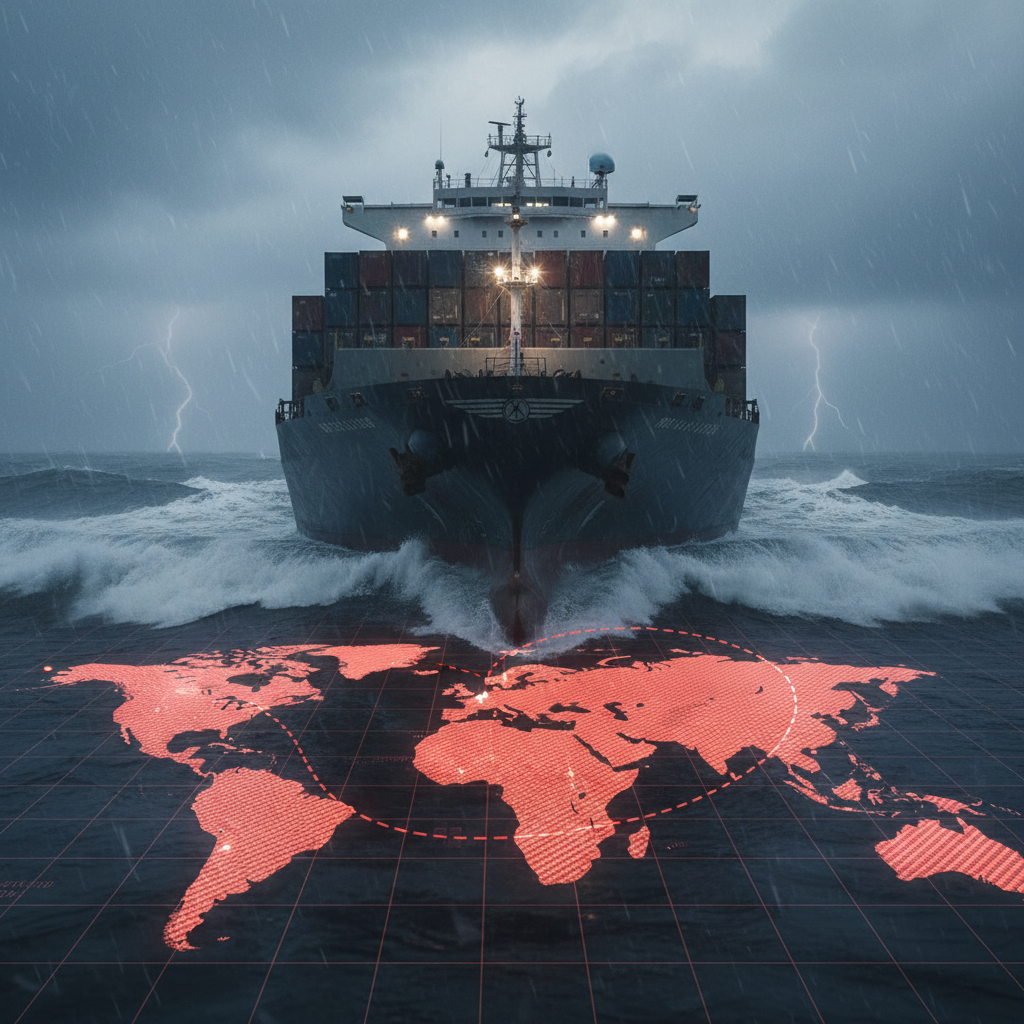
The Evolving Geopolitical Landscape of Trade
The global supply chain, once primarily driven by efficiency and cost optimization, is increasingly navigating a complex web of geopolitical pressures. What were historically considered neutral trade conduits – maritime routes, critical waterways, and international airspace – are now emerging as strategic assets in a shifting global power dynamic. This transformation means that the day-to-day operation of these vital corridors is no longer solely a logistical concern but a source of significant strategic uncertainty. Nations are asserting greater control over their sovereign territories and adjacent zones, viewing the coordination of cross-border trade not just through the lens of economic benefit, but also through the imperative of maintaining national security and influence. This emphasis on "corridor sovereignty" introduces a new layer of complexity, where the ability to move goods efficiently can be overshadowed by strategic considerations, fundamentally altering the calculus for international trade and transport. For supply chain professionals, this translates into a heightened need for adaptability and real-time insight into potential disruptions.
Disruptions to Maritime Routes and Waterways
Maritime shipping, the backbone of global trade, is particularly vulnerable to geopolitical tensions. Critical chokepoints, such as major canals and straits, can become flashpoints, leading to significant rerouting and delays. When a key waterway is restricted or deemed unsafe due to regional conflicts, piracy, or political blockades, vessels are often forced to take much longer alternative routes. For example, rerouting around an entire continent can add weeks to transit times, dramatically increasing fuel consumption, operational costs, and the risk of cargo spoilage or obsolescence. This not only inflates shipping expenses for carriers, which are then passed on to consumers, but also creates ripple effects across entire supply chains, delaying manufacturing inputs and finished goods. Port operations can also be affected, as sanctions or political disputes can lead to refusal of entry for certain vessels or cargo, causing congestion at alternative ports and further exacerbating delays. The predictability of maritime schedules, a cornerstone of modern logistics planning, is severely undermined in such environments, demanding greater flexibility and foresight from shippers.
Impact of Airspace Restrictions
Air cargo, while offering speed, is equally susceptible to geopolitical shifts, particularly through airspace restrictions. When nations close their airspace to specific airlines or countries, or when conflict zones render certain flight paths unsafe, air carriers must find alternative routes. These detours often involve flying longer distances, consuming more fuel, and increasing flight times. For time-sensitive and high-value goods, such as pharmaceuticals, electronics, or perishable items, these delays can be extremely costly, impacting product integrity and market delivery. Furthermore, restricted airspace can lead to increased air traffic in permitted corridors, causing congestion and further operational inefficiencies. The cascading effect includes higher operational costs for airlines, which are inevitably transferred to freight forwarders and ultimately to the end-consumer. The ability to maintain reliable air freight schedules becomes a significant challenge, forcing companies to build in greater buffer times or explore multi-modal alternatives, often at higher costs and with extended lead times.
The Double-Edged Sword of Tariffs and Sanctions
Tariffs and sanctions represent economic tools wielded in the geopolitical arena, but their impact on supply chains is profound and multifaceted. Tariffs, essentially taxes on imported goods, directly increase the cost of doing business, making certain products less competitive or entirely unviable. Companies often respond by seeking alternative sourcing locations, reconfiguring their manufacturing footprint, or absorbing the increased costs, which can strain profit margins. Sanctions, on the other hand, can be far more disruptive, prohibiting trade with specific countries, entities, or individuals. This can lead to the sudden cessation of established trade relationships, stranding cargo, freezing assets, and forcing businesses to completely overhaul their supply networks. The complexity of compliance with sanctions regimes is immense, requiring meticulous due diligence to avoid severe penalties. Both tariffs and sanctions introduce significant uncertainty, compelling businesses to diversify suppliers, de-risk their operations, and constantly monitor the evolving regulatory landscape, often at the expense of efficiency gains achieved through years of optimization.
Broader Consequences for Global Trade and Transport
The cumulative effect of these geopolitical disruptions extends far beyond individual shipments, reshaping the very fabric of global trade and transport. Increased transit times, higher freight costs, and heightened operational risks contribute to inflationary pressures across various sectors. Companies are compelled to re-evaluate their long-standing "just-in-time" inventory strategies, moving towards "just-in-case" models that involve holding larger buffer stocks, which ties up capital and increases warehousing costs. This shift away from lean supply chains prioritizes resilience and redundancy over pure efficiency. Furthermore, the strategic re-evaluation of trade corridors can lead to a fragmentation of global supply chains, as companies seek to regionalize or "friend-shore" their operations to mitigate risks associated with distant or politically unstable regions. This can result in the emergence of new trade blocs and corridors, but also a reduction in the benefits of global specialization and economies of scale, potentially leading to higher production costs and reduced consumer choice in the long run. The overall predictability and stability of international commerce are diminished, demanding a more agile and risk-aware approach to logistics planning.
Leveraging Visibility for Resilience
In this environment of heightened uncertainty, real-time, end-to-end shipment visibility becomes not just an advantage, but a critical necessity. A robust shipment-visibility control tower, like MGS, provides the crucial intelligence needed to navigate these complex geopolitical waters. By offering granular tracking across all modes of transport – maritime, air, road, and rail – and integrating data from multiple sources, it provides an immediate picture of where cargo is, its estimated arrival time, and any deviations from the planned route. When a waterway is blocked, airspace is closed, or a port faces restrictions, an MGS control tower can instantly flag affected shipments, allowing logistics teams to proactively assess the impact and initiate contingency plans. This might involve rerouting cargo, switching transport modes, or communicating revised schedules to stakeholders. Beyond reactive measures, the aggregated data and predictive analytics capabilities of such a platform can help identify emerging risk patterns, inform strategic sourcing decisions, and build more resilient supply chain networks that can withstand future geopolitical shocks. The ability to see, understand, and act swiftly is paramount to maintaining operational continuity and mitigating financial losses in an era where trade routes are increasingly becoming instruments of power.
Source: Container News — https://container-news.com/when-the-route-becomes-the-lever/