
Three Commercial Ships Struck by Drones Near Romania's Sulina Canal
Drone attacks on three commercial vessels in the Black Sea near Romania's Sulina canal on Sunday, November 15, mark a direct escalation of operational risk for shippers. This incident transforms the Black Sea from a region of geopolitical tension into an active threat zone for cargo movement, impacting vital trade lanes for grain and other commodities.
Direct Targeting Elevates Black Sea Shipping Risk
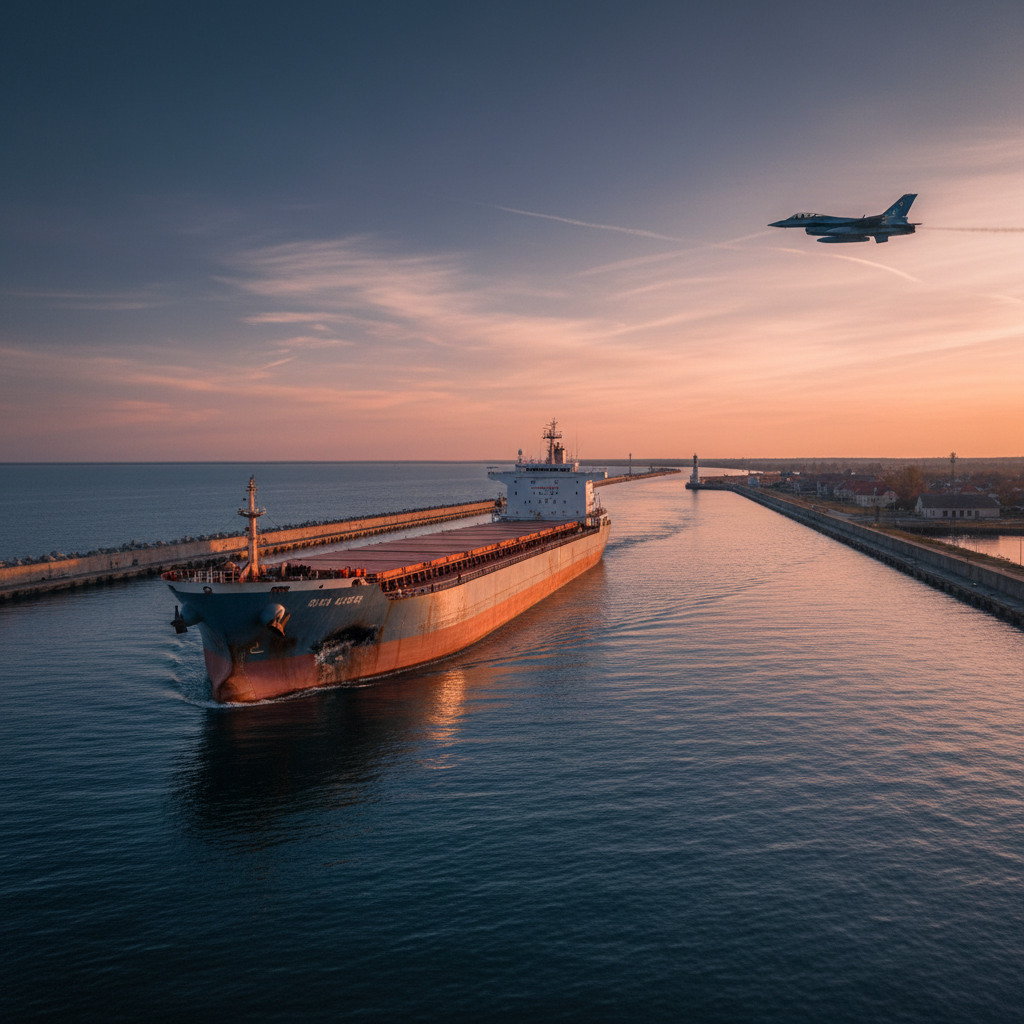
The Black Sea shipping environment experienced a significant escalation on Sunday, November 15, when three commercial ships were struck by drones near Romania's Sulina canal. This incident, confirmed by Prime Minister Luca Niculescu, prompted an immediate response from Romanian armed forces, including the scrambling of fighter jets. The location of these strikes is particularly noteworthy; the Sulina canal serves as a crucial maritime artery, providing access from the Black Sea to the Danube River. This waterway is a vital conduit for agricultural exports from Eastern Europe, including Ukraine, Romania, and other riparian states.
Previous incidents in the Black Sea have often involved indirect threats or attacks on naval vessels, but the direct targeting of commercial shipping represents a new and more dangerous phase. For shippers, forwarders, and supply-chain managers, this development means that the risk of operating in the Black Sea is no longer theoretical or confined to specific conflict zones. It is now an immediate, tangible threat to commercial vessels navigating what was previously considered a relatively safer corridor within the broader Black Sea region. The incident will undoubtedly lead to heightened security alerts and increased scrutiny of vessel movements, potentially causing delays and requiring more complex operational planning for any cargo transiting these waters. The direct impact on three vessels underscores the vulnerability of commercial maritime assets to such attacks, forcing a re-evaluation of security protocols and risk assessments for all stakeholders.
Broader Implications for Grain and Commodity Trade
The Black Sea is a globally significant corridor for the movement of agricultural commodities, particularly grains like wheat and corn, as well as sunflower oil and other foodstuffs. Ukraine and Russia are major global suppliers, and Romania also plays a substantial role in regional exports. The drone strikes near the Sulina canal directly threaten the continuity and reliability of these supply chains. Even if the specific cargo on the three struck ships is not yet publicly detailed, the broader message sent by these attacks is clear: commercial shipping in the Black Sea is now a direct target.
This escalation will likely have ripple effects across global commodity markets. Uncertainty regarding the safe passage of vessels can lead to increased volatility in prices for grains and other agricultural products. Shippers reliant on these routes may face challenges securing vessel capacity, as shipowners and operators become more reluctant to expose their assets and crews to such dangers. This reluctance could manifest as fewer vessels willing to call at Black Sea ports, or only doing so at significantly elevated rates. For importers, this translates to higher landed costs and potential delays in receiving crucial supplies. Exporters, conversely, may struggle to find viable and cost-effective ways to move their products to international markets, potentially impacting their competitiveness and market share. The incident highlights the fragility of global food supply chains when key maritime arteries are compromised by geopolitical actions.
Rising Costs and Insurance Premiums for Black Sea Operations
The immediate consequence of direct attacks on commercial shipping is a sharp increase in perceived risk, which translates directly into higher operational costs for all parties involved. War risk insurance premiums for vessels operating in the Black Sea region are expected to surge following the November 15 drone strikes. Insurers will re-evaluate their risk models, factoring in the demonstrated capability and intent to target commercial ships. This will inevitably lead to higher premiums, which carriers will pass on to shippers in the form of increased freight rates, often through specific war risk surcharges.
Beyond insurance, other operational costs will also climb. Enhanced security measures, such as hiring private security details or implementing more sophisticated onboard defense systems, add to the expense of each voyage. Should rerouting become necessary to avoid perceived high-risk areas, vessels will incur longer transit times, consuming more fuel and incurring additional crew costs. The potential for damage to vessels or cargo, as demonstrated by the three ships struck, also introduces significant financial exposure for shipowners and their insurers. For shippers, these rising costs erode profit margins and can make Black Sea-sourced goods less competitive in global markets. Supply chain managers must now factor in these elevated financial risks when making sourcing and logistics decisions, potentially shifting budgets or exploring alternative, albeit possibly more expensive, transportation options.
Mitigating Black Sea Supply Chain Exposure
In light of the direct drone strikes on commercial vessels near Romania's Sulina canal, shippers and supply-chain managers must proactively reassess and mitigate their exposure to Black Sea risks. The first step involves a comprehensive re-evaluation of current supply chain vulnerabilities. Identify all cargo movements, suppliers, and customers that rely on Black Sea routes, directly or indirectly. Understand the volume and value of goods at risk.
Diversification of sourcing and transportation routes becomes a key strategy. Explore alternative origins for essential commodities or components that currently transit the Black Sea. Investigate overland rail corridors through Central Europe or alternative port access points that bypass the most volatile maritime zones. While these alternatives may present their own challenges in terms of cost or capacity, they offer a buffer against Black Sea disruptions. Review existing contracts with carriers, forwarders, and suppliers. Pay close attention to force majeure clauses, war risk surcharges, and liability provisions to understand financial and operational responsibilities in an escalating conflict environment.
Maintaining robust communication channels with logistics partners, including carriers, freight forwarders, and marine insurers, is essential for real-time intelligence and updated risk assessments. These partners can provide insights into changing threat levels, available vessel capacity, and evolving insurance requirements. Finally, consider adjusting inventory management strategies. For goods deemed essential and heavily reliant on Black Sea routes, holding higher safety stock levels might be prudent to absorb potential transit delays or disruptions. Enhancing visibility into vessel movements and regional security updates will also empower quicker decision-making in a rapidly changing operational landscape.
Black Sea Risk Now a Direct Operational Threat
The drone strikes on three commercial ships near Romania's Sulina canal represent a significant shift in the Black Sea's security dynamic. This incident moves beyond generalized geopolitical tension, demonstrating a direct capability and willingness to target commercial maritime assets. For supply chain stakeholders, the Black Sea is no longer merely a region of elevated risk; it is an active operational threat zone. This development demands immediate and adaptive responses from shippers and carriers to safeguard cargo, manage costs, and ensure supply chain continuity. The implications for global commodity flows, particularly grain exports, are significant, necessitating a rapid re-evaluation of established trade routes and risk mitigation strategies.
Source: gCaptain — https://gcaptain.com/three-ships-struck-by-drones-in-black-sea-near-romanian-shipping-canal/