
Global Cargo Routes Divert, Costs Climb Amid Escalating Geopolitical Pressures
Geopolitical events are fundamentally reshaping global cargo movement, forcing extensive rerouting of air and sea lanes, fragmenting technology supply chains through export controls, and increasing trade barriers. Shippers and forwarders face extended transit times, higher operational costs, and complex compliance challenges, demanding adaptive strategies for resilient logistics.
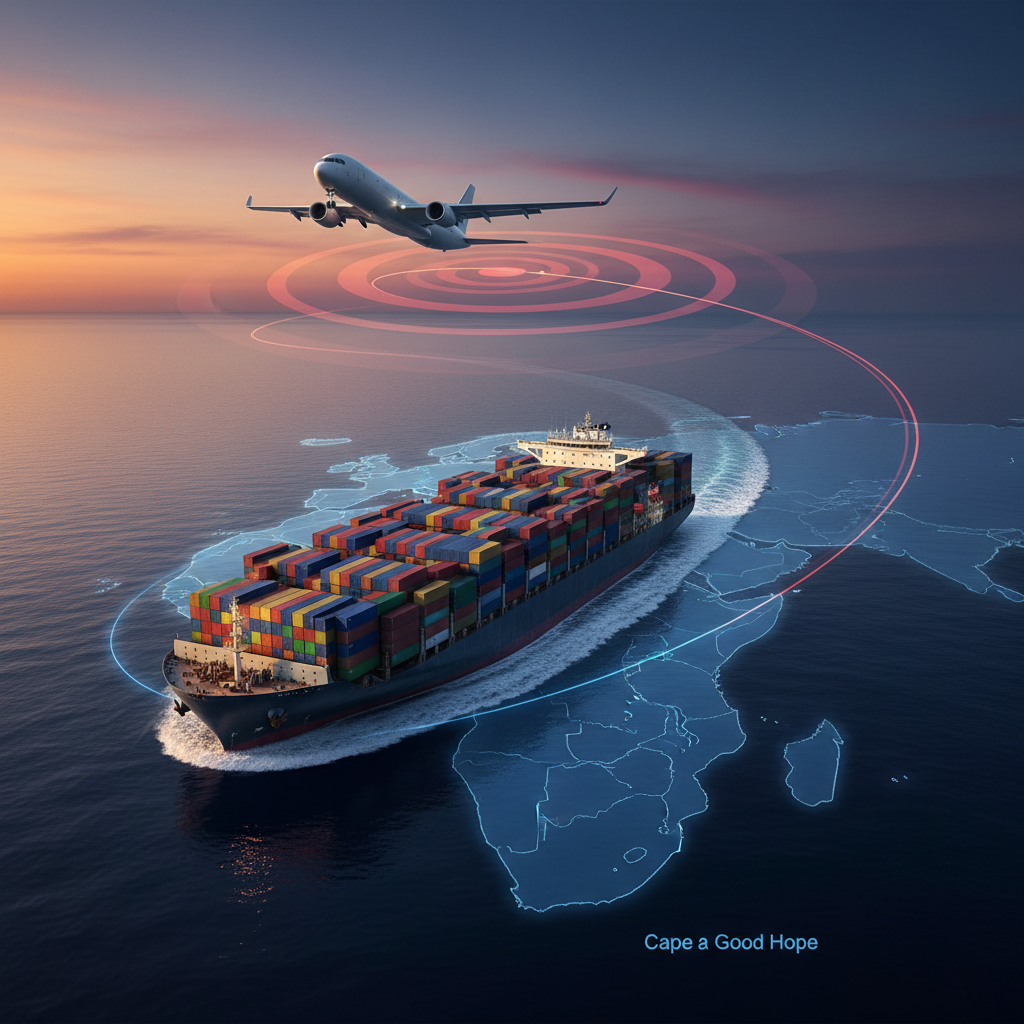
Geopolitical tensions are no longer isolated incidents; they are now a persistent force fundamentally altering the global flow of goods. From conflict-driven airspace closures and maritime diversions to the strategic application of export controls and tariffs, the consequences for trade and transport are significant. Supply chain managers must contend with a new reality where established routes, transit times, and cost structures are subject to rapid, unpredictable change. The focus has shifted from efficiency optimization to resilience and adaptability, as external pressures dictate operational adjustments across all modes of cargo movement.
Airspace Closures and Maritime Diversions Extend Transit Times
Recent geopolitical conflicts have led to extensive airspace restrictions, particularly over Eastern Europe and parts of the Middle East. These closures compel air cargo carriers to adopt significantly longer flight paths, often skirting conflict zones or entirely avoiding previously direct routes. The immediate consequence is a substantial increase in flight duration, leading to greater fuel consumption and elevated operating costs for airlines. For shippers, this translates directly into higher air freight rates and extended lead times, disrupting just-in-time inventory models and time-sensitive deliveries. The ripple effect extends to airport slot availability and ground handling capacity at alternative hubs, creating bottlenecks.
Similarly, maritime trade routes have been heavily impacted by security concerns in strategic waterways. Diversions around the Red Sea, for instance, force vessels to take the much longer route around the Cape of Good Hope. This adds weeks to transit times for cargo moving between Asia and Europe, consuming considerably more bunker fuel and increasing vessel operating expenses. The need for more ships to maintain existing service frequencies places additional strain on global fleet capacity, driving up charter rates and container shipping costs. Such diversions also introduce new challenges related to port rotation, schedule reliability, and the potential for port congestion at revised calls. Insurance premiums for vessels operating in or near designated high-risk areas have also seen steep increases, adding another layer of cost to maritime logistics.
Export Controls and Sanctions Fragment Technology Supply Chains
National security concerns and strategic competition have driven a sharp rise in the use of export controls, particularly for advanced technologies and dual-use items. Governments are increasingly restricting the sale and transfer of specific components, software, and intellectual property to certain countries or entities. For the logistics sector, this means a heightened compliance burden. Forwarders and shippers must meticulously verify the origin, destination, and end-use of sensitive goods, ensuring adherence to complex and frequently updated regulations. The risk of inadvertent violations carries severe penalties, including hefty fines and trade restrictions.
These controls force companies to re-evaluate their sourcing strategies, often leading to the diversification of supplier bases away from restricted regions or the redesign of products to incorporate components from compliant sources. This fragmentation of supply chains can increase manufacturing costs, reduce economies of scale, and prolong product development cycles. Broader economic sanctions, targeting entire sectors or financial transactions, further complicate cargo movement. Banks and logistics providers often de-risk by refusing to handle shipments or payments linked to sanctioned entities, even if the goods themselves are not directly restricted. This creates significant hurdles for legitimate trade, forcing companies to find alternative, often less efficient, financial and logistical channels.
Tariff Barriers and Trade Policy Shifts Redraw Sourcing Maps
The strategic application of tariffs and other trade barriers has become a prominent tool in geopolitical maneuvering. Imposed on specific goods or originating from particular countries, these tariffs directly increase the landed cost of imports, making goods less competitive or forcing consumers to pay more. For supply chain managers, this necessitates a constant re-evaluation of sourcing locations and manufacturing footprints. Companies are increasingly exploring strategies like 'friend-shoring' – relocating production to politically aligned countries – or 'near-shoring' – moving production closer to end markets to mitigate tariff risks and reduce transit times.
These shifts are not trivial; they involve substantial investments in new facilities, retraining workforces, and establishing entirely new supplier networks. The process can take years and significantly alter established trade lanes. Furthermore, the threat of new tariffs or the removal of existing trade preferences introduces considerable uncertainty into long-term planning. Businesses must develop robust trade management systems capable of tracking origin rules, duty rates, and preferential trade agreements to optimize costs and maintain compliance. The overall effect is a less globally integrated, but potentially more resilient, network of regional supply chains, with cargo movement increasingly directed by political alignment rather than purely economic efficiency.
Physical and Cyber Attacks Elevate Logistics Risk Premiums
Beyond economic and regulatory measures, geopolitical events also manifest in direct physical threats to logistics infrastructure and cargo. Attacks on vessels in critical maritime chokepoints, or on port facilities and pipelines in conflict zones, introduce immediate and severe disruptions. Such incidents can lead to direct damage, loss of cargo, and operational shutdowns, creating significant delays and increasing the risk profile for entire regions. Consequently, marine insurance premiums for voyages through these areas surge, and some carriers may refuse to serve them altogether, limiting transport options.
Alongside physical threats, cyberattacks targeting logistics and transport systems are becoming more sophisticated and frequent. These attacks can cripple port operations, disrupt customs clearance processes, or compromise sensitive shipping data. A successful cyberattack can lead to widespread operational paralysis, financial losses, and a loss of trust in the integrity of the supply chain. Companies must invest heavily in cybersecurity measures, not just for their own systems but also for their partners across the logistics ecosystem. The cumulative effect of these physical and digital vulnerabilities is a higher baseline risk for cargo movement, demanding enhanced security protocols, contingency planning, and a readiness to absorb unexpected costs and delays.
Geopolitical Volatility Demands Adaptive Supply Chain Design
The current geopolitical climate has irrevocably altered the operating environment for global trade and transport. The era of optimizing supply chains purely for cost and speed is receding, replaced by an urgent need for resilience and adaptability. Shippers, forwarders, and supply chain managers must develop dynamic strategies that account for route volatility, regulatory complexity, and elevated risk profiles. This involves diversifying sourcing, building buffer stocks, investing in advanced compliance technologies, and fostering collaborative relationships with a wider network of logistics partners. The ability to pivot rapidly in response to unforeseen disruptions will be a defining characteristic of successful supply chains.
However, this strategic shift toward resilience could be partially mitigated by a sustained period of de-escalation in major geopolitical flashpoints. A return to more predictable international relations, coupled with renewed emphasis on multilateral trade agreements, could alleviate some of the current pressures on routes and costs. Yet, the underlying trend towards regionalization and the strategic use of trade as a policy tool would likely persist, meaning supply chains would still require a more robust and flexible design than in previous decades. The lessons learned from recent disruptions are likely to embed a permanent preference for redundancy over pure efficiency. This is a critical insight for all stakeholders in global commerce.
Source: Atlantic Council — https://www.atlanticcouncil.org/dispatches/beyond-the-spy-scandal-what-the-nvidia-megaspeed-case-reveals-about-export-controls/