
Durban Port Delays Threaten South Africa Auto Industry
Severe and worsening delays at South Africa's largest container terminal in Durban are creating significant operational backlogs, directly threatening the nation's vital auto industry. These disruptions, often exacerbated by adverse weather conditions, impact both inbound component supply and outbound vehicle exports, forcing shippers to re-evaluate their supply chain strategies.
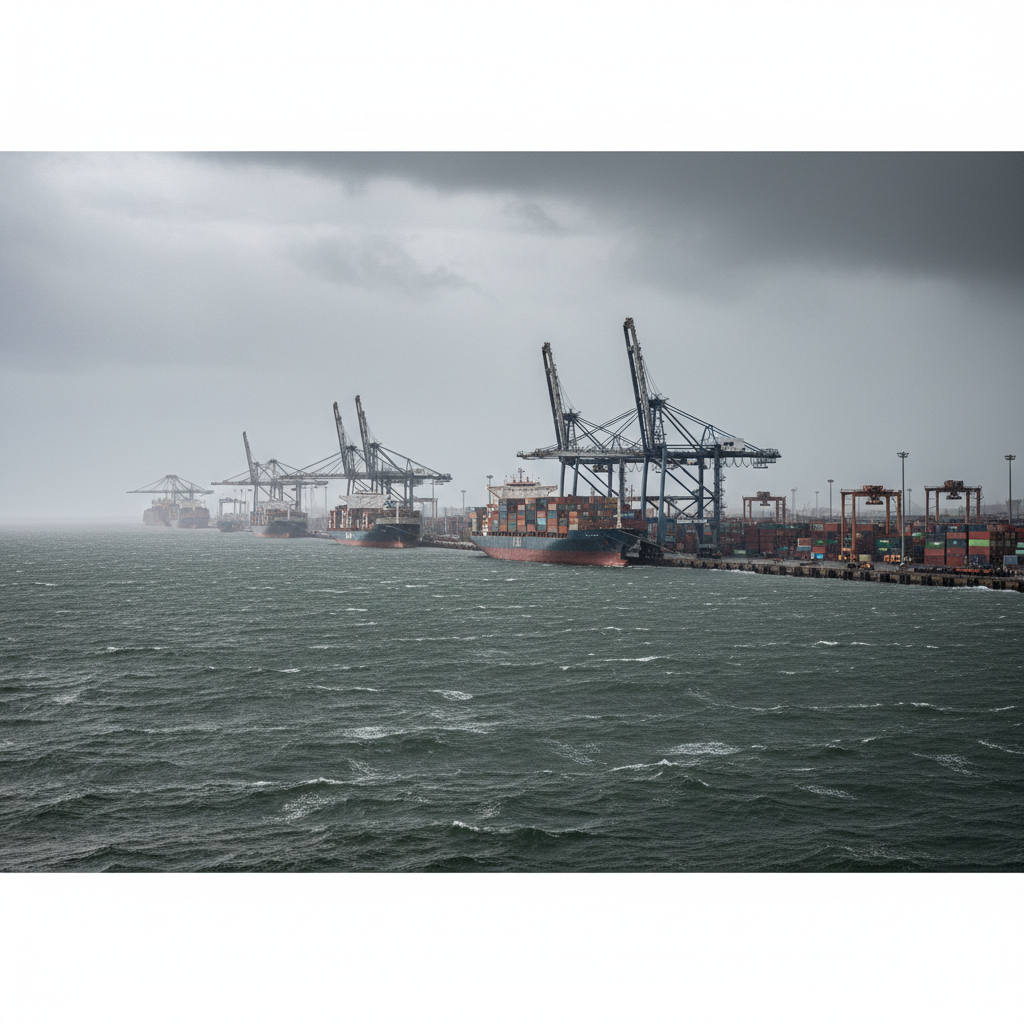
Durban's Container Terminal Faces Severe Operational Backlogs
South Africa's largest container terminal, located in the port city of Durban, is currently experiencing severe and worsening operational delays. These backlogs are creating significant challenges for cargo movement, particularly impacting the nation's automotive industry. While port operations are inherently complex, adverse weather conditions frequently exacerbate existing infrastructure and equipment limitations, leading to prolonged disruptions. High winds, heavy rainfall, and rough seas can halt crane operations, restrict pilotage services, and prevent vessels from berthing or departing, causing a cascade of delays across the terminal.
Durban serves as a critical gateway for South Africa's international trade, handling a substantial volume of containerized cargo. Its strategic importance means that any disruption there has far-reaching consequences for national supply chains. For the automotive sector, this port is indispensable for the import of specialized components and raw materials required for vehicle assembly, as well as for the export of finished vehicles to global markets. The current severe delays translate directly into extended waiting times for vessels, reduced cargo throughput, and increased congestion within the port area, creating a bottleneck that ripples through the entire logistics network.
The cumulative effect of these delays is a substantial increase in lead times for both inbound and outbound cargo. This unpredictability makes it exceedingly difficult for manufacturers to maintain their production schedules and for exporters to meet delivery commitments. The situation highlights the vulnerability of supply chains heavily reliant on a single, major port, especially when that port faces persistent operational challenges compounded by environmental factors.
Auto Sector Supply Chains Face Production Halts and Export Misses
The automotive industry operates on a highly synchronized, just-in-time (JIT) manufacturing model, where the timely arrival of components is crucial for continuous production. The severe delays at Durban's container terminal directly jeopardize this delicate balance. Inbound shipments of critical parts, ranging from engine components and electronic systems to specialized plastics and metals, are held up, leading to potential production line stoppages at assembly plants across the country. Even short delays can result in significant downtime, incurring substantial costs related to idle labor, missed production targets, and contractual penalties with original equipment manufacturers (OEMs).
Beyond manufacturing, the delays also severely impact the export segment of the auto industry. Finished vehicles, often produced for specific international markets, are stranded at the port, awaiting vessel space or clearance. Missing scheduled vessel departures means these vehicles remain in storage for extended periods, incurring additional holding costs and potentially missing market windows. This can lead to a loss of competitiveness for South African auto manufacturers on the global stage, as buyers may turn to more reliable sources. The financial implications extend to increased demurrage charges for delayed containers, higher inventory carrying costs for both parts and finished goods, and the potential need to resort to more expensive air freight options for urgent components, further eroding profit margins.
These disruptions affect specific trade lanes: primarily the import routes for automotive components originating from various global manufacturing hubs into South Africa, and the export routes for completed vehicles destined for markets in Europe, Asia, and other parts of Africa. The reliance on Durban as the primary hub for these movements means that the entire automotive supply chain, from tier-one suppliers to final distributors, is exposed to the port's performance issues. The threat to the nation's auto industry is not merely theoretical; it translates into tangible economic losses and a potential erosion of investor confidence in the region's manufacturing capabilities.
Shippers Must Adapt to Unpredictable Port Performance
Given the persistent nature of these severe port delays, shippers, forwarders, and supply-chain managers must adopt proactive and adaptive strategies to mitigate risks and maintain operational continuity. A critical first step involves enhancing supply chain visibility. Implementing advanced tracking and monitoring systems that provide real-time data on vessel positions, estimated times of arrival, port congestion levels, and container status is no longer a luxury but a necessity. This granular insight allows for earlier detection of potential delays and enables more informed decision-making regarding rerouting or rescheduling.
Diversification of logistics pathways presents another strategic imperative. While Durban is the largest, exploring the feasibility of utilizing alternative, smaller ports within South Africa or neighboring countries, even if they involve longer inland transit, can reduce reliance on a single, congested hub. This might entail developing multimodal transport solutions, combining sea freight with rail or road networks for the final leg of delivery. Such diversification requires careful cost-benefit analysis, considering factors like infrastructure quality, customs efficiency, and overall transit times, but it offers a crucial buffer against localized disruptions.
Furthermore, a re-evaluation of inventory management strategies is essential. The traditional just-in-time model, while efficient, proves vulnerable to unpredictable disruptions. Shippers may need to consider increasing safety stock levels for critical components, balancing the increased carrying costs against the significant financial and reputational risks of production halts. This requires close collaboration with suppliers to ensure buffer stock availability and efficient warehousing solutions. Finally, robust communication protocols with all supply chain partners—carriers, freight forwarders, customs brokers, and customers—are vital. Transparent and timely updates on potential delays, revised schedules, and mitigation efforts can manage expectations and foster stronger relationships, minimizing the commercial impact of unavoidable disruptions.
Source: gCaptain — https://gcaptain.com/south-africas-auto-industry-threatened-by-worsening-port-delays/