
Tanker Struck by Projectile Near Oman on November 21 Escalates Strait of Hormuz Risk
A recent incident involving a tanker struck by a projectile near Oman highlights the escalating security risks for cargo movement through the Strait of Hormuz. This event, occurring 11 nautical miles north of Khasab on November 21, signals potential disruptions for global energy supply chains and necessitates a re-evaluation of risk management strategies for shippers and forwarders.
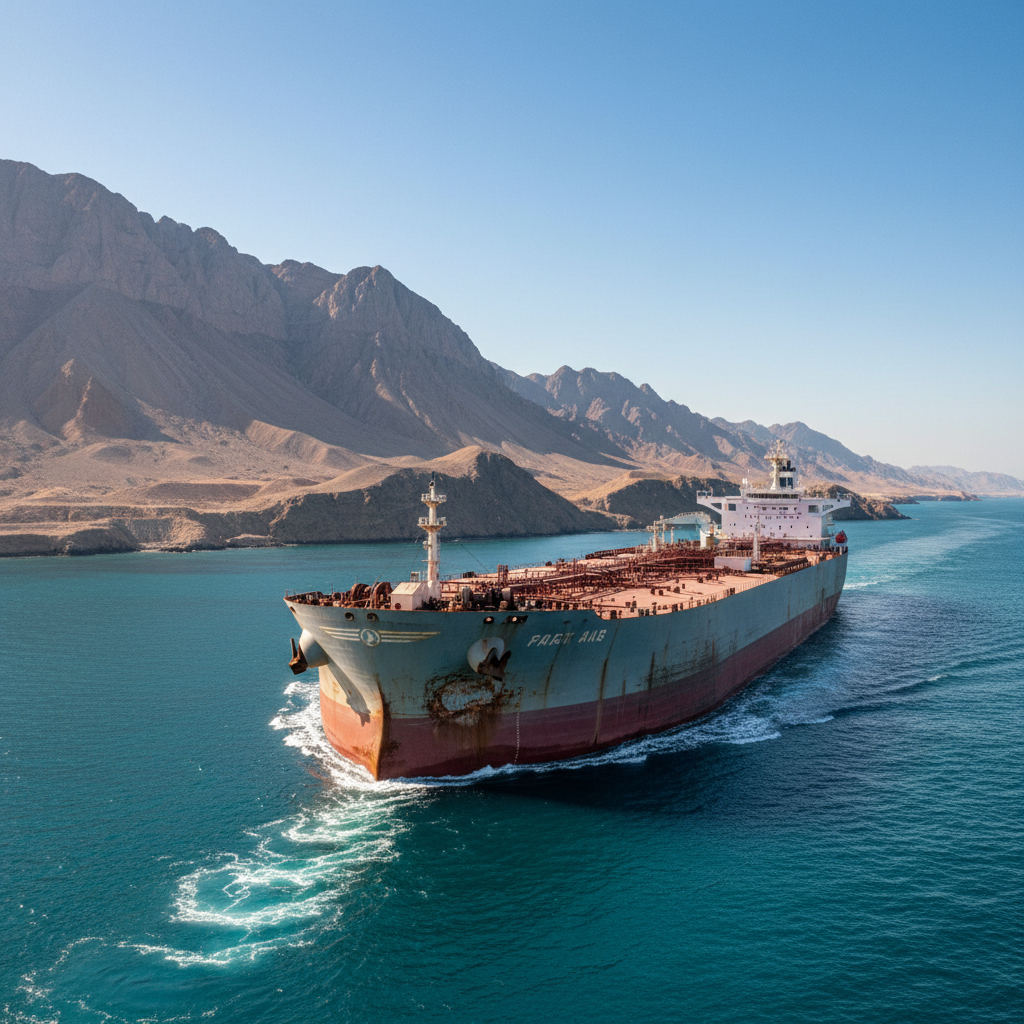
Tanker Struck 11 Nautical Miles North of Khasab on November 21
On November 21, a tanker navigating outbound through the Strait of Hormuz experienced a direct impact on its stern from an unidentified projectile. The incident occurred approximately 11 nautical miles north of Oman’s Khasab, marking a significant security event in one of the world’s most crucial maritime choke points. This was not an isolated occurrence, as reports indicated other incidents in the vicinity around the same date, specifically on November 21, 2026, at 19:38:29 UTC. Such events immediately raise concerns for the safety of maritime operations and the stability of cargo flows through the region.
The Strait of Hormuz, a narrow sea lane connecting the Persian Gulf with the Arabian Sea and the open ocean, is indispensable for global energy markets. A substantial portion of the world's seaborne oil and liquefied natural gas (LNG) transits this waterway daily. Any disruption, whether from geopolitical tensions or direct attacks, has immediate and far-reaching consequences for international trade. The targeting of a tanker, a vessel specifically designed for bulk liquid cargo, directly threatens the supply of these commodities. The precise location, 11 nautical miles from Khasab, places the incident squarely within the operational zone of the Strait, emphasizing the direct threat to vessels in transit.
The nature of the projectile, described as "unidentified," adds a layer of complexity and uncertainty to the situation. This ambiguity complicates attribution and response, making it harder for shipping companies and naval forces to assess future risks accurately. The incident serves as a stark reminder that maritime security in this region remains volatile, demanding constant vigilance and adaptive strategies from all stakeholders involved in global logistics and supply chain management. Shippers and forwarders must recognize that such events are not merely isolated occurrences but indicators of persistent underlying tensions that can rapidly escalate and affect cargo movement.
Escalating Risk in the Strait of Hormuz for Energy Shipments
The recent projectile strike on a tanker near Oman directly impacts the operational environment for energy shipments. The Strait of Hormuz is a bottleneck through which approximately one-fifth of the world's oil supply passes. Incidents like the one on November 21 immediately elevate the perceived risk for all vessels, particularly tankers, transiting this waterway. This heightened risk translates into tangible costs and operational challenges for shippers and carriers alike.
One immediate consequence is the potential for increased insurance premiums. War risk insurance, already a consideration for voyages through the Strait, can see sharp increases following such attacks. These additional costs are inevitably passed down the supply chain, affecting the final price of crude oil, refined products, and LNG. Furthermore, shipowners may become more reluctant to send their vessels through the Strait, leading to reduced vessel availability and potentially higher charter rates. This scarcity of capacity can further exacerbate shipping costs and introduce delays.
Beyond financial implications, the safety of crew members becomes a paramount concern. Shipping companies must implement enhanced security measures, which can include hiring private security details or adjusting vessel speeds and routes within the Strait. While rerouting around the Arabian Peninsula is technically possible for some vessels, it adds thousands of nautical miles to a journey, significantly increasing transit times and fuel consumption. For the vast majority of energy shipments originating from the Persian Gulf, the Strait of Hormuz remains the only practical and economically viable exit. The November 21 incident thus reinforces the vulnerability of this crucial energy artery, compelling energy shippers to re-evaluate their risk exposure and contingency plans.
Broader Economic Repercussions Beyond Crude Oil Transport
While the immediate target of the November 21 incident was a tanker, the economic repercussions extend far beyond the direct transport of crude oil and LNG. The global economy is deeply interconnected, and disruptions in one sector, especially energy, inevitably cascade into others. Higher oil prices, driven by supply uncertainty and increased shipping costs through the Strait of Hormuz, directly impact fuel surcharges across all modes of transportation—ocean freight, air cargo, and even inland trucking. This means that the cost of moving virtually any type of cargo, from consumer electronics to agricultural products, will likely see upward pressure.
Manufacturing industries, particularly those with high energy consumption, will face increased operational expenses. Factories relying on stable and affordable energy inputs for production may see their profit margins squeezed, potentially leading to price increases for finished goods. This inflationary pressure can then ripple through retail sectors, affecting consumer purchasing power and overall economic stability. For shippers of non-energy goods, the challenge lies in absorbing these rising logistics costs or passing them on to customers, a decision that impacts competitiveness.
Moreover, sustained instability in a region as economically significant as the Persian Gulf can deter foreign investment and disrupt long-term trade agreements. Companies may reconsider sourcing strategies or manufacturing locations if the reliability of supply chains through this region is consistently compromised. The incident on November 21, occurring 11 nautical miles from Khasab, serves as a reminder that geopolitical risks are not confined to specific commodities but pose a systemic threat to the predictability and efficiency of global supply chains, demanding a comprehensive approach to risk mitigation across all cargo types.
Shippers Must Re-evaluate Risk and Diversify Routes
In light of the November 21 tanker incident near Oman, shippers, forwarders, and supply chain managers must proactively re-evaluate their exposure to geopolitical risks in critical maritime corridors. A reactive stance is no longer sufficient; a forward-looking strategy is essential to maintain supply chain resilience. The first step involves a thorough and continuous risk assessment of all trade lanes that traverse or are influenced by volatile regions like the Strait of Hormuz. This includes monitoring geopolitical intelligence, understanding potential flashpoints, and assessing the likelihood and impact of disruptions.
Developing robust contingency plans is another crucial measure. While rerouting around the Strait of Hormuz is often impractical for energy shipments, shippers of other goods might explore alternative sea lanes, even if they involve longer transit times or higher costs. For time-sensitive or high-value cargo, a planned shift to air freight for specific legs might become a necessary, albeit more expensive, option. Diversifying sourcing locations can also reduce dependence on single-point failures in the supply chain. If a particular region becomes too risky, having alternative suppliers in more stable areas can prevent complete disruption.
Furthermore, shippers should engage in transparent communication with their logistics partners and carriers. Understanding their security protocols, insurance coverage, and contingency capabilities is vital. Reviewing existing cargo insurance policies to ensure adequate coverage for war risks and political instability is also a prudent step. Finally, adjusting inventory management strategies, such as increasing safety stock levels for critical components or finished goods, can provide a buffer against unexpected delays or supply interruptions stemming from incidents like the one 11 nautical miles north of Khasab. Proactive measures will be key to mitigating the financial and operational fallout from such security challenges.
Hormuz Instability Demands Immediate Supply Chain Adjustments
The projectile incident on November 21 underscores the persistent and escalating security challenges within the Strait of Hormuz, requiring immediate strategic adjustments from global supply chain stakeholders. This event, occurring 11 nautical miles north of Oman’s Khasab, signals that geopolitical risks in this vital waterway are not diminishing.
- Monitor regional security advisories and intelligence updates following the November 21 incident.
- Observe changes in war risk insurance premiums for vessels transiting the Strait of Hormuz in the coming weeks.
- Track any reported rerouting decisions by major tanker operators or energy companies.
- Assess the impact on global crude oil and LNG prices over the next month.
Source: gCaptain — https://gcaptain.com/two-tanker-incidents-reported-near-oman-vessel-hit-mine-east-of-hormuz/