
Strait of Hormuz Attack Signals New Era of Maritime Risk for Supply Chains
An attack on a tanker in the Strait of Hormuz highlights escalating geopolitical risks to global shipping. This brief analyzes the impact on key lanes, facilities, and modes, offering strategies for shippers to enhance resilience through advanced visibility.
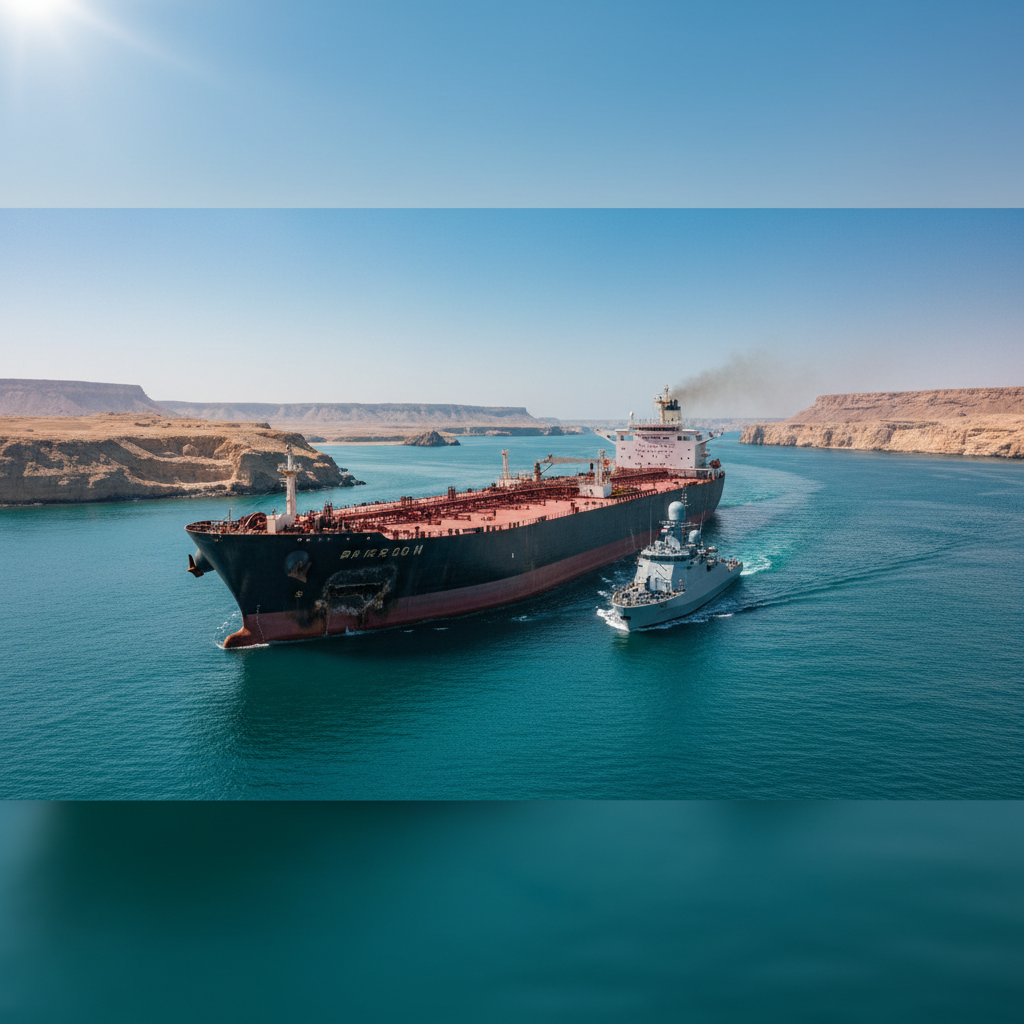
The Evolving Threat Landscape in Critical Maritime Chokepoints
The global supply chain faces a persistent array of challenges, from port congestion to labor disputes. However, a recent incident in the Strait of Hormuz on October 30, 2026, underscores the emergence of a more insidious and unpredictable threat: targeted geopolitical attacks on commercial shipping. A tanker transiting this vital waterway was reportedly struck by two explosive devices, described as limpet mines, attached to its hull by a small boat. The resulting engine room fire temporarily disabled the vessel, sending a clear signal of escalating maritime insecurity.
This event is not merely an isolated act but represents a significant escalation in the tactics employed against commercial shipping in critical chokepoints. The use of limpet mines, often associated with asymmetric warfare, bypasses traditional naval defenses and introduces a new layer of complexity to maritime risk assessment. For supply chain professionals, this incident necessitates a re-evaluation of established risk models, moving beyond conventional piracy and natural disasters to encompass deliberate, state-sponsored, or proxy-group actions aimed at disrupting global trade. The Strait of Hormuz, through which a substantial portion of the world's oil and gas transits, is already a geopolitical flashpoint. An attack of this nature amplifies the perceived risk for all vessels operating in the region, demanding immediate attention and strategic adaptation from shippers worldwide.
Impact on Key Shipping Lanes
The immediate and most profound impact of such an attack is felt across the shipping lanes directly affected, particularly the Strait of Hormuz itself. As one of the world's most critical maritime chokepoints, any disruption here has ripple effects across global energy markets and beyond. The incident will inevitably lead to:
- Increased Risk Perception: Shipping companies and insurers will reassess the threat level in the Strait of Hormuz and the broader Persian Gulf. This could translate into higher war risk premiums for vessels and cargo, increasing operational costs for shippers.
- Potential for Delays and Rerouting: While the Strait remains open, the heightened security concerns might prompt some carriers to slow down, increase vigilance, or even consider alternative, longer routes around the Cape of Good Hope for certain high-value or sensitive cargo. Such rerouting would significantly extend transit times, increase fuel consumption, and add to freight costs.
- Congestion at Entry/Exit Points: Enhanced security protocols, including potential inspections or naval escorts, could lead to bottlenecks at the entry and exit points of the Strait, causing delays for vessels waiting to transit.
- Cascading Effects on Schedules: Delays in the Strait of Hormuz can throw off vessel schedules globally, impacting subsequent port calls and disrupting just-in-time supply chains reliant on precise arrival windows.
Beyond the Strait, the incident serves as a stark reminder of the vulnerability of other global chokepoints, such as the Suez Canal, Bab-el-Mandeb, or the Malacca Strait, to similar asymmetric threats. Shippers must now factor in a broader spectrum of geopolitical risks when planning routes through any strategically significant waterway.
Implications for Port Facilities and Infrastructure
While the attack occurred at sea, its repercussions extend to port facilities and their operations, both regionally and globally:
- Regional Ports (Persian Gulf): Ports like Jebel Ali, Fujairah, Ras Tanura, and others in the Gulf region may experience direct impacts. Increased security measures at these ports could slow down cargo handling, vessel turnaround times, and customs clearance processes. There's also a potential for reduced vessel calls if shipping lines deem the risk too high, leading to a decrease in throughput.
- Downstream Ports (Global): Ports receiving cargo from the Persian Gulf, particularly crude oil and refined products, could face delayed arrivals. This could lead to temporary shortages of specific commodities, requiring adjustments in inventory management and potentially impacting industrial production that relies on these inputs. Congestion at these receiving ports might also increase if multiple delayed vessels arrive simultaneously.
- Insurance and Security Costs: Port operators and logistics providers may see an increase in their insurance premiums due to the elevated risk environment. Investments in enhanced port security measures, including surveillance and access control, could also rise, potentially impacting service costs for shippers.
- Supply Chain Resilience Testing: The incident tests the resilience of port infrastructure and associated logistics networks. Ports that are highly reliant on traffic from high-risk areas may need to diversify their trade partners or enhance their contingency planning for disruptions.
Modes of Transport Under Scrutiny
This specific incident directly implicates ocean freight, particularly tankers and potentially other large commercial vessels. The attack on a tanker highlights the vulnerability of vessels carrying high-value or strategically important commodities. While the immediate threat is maritime, the ripple effects can influence other modes of transport:
- Ocean Freight (Tankers, Container Ships, Bulk Carriers): Tankers are clearly the primary target in this scenario, but the general increase in maritime insecurity impacts all vessel types transiting the Strait. Container ships, bulk carriers, and LNG carriers will face similar increases in insurance costs, security protocols, and potential delays. The perceived risk could lead to a shortage of available vessels willing to operate in the region, driving up freight rates.
- Air Freight: In the event of prolonged or severe disruptions to sea lanes, shippers with urgent or high-value cargo might shift to air freight. This could lead to a surge in demand for air cargo capacity, resulting in higher air freight rates and potential capacity crunch on key routes, especially for goods that can withstand the higher cost.
- Rail and Road: For intra-regional movements or as part of multimodal solutions, rail and road transport might see increased utilization if maritime routes become too risky or slow. However, these modes have their own limitations in terms of capacity and reach for intercontinental trade.
The incident underscores that while the attack was maritime, its implications force a re-evaluation of intermodal strategies, pushing shippers to consider the interconnectedness of all transport modes in a volatile geopolitical landscape.
Strategic Responses for Shippers
In the face of such evolving geopolitical threats, shippers must adopt proactive and adaptive strategies to safeguard their supply chains:
- Enhanced Risk Assessment and Scenario Planning: Move beyond historical data to anticipate future threats. Develop robust scenario plans for various levels of disruption in critical chokepoints, including complete closure or severe restrictions.
- Supply Chain Diversification: Explore alternative sourcing regions, manufacturing locations, and shipping routes to reduce over-reliance on single points of failure, especially those in geopolitically sensitive areas.
- Inventory Optimization: Re-evaluate just-in-time (JIT) strategies. Building strategic safety stock for critical components or finished goods can provide a buffer against unexpected transit delays or disruptions.
- Strengthened Carrier Relationships: Engage in open dialogue with carriers and freight forwarders to understand their contingency plans, security measures, and insurance coverage for high-risk routes. Negotiate flexible contracts that account for geopolitical volatility.
- Review Insurance Coverage: Scrutinize marine cargo insurance policies to ensure adequate coverage for war risks, piracy, and other geopolitical incidents. Understand the triggers for such coverage and potential exclusions.
- Real-time Communication Protocols: Establish clear and rapid communication channels with all supply chain partners to disseminate information quickly during a crisis and coordinate responses.
Leveraging Visibility for Enhanced Resilience
In an environment characterized by unpredictable geopolitical threats, a robust shipment-visibility control tower platform like MGS becomes an indispensable tool for shippers seeking to build resilient supply chains. MGS empowers organizations to transform reactive responses into proactive strategies:
- Real-time Situational Awareness: MGS provides continuous, granular tracking of all shipments across global lanes. In the event of an incident like the Strait of Hormuz attack, shippers can immediately identify which of their vessels or cargo are in the affected region or en route, assessing direct exposure.
- Proactive Alerting and Anomaly Detection: The platform can be configured to issue immediate alerts for deviations from planned routes, unexpected delays, or vessels entering designated high-risk zones. This allows shippers to be informed of potential issues before they escalate.
- Dynamic Route Optimization: By integrating real-time threat intelligence and traffic data, MGS can help evaluate alternative routes instantly, providing data-driven recommendations for rerouting shipments to avoid escalating risks or mitigate delays.
- Enhanced Collaboration and Communication: A control tower centralizes information, enabling seamless communication and collaboration among internal teams, carriers, and logistics partners. This ensures everyone operates from a single source of truth during a crisis, facilitating faster decision-making and coordinated responses.
- Impact Analysis and Scenario Modeling: MGS can leverage historical data and real-time inputs to model the potential impact of disruptions on inventory levels, production schedules, and customer commitments. This capability is crucial for developing effective contingency plans and stress-testing supply chain resilience against various geopolitical scenarios.
By providing unparalleled transparency and actionable insights, MGS transforms geopolitical risks from unforeseen catastrophes into manageable challenges, allowing shippers to navigate volatility with greater confidence and maintain continuity of operations even in the most turbulent times.
Source: gCaptain — https://gcaptain.com/tanker-hit-by-limpet-mines-in-strait-of-hormuz-as-new-threat-to-shipping-emerges/