
Savannah's $1.6B Expansion: Reshaping Global Container Flows and Boosting East Coast Resilience
The Port of Savannah's ambitious $1.6 billion expansion, now 60% complete, is set to dramatically increase its Ocean Terminal's capacity from 200,000 to 1.75 million TEUs annually. This brief analyzes the profound implications for global supply chains, financial dynamics for shippers and carriers, and how advanced visibility platforms like MGS will be crucial in navigating this transformative period.
How this impacts the global supply chain
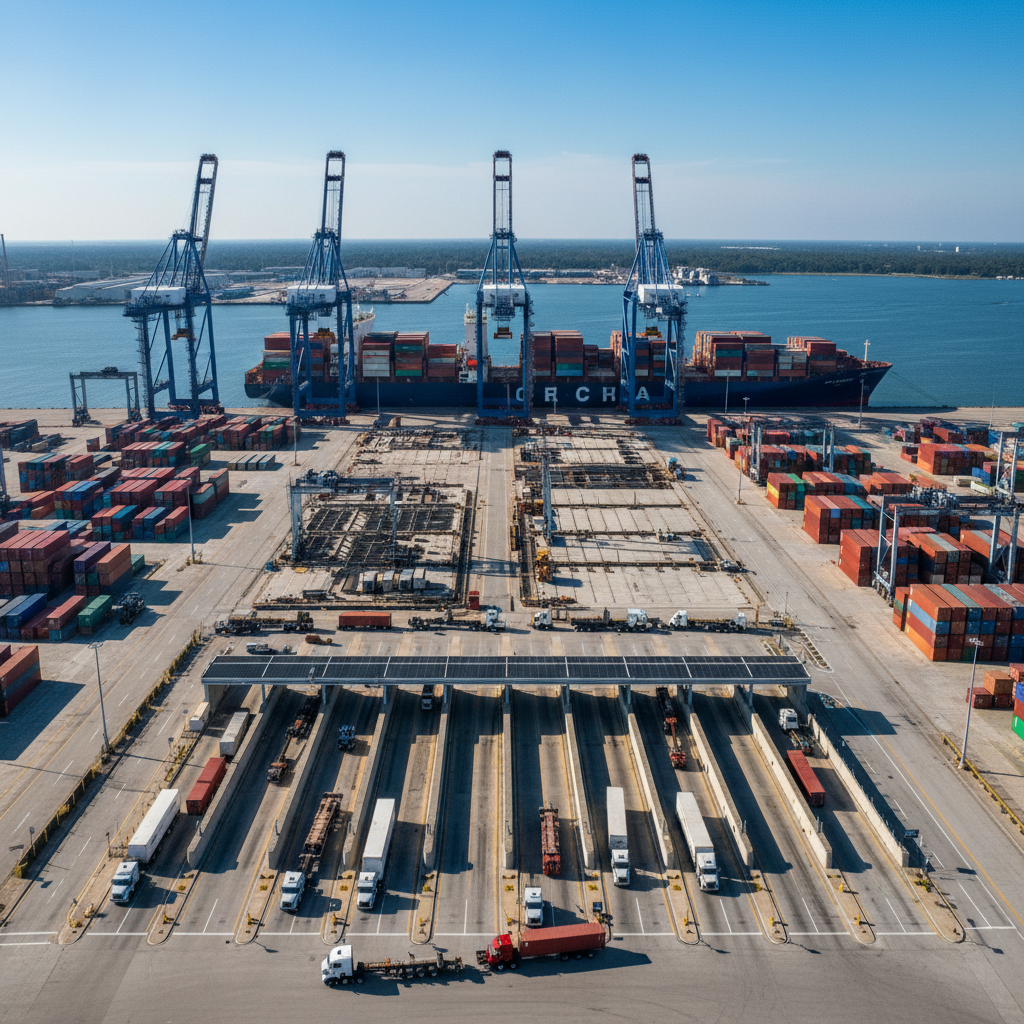
The Port of Savannah's $1.6 billion expansion, now 60% complete, is set to dramatically reshape global supply chain flows and capacity, particularly for U.S. East Coast trade. The Ocean Terminal's annual container handling capacity will surge from 200,000 TEUs to 1.75 million TEUs, a nearly nine-fold increase. This transformative boost will significantly alleviate pressure on existing U.S. port infrastructure, enhancing overall network resilience. Carriers will gain flexibility to introduce new direct services or deploy larger, more efficient vessels to Savannah, potentially shifting cargo away from more distant or congested ports.
Operationally, the phased completion, with the first container yard renovation phase by mid-fall 2027 and the entire yard by end of 2028, allows for strategic integration of new capacity. The immediate benefit of the fully operational truck gate, featuring 12 inbound and 6 outbound lanes, directly addresses landside efficiency. Faster truck turn times will reduce congestion, mitigate drayage delays, and improve cargo fluidity from port to inland distribution centers. This enhanced landside capability, combined with vast waterside and yard capacity, solidifies Savannah's strategic importance as a critical component of the international logistics landscape, capable of handling substantially larger volumes of global trade.
Global financial impact
The Port of Savannah's $1.6 billion expansion carries significant financial implications for shippers, carriers, and broader trade. For shippers, the primary benefit will be reduced logistics costs through increased efficiency. Enhanced capacity and improved landside operations, like the new 12 inbound and 6 outbound truck lanes, will lead to quicker cargo processing, reducing demurrage and detention charges. More reliable throughput allows for optimized inventory management, cutting warehousing expenses. A high-capacity East Coast gateway could also foster carrier competition, potentially leading to more favorable freight rates.
Carriers will benefit from improved operational economics. The ability to handle 1.75 million TEUs annually means faster vessel turnaround, maximizing asset utilization and reducing costly idle time. This efficiency allows for more effective fleet deployment, potentially offering more frequent services or utilizing larger, more economical vessels to Savannah. For trade at large, the $1.6 billion investment signals a long-term commitment to infrastructure, underpinning economic growth. By improving trade flow efficiency and reliability, the expansion helps reduce the "cost of doing business," making goods more competitive. It also acts as a buffer against future supply chain shocks, mitigating financial volatility and fostering greater economic stability.
How MGS can help navigate today's global trade environment
In an environment shaped by significant infrastructure transformations like Savannah's expansion, a shipment-visibility control tower platform such as MGS becomes an indispensable tool. The phased completion and dramatic capacity increase introduce both opportunity and complexity, making real-time visibility critical.
MGS provides end-to-end visibility, allowing operators to track cargo from origin to destination, including granular movements within the port. During construction, particularly as "smaller vessels" are worked until mid-fall 2027, MGS users can monitor vessel schedules, berth assignments, and container status. This detail is crucial for anticipating potential delays or operational adjustments, enabling proactive communication and contingency planning.
With the new 12 inbound and 6 outbound truck lanes now operational, MGS can optimize landside operations. Operators can leverage MGS data to monitor truck turnaround times, gate wait times, and drayage efficiency. Analyzing these metrics allows logistics managers to identify peak times, optimize truck scheduling, and ensure drayage partners perform optimally, directly capitalizing on the port's investment in faster gate processing. As capacity grows to 1.75 million TEUs, MGS empowers users with intelligence for informed routing and inventory decisions. Clear, real-time ETAs and understanding cargo flow through the expanded terminal help fine-tune inventory levels, reducing costs and improving fulfillment. MGS acts as a central nervous system, consolidating data from various sources (carriers, terminals, drayage) into a single, actionable view, thereby enabling operators to navigate the evolving landscape of global trade with greater agility and precision, especially during periods of significant port transformation like Savannah's expansion.
Demand–supply analysis & improvement
The Port of Savannah's $1.6 billion expansion directly addresses a significant imbalance between existing port capacity and burgeoning demand for container shipping, particularly for the U.S. East Coast. The decision to increase the Ocean Terminal's annual capacity from 200,000 TEUs to 1.75 million TEUs signifies a clear recognition that current infrastructure is vastly outstripped by trade volumes. This nearly nine-fold capacity increase is a proactive response to sustained growth and the imperative for more resilient port infrastructure.
The project's phased nature, with the first container yard renovation phase completing by mid-fall 2027 and the entire yard by the end of 2028, represents a strategic approach to gradually integrating new supply. This allows the broader port ecosystem to adapt to increased throughput.
Key improvement levers are already in play:
- Enhanced Landside Efficiency: The fully operational truck gate with 12 inbound and 6 outbound lanes immediately streamlines cargo movement off the terminal, improving velocity and reducing container dwell times.
- Vessel Handling Capacity: The ultimate 1.75 million TEU capacity will enable the port to accommodate more vessels and potentially larger ships, optimizing berth utilization and reducing waiting times.
- Container Yard Optimization: The comprehensive renovation of the Ocean Terminal yard will enhance container stacking, retrieval, and transfer processes, crucial for managing vastly increased volumes and minimizing internal congestion.
These improvements aim to rebalance the demand-supply equation in a critical trade corridor, positioning Savannah as a preferred gateway capable of absorbing future growth.
ROI-focused resilience
The $1.6 billion investment in the Port of Savannah's expansion represents a strategic, ROI-driven commitment to bolstering supply chain resilience. This investment directly protects against the substantial economic costs associated with a port operating at a limited 200,000 TEU annual capacity in a high-demand global trade environment.
The primary quantified risk being mitigated is the cost of congestion and insufficient capacity. Without this expansion, Savannah would face escalating congestion, leading to:
- Increased Demurrage and Detention Charges: High likelihood of fees due to delays in container pickup/return. The expansion to 1.75 million TEUs significantly reduces this, avoiding millions in annual costs for shippers.
- Vessel Waiting Times and Schedule Delays: Carriers incur substantial costs from idle ships. The capacity increase improves vessel turnaround, saving millions in operational expenses.
- Lost Sales and Expedited Shipping Costs: Supply chain delays cause stockouts and expensive expedited shipping. The expansion acts as an insurance policy against these disruptions, ensuring smoother goods flow.
The ROI of this resilience investment is evident:
- Direct Economic Contribution: Handling 1.75 million TEUs annually, compared to 200,000 TEUs, dramatically increases economic activity, providing a substantial return on the $1.6 billion outlay.
- Enhanced Competitiveness: Superior capacity and efficiency (e.g., new truck lanes) make Savannah more attractive, securing future trade volume and revenue.
- Future-Proofing Against Demand Surges: The expansion provides a critical buffer against unpredictable demand, ensuring the port can absorb future growth without collapsing into congestion, protecting against economic fallout.
This $1.6 billion is a strategic investment yielding substantial returns by mitigating quantifiable and unquantifiable risks, ensuring long-term operational and economic resilience.
Source: DC Velocity — https://www.dcvelocity.com/transportation/maritime-ocean/ports/port-of-savannah-is-60-done-with-1-6-billion-expansion