
Navigating the Chokepoints: How Visibility Unlocks Flow in Congested Ports
Port congestion continues to be a formidable challenge in global trade, impacting supply chain efficiency and driving up costs. This brief examines the multifaceted effects of port bottlenecks on global supply chains and financial performance, highlighting how advanced shipment-visibility platforms like MGS are crucial tools for shippers to mitigate disruptions and enhance operational resilience.
How this impacts the global supply chain
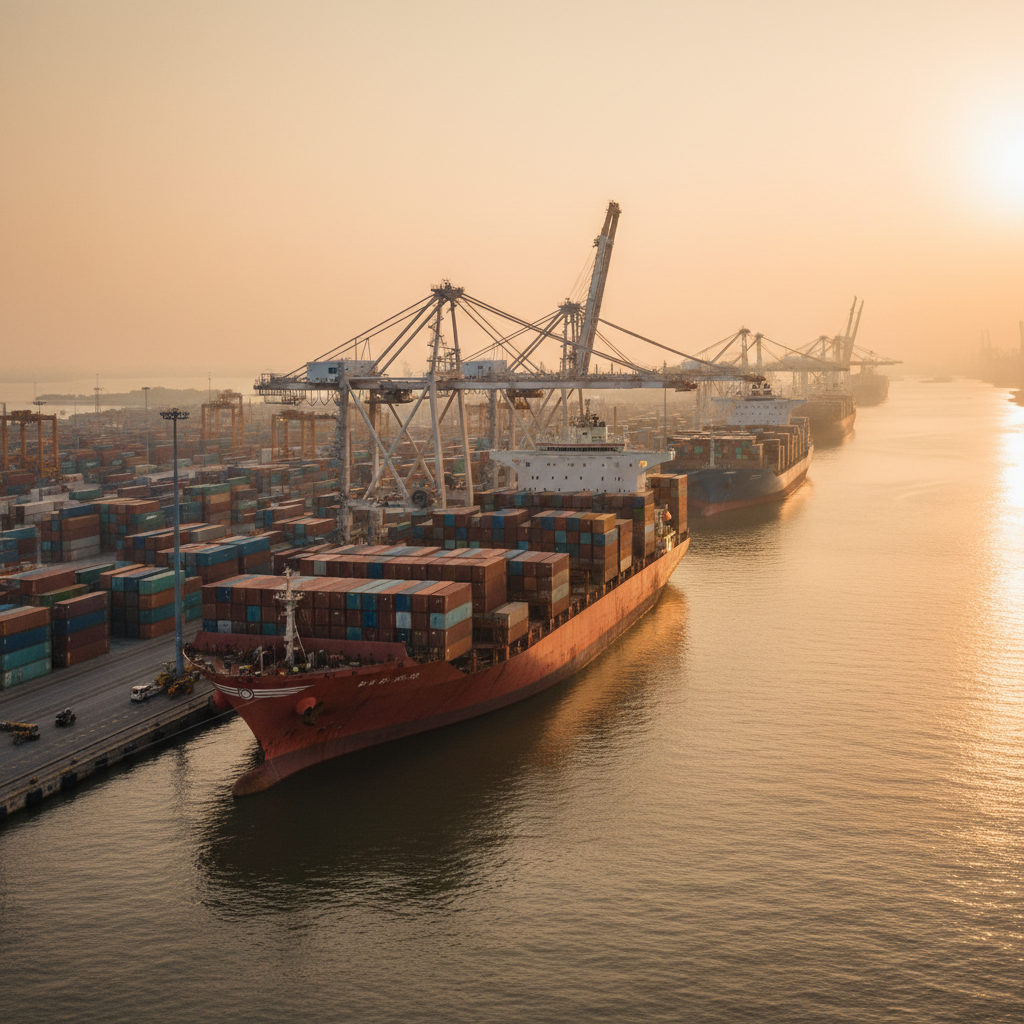
Persistent port congestion represents a critical impediment to the smooth functioning of global supply chains, fundamentally altering flows, routes, capacity, and operational efficiency. When vessels queue outside major maritime gateways, the ripple effect extends far beyond the immediate port area.
Firstly, global supply-chain flows are severely disrupted. Goods intended for just-in-time manufacturing or retail shelves face unpredictable delays, throwing finely tuned production schedules and inventory management strategies into disarray. This forces companies to either hold larger safety stocks, incurring higher carrying costs, or risk stockouts and lost sales. The predictability that underpins efficient global trade erodes, making planning incredibly difficult for all stakeholders.
Secondly, established shipping routes become less reliable. Carriers may be forced to implement blank sailings or omit congested ports entirely, leading to cargo being offloaded at alternative, less convenient locations. This necessitates additional transshipment, trucking, or rail transport, adding layers of complexity, cost, and transit time to the journey. Shippers might also explore more expensive, alternative modes, such as air freight, to bypass sea-based delays, further skewing traditional routing economics.
Thirdly, effective shipping capacity is significantly diminished. While the number of vessels in operation might remain constant, their productivity plummets when they spend days or weeks waiting to berth. This 'lost' capacity translates into fewer available slots for cargo, driving up freight rates and making it harder for shippers to secure space. Similarly, containers, chassis, and other essential equipment become trapped within congested port systems, leading to equipment imbalances globally. A lack of available containers at origin points can prevent new shipments from even beginning, creating a cascading effect across the supply chain.
Finally, day-to-day operations become strained. Port operators grapple with overwhelming volumes and extended dwell times for cargo, leading to increased labor demands and operational bottlenecks. For shippers, managing these delays involves constant communication with carriers, customs brokers, and consignees, consuming valuable resources and increasing administrative overhead. The cumulative effect is a global supply chain that is less agile, more expensive, and significantly more prone to disruption.
Global financial impact
The financial ramifications of port congestion are substantial and felt across the entire trade ecosystem, impacting shippers, carriers, and the broader global economy.
For shippers, the financial burden is multifaceted. Direct costs include elevated freight rates, as reduced effective capacity allows carriers to command higher prices. More critically, shippers face significant demurrage and detention charges when containers are held beyond the free-time allowance at ports or terminals. These fees can quickly escalate, turning a profitable shipment into a costly liability. Beyond direct shipping costs, increased inventory holding costs arise from longer transit times and the need for larger safety stocks to buffer against unpredictability. Perhaps most damaging are the indirect costs: lost sales due to delayed product availability, penalties for failing to meet delivery commitments, and the potential need to resort to expensive expedited shipping methods like air freight to salvage critical orders. Brand reputation can also suffer from consistent delivery failures.
Carriers, while sometimes benefiting from higher freight rates, also incur substantial costs. Vessels idling outside ports consume fuel without generating revenue, eroding profitability. Schedule integrity is compromised, leading to a domino effect of delays across their network, often necessitating costly re-routing or blank sailings to get schedules back on track. Repositioning empty containers and equipment from congested areas to demand centers becomes more expensive and complex. Furthermore, the operational inefficiencies strain carrier resources, from vessel crews to onshore planning teams, leading to increased operational expenditures.
For trade at large, port congestion contributes to inflationary pressures as the increased costs for shipping and logistics are often passed on to consumers. It reduces the overall efficiency of global trade, hindering economic growth by creating friction in the movement of goods and capital. Supply chain instability can deter investment and lead to a more cautious approach to international sourcing, potentially impacting global economic integration and resilience. The cumulative effect is a less predictable and more expensive global marketplace, challenging businesses and consumers alike.
How MGS can help navigate today's global trade environment
In an environment characterized by persistent port congestion and supply chain volatility, a sophisticated shipment-visibility control tower like MGS becomes an indispensable tool for operators seeking to maintain continuity and efficiency.
Firstly, MGS provides real-time, end-to-end visibility into every shipment's journey, including its precise location and status within a congested port. This means operators are not reliant on sporadic updates but have a continuous, granular view of their cargo, whether it's awaiting berth, being offloaded, or stuck in customs clearance. This immediate insight is crucial for understanding the true impact of congestion on specific shipments.
Secondly, MGS's proactive alert system is vital. When a vessel's estimated time of arrival (ETA) changes significantly due to port queues, or if a container's dwell time exceeds predefined thresholds, MGS can trigger immediate notifications. This early warning allows supply chain managers to react swiftly, rather than retrospectively. They can communicate proactively with customers about potential delays, explore alternative distribution channels, or prepare for expedited inland transport if necessary, minimizing the impact of unforeseen events.
Thirdly, the platform empowers better decision-making. With accurate, real-time data on congestion and its impact, operators can make informed choices about rerouting critical shipments, adjusting inventory levels at destination warehouses, or even diverting vessels to less congested ports if feasible. This data-driven approach helps mitigate the financial penalties associated with demurrage and detention by identifying at-risk cargo and facilitating faster clearance processes.
Furthermore, MGS supports enhanced collaboration. By providing a single source of truth for shipment data, it enables better coordination between various stakeholders—shippers, carriers, customs brokers, and logistics partners. This shared visibility fosters a more collaborative environment, streamlining communication and accelerating problem resolution. Over time, the aggregated data from MGS can also be leveraged for performance analysis, identifying recurring bottlenecks and informing strategic improvements to logistics networks and carrier selection.
Demand–supply analysis & improvement
Port congestion is fundamentally a manifestation of demand-supply imbalances within the logistics infrastructure. On the demand side, factors such as sudden surges in consumer spending, particularly exacerbated by e-commerce growth, and seasonal peaks can overwhelm port capabilities. Geopolitical events or unexpected disruptions elsewhere in the supply chain can also redirect cargo flows, creating concentrated demand at specific ports. On the supply side, limitations include aging port infrastructure, insufficient investment in new berths or equipment (like cranes and chassis), labor shortages (e.g., dockworkers or truck drivers), and inefficient operational processes that slow throughput.
The story of port congestion reveals critical areas for improvement. To address these dynamics, several concrete levers can be pulled. Improving port efficiency is paramount; this includes digitalization of port processes, such as paperless customs clearance and automated gate systems, which can significantly reduce dwell times. Enhanced data sharing and collaborative planning between ocean carriers, port authorities, and inland logistics providers can optimize vessel scheduling and cargo evacuation. Investment in infrastructure, including expanding berth capacity, upgrading handling equipment, and improving hinterland connections (rail and road networks), is a long-term but essential solution. Moreover, fostering a more resilient labor force through training and fair working conditions can alleviate bottlenecks. From a shipper's perspective, diversifying sourcing locations and transportation partners can help distribute demand and reduce reliance on single, potentially congested, trade lanes.
ROI-focused resilience
Investing in supply chain resilience, particularly in the face of port congestion, offers a clear return on investment by mitigating quantifiable risks. The cost of inaction—measured in demurrage fees, lost sales, expedited shipping expenses, and damaged customer relationships—far outweighs the investment in proactive measures.
For instance, investing in a real-time visibility platform like MGS protects against the financial drain of demurrage and detention charges. By providing early warnings of delays and empowering faster decision-making for cargo clearance, MGS can directly reduce these punitive costs. If a typical container incurs hundreds of dollars per day in demurrage after free time, avoiding just a few days of delay across a fleet of containers can quickly generate significant savings, demonstrating a clear ROI. Furthermore, by preventing stockouts and enabling timely fulfillment, the platform safeguards against lost revenue from unfulfilled orders, which can represent a substantial portion of a company's profit margin. The investment in visibility is thus directly offset by the avoidance of these tangible financial losses.
Another resilience action is the strategic diversification of sourcing and routing. While this might involve higher initial setup costs or slightly increased per-unit freight for alternative routes, the ROI is realized in the protection against single-point-of-failure risks. If a primary port becomes severely congested or otherwise inaccessible, having established secondary routes or alternative suppliers prevents complete supply chain paralysis, avoiding potentially catastrophic production stoppages or market withdrawal. The cost of a diversified network is an insurance premium against the much larger cost of a full-scale disruption. Quantifying this involves assessing the potential revenue loss from a complete shutdown versus the incremental cost of maintaining alternative pathways. This shift from a purely cost-optimized to a risk-optimized strategy provides a measurable return in terms of business continuity and market share preservation during turbulent times.
Source: Freightos — https://www.freightos.com/freight-resources/port-congestion/