
Geopolitical Tides: Navigating Disruption in Global Cargo Movement
Geopolitical events are increasingly reshaping global supply chains, forcing businesses to adapt to dynamic changes in routes, airspace, waterways, tariffs, and sanctions. This brief examines the profound consequences for trade and transport, emphasizing the critical role of real-time visibility.
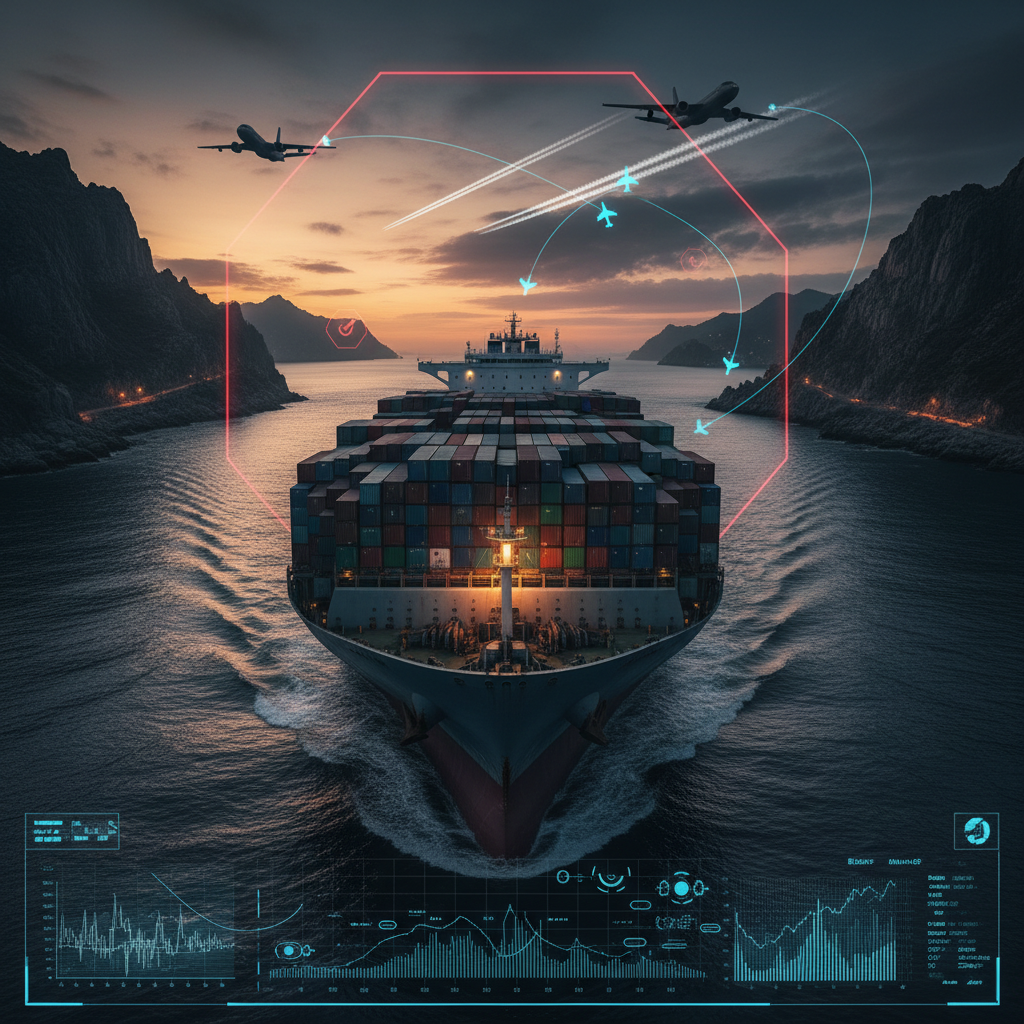
The Unfolding Geopolitical Landscape and Its Supply Chain Impact
Global supply chains, once optimized for efficiency and cost-effectiveness, are now operating under the constant shadow of geopolitical volatility. From regional conflicts to shifting international relations, the ripple effects are immediate and far-reaching, fundamentally altering the calculus for cargo movement worldwide. These events are no longer isolated incidents; they represent a persistent, systemic risk that demands a new level of agility and foresight from logistics professionals. The intricate web of global trade routes, established over decades, is being redrawn in real-time, necessitating constant adaptation and strategic recalibration. Businesses must contend with an environment where established norms can be upended overnight, leading to unprecedented challenges in maintaining predictable and reliable transport flows.
Airspace Closures and the Redrawing of Air Cargo Maps
One of the most immediate and impactful consequences of geopolitical tensions is the closure of national or regional airspace. When conflicts erupt or political disputes escalate, vast swathes of sky can become no-fly zones, forcing air cargo carriers to reroute. This phenomenon has significant implications for air freight, which is often relied upon for high-value, time-sensitive, or perishable goods. Rerouting adds thousands of miles to journeys, dramatically increasing flight times, fuel consumption, and operational costs. For instance, flights that once took a direct path might now circumnavigate entire continents, leading to extended transit times and potential delays in critical deliveries. This not only inflates shipping expenses but also strains aircraft capacity and crew availability, creating bottlenecks in the global air freight network. The unpredictability of these closures makes long-term planning difficult and places a premium on dynamic route optimization.
Navigating Perilous Waterways and Maritime Chokepoints
Maritime shipping, the backbone of global trade, is equally vulnerable to geopolitical disruptions, particularly in critical waterways and chokepoints. Areas prone to piracy, armed conflict, or political instability become high-risk zones, compelling shipping lines to divert vessels. Recent examples include security threats in key maritime passages, which have forced ships to undertake significantly longer journeys around entire continents. Such rerouting adds weeks to transit times, consumes substantially more fuel, and incurs higher insurance premiums, all of which translate into increased costs for shippers and ultimately, consumers. Furthermore, environmental challenges, such as droughts impacting major canals, can exacerbate these issues by limiting capacity or forcing diversions. The cumulative effect is a reduction in vessel availability, increased port congestion at alternative hubs, and a profound impact on the predictability of global supply chains for bulk commodities and containerized cargo alike.
Tariffs, Sanctions, and the Shifting Sands of Trade Policy
Geopolitical tensions frequently manifest as economic tools, primarily through the imposition of tariffs, sanctions, and other trade restrictions. These measures are designed to exert political pressure but have direct and often severe consequences for international trade flows. Tariffs increase the cost of imported goods, making certain supply chains economically unviable and prompting businesses to seek alternative sourcing locations or to absorb higher costs. Sanctions, on the other hand, can completely prohibit trade with specific countries or entities, forcing companies to disentangle complex relationships and find new markets or suppliers. Navigating this evolving landscape requires meticulous compliance management and a constant re-evaluation of global sourcing and distribution strategies. The result is often a push towards diversification, nearshoring, or reshoring initiatives, which, while reducing geopolitical risk, can introduce new operational complexities and higher production costs.
The Cumulative Toll on Global Trade and Transport Efficiency
The confluence of these geopolitical disruptions — airspace closures, maritime rerouting, and trade restrictions — exacts a heavy toll on global trade and transport efficiency. The most immediate consequences include extended lead times, significantly higher operational costs due to increased fuel consumption, longer transit times, and elevated insurance premiums. Predictability, a cornerstone of efficient supply chain management, is severely eroded, leading to increased inventory holding costs as companies build buffers against uncertainty, or conversely, to stockouts when disruptions are more severe than anticipated. The overall risk profile for international trade escalates, requiring businesses to invest more in risk assessment, contingency planning, and supply chain resilience. This environment challenges the traditional just-in-time models, pushing towards more robust, albeit potentially more expensive, supply chain architectures.
The Strategic Advantage of Real-Time Visibility and Control
In this era of unprecedented geopolitical volatility, a robust shipment-visibility control tower platform is no longer a luxury but an indispensable strategic asset. Such a platform provides real-time, end-to-end visibility into the location and status of every shipment, whether by air, sea, or land. When airspace is closed or a maritime route becomes impassable, the control tower immediately flags the affected shipments, allowing supply chain managers to assess the impact and explore alternative routes. This proactive capability enables rapid decision-making, such as rerouting air cargo to different hubs or diverting vessels before they enter a high-risk zone. Furthermore, it facilitates precise communication with customers and partners regarding revised estimated times of arrival (ETAs) and potential delays. For managing tariffs and sanctions, the platform can integrate compliance data, ensuring that shipments adhere to current regulations and avoiding costly penalties or seizures. By consolidating data from multiple sources, a control tower empowers businesses to maintain operational continuity, mitigate financial losses, and uphold customer commitments even amidst significant global disruption.
Building Resilience in an Era of Constant Flux
The current geopolitical climate underscores a fundamental shift in supply chain management: resilience has become as critical as efficiency. While the pursuit of cost optimization remains important, the ability to withstand and adapt to external shocks is paramount for long-term viability. Geopolitical events will continue to shape the global trade landscape, making dynamic risk assessment and agile response capabilities essential. Investing in advanced technologies, particularly comprehensive shipment-visibility control tower platforms, provides the foundational intelligence needed to navigate this complexity. By transforming raw data into actionable insights, these platforms enable businesses to anticipate disruptions, react decisively, and ultimately build more robust, adaptable, and competitive supply chains that can thrive even in an environment of constant geopolitical flux.
Source: Global Trade Magazine — https://www.globaltrademag.com/gt-podcast-community-connection-series-episode-3-laredo-tx-the-pathway-for-trade/