
Red Sea Under Threat: Yanbu Incident's Supply Chain Reverberations
An MGS supply-chain analyst examines the immediate and long-term implications of the recent incident at Yanbu, a critical Saudi oil export terminal on the Red Sea. This brief details the impact on key shipping lanes, facilities, and commodities, while outlining proactive strategies for shippers to navigate increased geopolitical risk and leverage advanced visibility platforms.
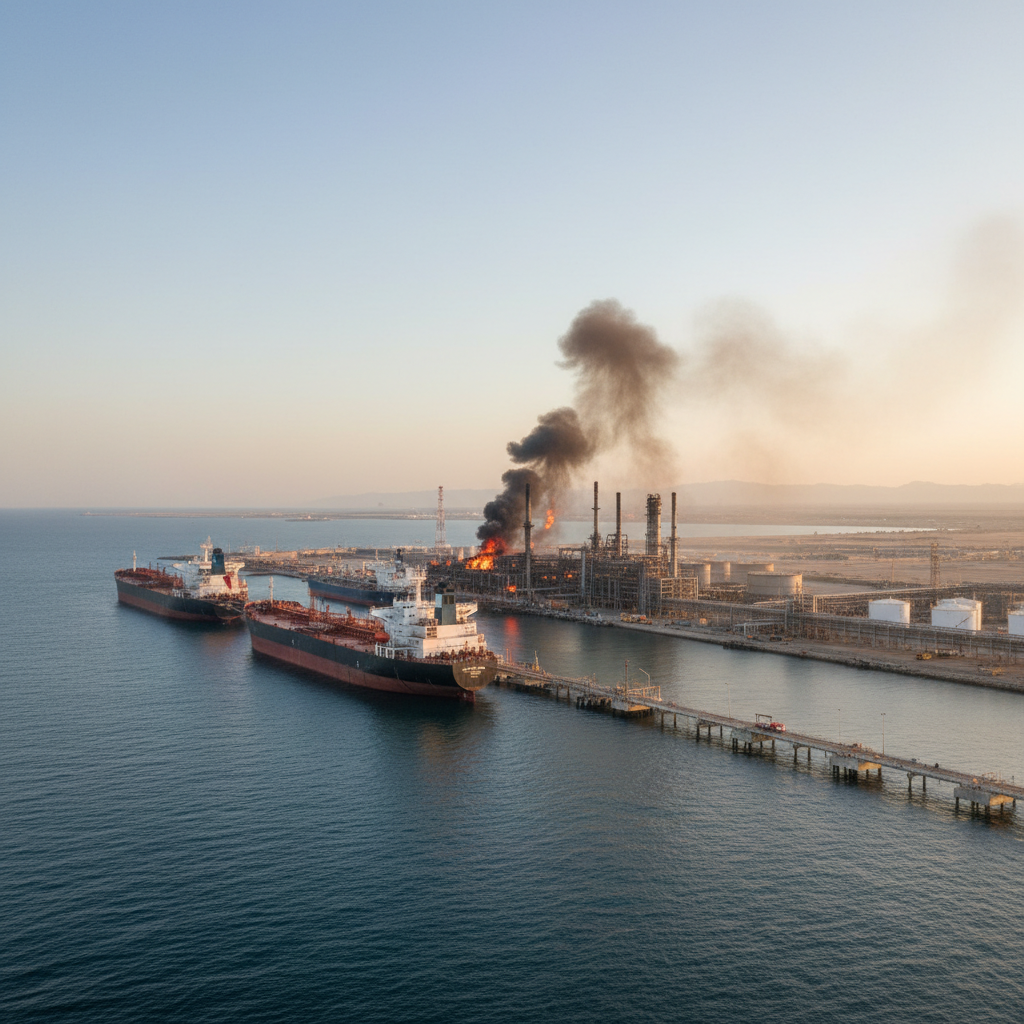
As supply chain professionals, we constantly monitor global events that can introduce volatility and disruption into the intricate networks we manage. The recent incident at Yanbu, a pivotal Saudi oil export terminal on the Red Sea, serves as a stark reminder of the ever-present geopolitical risks that can swiftly alter trade flows and operational stability. While the full scope of the event is still unfolding, its implications for maritime cargo movement, particularly through one of the world's most critical chokepoints, are significant and demand immediate attention.
Event Overview and Immediate Impact
On a recent Thursday, reports emerged of an explosion and fire at the main Saudi oil export terminal located in Yanbu, a strategic port city on the Red Sea. The incident was attributed to an unidentified projectile, introducing an element of uncertainty and potential for escalation. Yanbu is not merely a port; it is a linchpin in the global energy supply chain, facilitating a substantial portion of Saudi Arabia's crude oil exports. Any disruption here has immediate and far-reaching consequences, extending beyond the physical damage to the facility itself. The immediate impact centers on operational delays, potential re-routing of vessels, and a palpable increase in perceived risk for maritime traffic in the broader Red Sea region. The ambiguity surrounding the projectile's origin further complicates risk assessment, as it leaves open questions about the nature and duration of future threats.
Critical Lanes and Facilities Affected
The most directly affected facility is, unequivocally, the Yanbu Port itself. As a primary export hub for crude oil, any operational impairment here translates directly into delays for tanker loadings and potential diversions for vessels en route. However, the ripple effect extends far beyond the port's immediate vicinity. The incident's location within the Red Sea immediately implicates this vital maritime artery. The Red Sea is a critical segment of the Asia-Europe trade route, serving as the gateway to the Suez Canal. Any perceived increase in security threats within the Red Sea corridor can compel shipping lines to reconsider their routes. While a full closure or widespread disruption is not yet confirmed, the mere presence of a security incident at such a prominent location introduces a 'risk premium' into the entire region. This could lead to vessels slowing down, altering their course, or, in more severe scenarios, even contemplating the longer and more costly journey around the Cape of Good Hope, bypassing the Suez Canal entirely. Such diversions would add significant transit time and fuel costs, impacting delivery schedules globally.
Impact on Modes and Commodities
Maritime shipping is the primary mode of transport directly impacted. Specifically, oil tankers are at the forefront, given Yanbu's role as an oil export terminal. Delays in loading, potential damage to infrastructure, or increased security protocols will directly affect the availability and flow of crude oil onto global markets. This, in turn, can lead to volatility in energy prices, which then cascades into higher operational costs for all transport modes – air, sea, and land – due to increased fuel expenses. While the direct target was an oil facility, the broader perception of risk in the Red Sea could affect container ships and bulk carriers transiting the region. Shippers of general cargo, manufactured goods, and raw materials moving between Asia and Europe via the Suez Canal may face increased insurance premiums (war risk surcharges), longer transit times, and potential congestion at alternative ports if re-routing becomes widespread. The commodity most directly affected is, of course, crude oil, with potential knock-on effects for refined petroleum products and petrochemicals. However, the indirect impact on the cost of transporting virtually all other commodities is also a significant concern.
Broader Supply Chain Implications
This incident at Yanbu underscores the inherent fragility of global supply chains when confronted with geopolitical instability at critical chokepoints. The 'unidentified projectile' aspect introduces a significant element of uncertainty, fueling a geopolitical risk premium across the region. This premium manifests as higher insurance costs for vessels, increased security expenditures, and potentially longer lead times due to re-routing or enhanced security checks. For companies operating on lean, just-in-time inventory models, such disruptions can quickly lead to stockouts, production halts, and lost sales. The incident also highlights the interconnectedness of energy markets and global trade; a disruption to oil exports from a major producer like Saudi Arabia will inevitably lead to energy market volatility, impacting fuel prices for all modes of transport and manufacturing processes worldwide. This event serves as a critical reminder for businesses to assess their exposure to regional geopolitical risks and build greater resilience into their supply chain strategies.
Shipper Strategies for Mitigation
In the face of such unpredictable geopolitical disruptions, shippers must adopt proactive and adaptive strategies. Firstly, enhanced visibility into their cargo's movement is paramount. Knowing the exact location and status of shipments, especially those transiting high-risk areas, allows for timely decision-making. Secondly, diversification of routes and carriers should be a continuous strategic exercise. While avoiding the Red Sea entirely might not always be feasible or cost-effective, having alternative plans (e.g., assessing the viability of air freight for critical components, or exploring alternative sea routes) can provide flexibility. Thirdly, revisiting inventory management strategies is crucial. Increasing safety stock levels for critical goods that typically transit the Red Sea can buffer against potential delays. Finally, engaging with logistics partners to understand their contingency plans and reviewing marine cargo insurance policies for specific coverage related to war risk and political instability are essential steps to mitigate financial exposure.
Leveraging MGS for Proactive Response
A robust shipment-visibility control tower like MGS becomes an indispensable tool in navigating such complex and volatile scenarios. MGS provides real-time, granular tracking of all shipments, allowing shippers to pinpoint the exact location of their cargo relative to the Yanbu incident and the broader Red Sea region. This immediate insight enables rapid assessment of exposure. Furthermore, MGS can integrate geopolitical intelligence feeds with live shipment data, offering predictive analytics on potential delays, rerouting impacts, and revised estimated times of arrival. Automated alerts and notifications can be configured to inform shippers instantly if their vessels are entering or exiting designated high-risk zones, or if port statuses at key facilities like Yanbu change. This capability allows for proactive communication with customers and internal stakeholders. By providing a single source of truth for all shipment data, MGS empowers shippers to conduct rapid scenario planning, model the financial and operational impact of various disruption levels, and make informed decisions on re-routing, inventory adjustments, or alternative sourcing, thereby minimizing the impact of unforeseen geopolitical events on their supply chains.
Source: The Maritime Executive — https://maritime-executive.com/article/explosion-and-fire-reported-at-yanbu