
D-Mart's Q2 2026 Performance: Unpacking Revenue Growth and Operational Acumen
This Insight brief analyzes Avenue Supermarts' (D-Mart) impressive Q2 2026 financial results, highlighting the drivers behind its 18.4% revenue growth and the operational strategies supporting its expanding 518-store network.
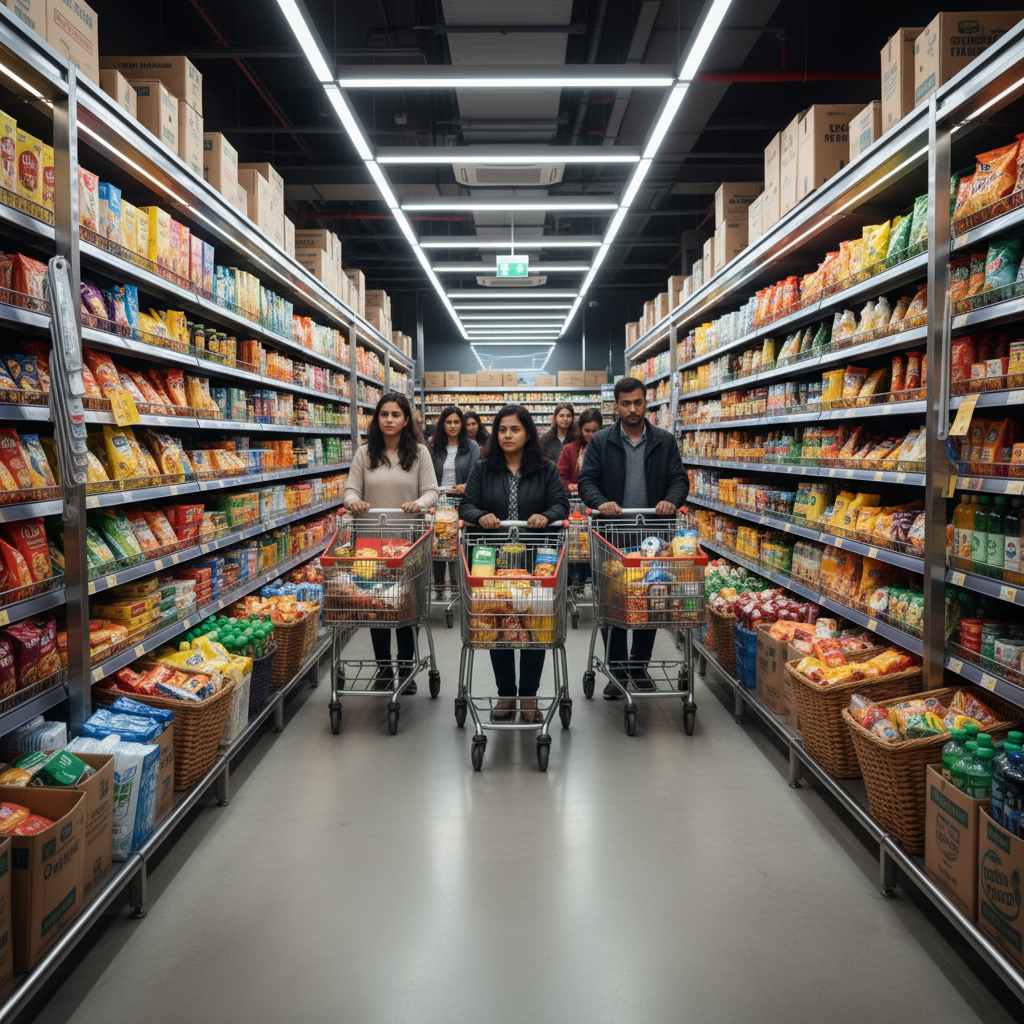
Sales effectiveness
Avenue Supermarts, operating under the D-Mart brand, has showcased remarkable sales effectiveness in the second quarter of 2026. The company reported a standalone revenue of Rs 19,206.18 crore, marking an impressive 18.4% surge compared to the Rs 16,218.79 crore achieved in the same period last year. This substantial year-over-year growth underscores the company's robust ability to capture market demand and convert it into tangible sales. Such a significant percentage increase is a clear indicator of strong consumer engagement, effective merchandising, and possibly successful promotional strategies that resonated with their customer base.
Further reinforcing this trend, the sequential growth from the preceding quarter also stands out. Revenue increased by 4.7% from Rs 18,343.49 crore, demonstrating consistent upward momentum. This quarter-over-quarter improvement suggests that the sales strategies are not only effective in the long term but also adaptable and responsive to immediate market conditions, allowing for sustained revenue generation. The ability to maintain sequential growth, even after a strong annual performance, speaks volumes about the underlying health of the sales pipeline and the efficiency of the sales channels.
The reported store count of 518 also plays a pivotal role in understanding D-Mart's sales effectiveness. While the source does not provide sales per store, the expansion to 518 locations inherently broadens the company's reach, making its products and services accessible to a larger consumer base. Each new store represents an additional point of sale, contributing to the overall revenue pool. The successful integration and operationalization of these stores, leading to the reported revenue figures, highlight the effectiveness of the company's market penetration strategies and its capacity to drive sales across a growing retail footprint. This combination of organic growth within existing stores and inorganic growth through expansion is a powerful driver of sales effectiveness, translating directly into the impressive revenue figures observed.
Revenue optimization
The substantial revenue figures reported by Avenue Supermarts, reaching Rs 19,206.18 crore in Q2 2026, are a testament to well-executed revenue optimization strategies. The 18.4% year-over-year increase from Rs 16,218.79 crore is not merely a result of market tailwinds but reflects deliberate efforts to maximize sales potential. A key component of this optimization is the strategic expansion of its retail footprint, evidenced by the current store count of 518. Each new store represents an optimized opportunity to tap into previously underserved markets or to increase market density in existing regions, thereby expanding the total addressable market and capturing a greater share of consumer spending.
Revenue optimization in a retail context typically involves a multi-faceted approach. While specific details are not provided, the consistent growth, including a 4.7% increase from the prior quarter's Rs 18,343.49 crore, suggests effective management of product assortment, pricing strategies, and promotional activities. D-Mart likely employs sophisticated data analytics to understand consumer preferences, optimize product placement, and tailor pricing to maximize both sales volume and value. The ability to achieve such significant revenue growth implies that the company is successfully balancing competitive pricing with attractive product offerings, ensuring that customers find value and continue to make purchases.
Furthermore, the scale of operations, now encompassing 518 stores, allows for economies of scale in procurement and distribution, which can indirectly support revenue optimization by enabling more competitive pricing or better product availability. By effectively managing its supply chain and store operations, D-Mart can ensure that shelves are stocked with high-demand items, minimizing lost sales opportunities due to stockouts. This holistic approach to managing the entire retail value chain, from procurement to point-of-sale, is crucial for consistently optimizing revenue streams and achieving the impressive financial results reported.
High-growth opportunities
Avenue Supermarts' performance in Q2 2026 clearly demonstrates a strong focus on and successful execution of high-growth opportunities. The 18.4% year-over-year revenue growth, escalating from Rs 16,218.79 crore to Rs 19,206.18 crore, is a compelling indicator of the company's aggressive pursuit and effective capitalization on market expansion. This growth rate significantly outpaces many established players in the retail sector, suggesting that D-Mart is not only growing organically but also actively identifying and penetrating new market segments or increasing its presence within existing ones.
The expansion of the store network to 518 locations is a primary driver of these high-growth opportunities. Each new store opening represents a strategic decision to enter a new geographical area or to increase market density in a region with high potential. This physical expansion strategy allows D-Mart to reach a broader customer base, capture new demographic segments, and increase its overall market share. The consistent increase in revenue, including the 4.7% sequential growth from Rs 18,343.49 crore, suggests that these new stores are quickly becoming productive and contributing meaningfully to the company's top line, indicating effective site selection and rapid market acceptance.
Moreover, sustained growth at this level implies that D-Mart is adept at identifying and responding to evolving consumer needs and market trends. Whether through category expansion, private label development, or enhanced customer experience, the company is clearly finding avenues to expand its revenue base. The ability to maintain such a high growth trajectory, supported by a continuously expanding physical presence, positions D-Mart as a leader in leveraging high-growth opportunities within the retail landscape, setting a strong precedent for future performance.
Operation efficiency
While the provided data does not offer granular details on specific operational metrics, the significant revenue growth achieved by Avenue Supermarts – an 18.4% year-over-year increase to Rs 19,206.18 crore and a 4.7% quarter-over-quarter rise – alongside the management of 518 stores, inherently points to a highly efficient operational framework. Scaling operations to support such substantial revenue figures and a large, expanding retail footprint requires robust and streamlined processes across the entire value chain.
The effective management of 518 stores, each requiring consistent inventory, staffing, and customer service, is a complex logistical challenge. Achieving the reported revenue growth implies that D-Mart's supply chain, warehousing, and in-store operations are functioning with high levels of efficiency. For a retail giant, this typically involves optimized inventory management to minimize stockouts and overstock situations, efficient logistics for timely replenishment, and effective store layouts that enhance customer flow and purchasing ease. Without these efficiencies, rapid expansion and sustained revenue growth would be difficult to achieve and maintain without significant operational bottlenecks or increased costs.
Consider the intricate web of activities required to support 518 stores: procurement from numerous suppliers, transportation to distribution centers, and final delivery to individual stores. In such a large-scale operation, tools that enhance visibility and control are paramount. For instance, a shipment-visibility control tower (MGS) would be invaluable in optimizing operational efficiency. By providing real-time tracking of goods from suppliers to store shelves, an MGS can help D-Mart proactively manage potential delays, optimize delivery routes, reduce transportation costs, and ensure that products are available when and where customers want them. This direct contribution to minimizing out-of-stocks and improving supply chain responsiveness would directly support the observed revenue growth by ensuring product availability and enhancing the overall customer experience, thereby solidifying the company's operational prowess in managing its extensive network and achieving its financial targets. The ability to consistently deliver revenue growth across such a vast and growing network is a strong testament to the underlying operational excellence.
Source: The Economic Times Markets — https://economictimes.indiatimes.com/markets/stocks/earnings/d-mart-q2-revenue-rise-18-pc-to-rs-19206-cr-store-count-at-518/articleshow/134656472.cms