
Panama Earthquake: A Near Miss for Global Supply Chains and the Imperative of Real-Time Visibility
A magnitude 7.7 earthquake near Panama underscores the fragility of critical global trade arteries. While transits continued, the incident highlights the need for real-time visibility platforms like MGS to navigate and mitigate potential disruptions, regardless of their origin.
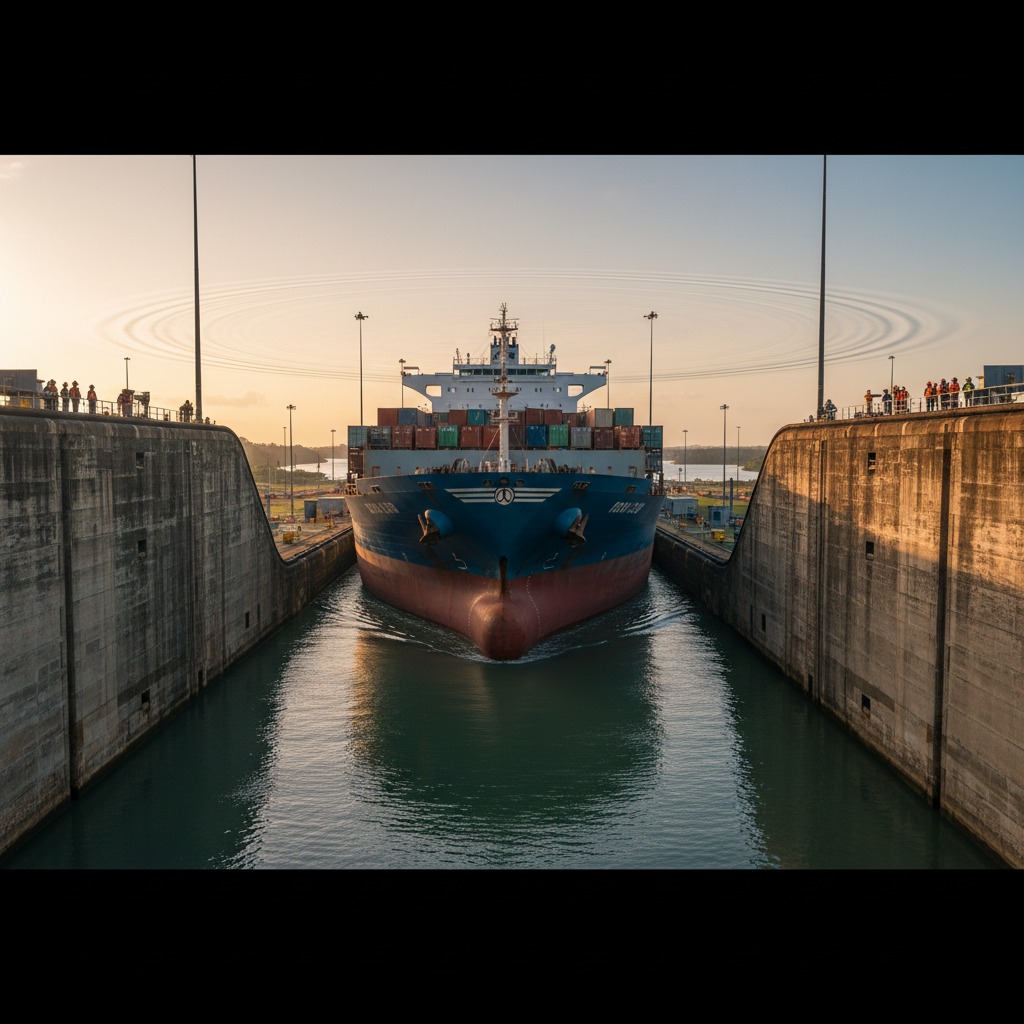
Event Overview and Immediate Impact
On October 9, 2026, a significant seismic event, a magnitude 7.7 earthquake, struck near Panama. Such a powerful natural disaster in close proximity to one of the world's most critical maritime choke points immediately raised concerns across global supply chains. The Panama Canal, a vital artery for international trade, facilitates an immense volume of cargo movement between the Atlantic and Pacific oceans. Initial reports from the Canal authority, however, indicated a fortunate outcome: transits continued without interruption, even as facilities underwent thorough inspection. Furthermore, a Pacific tsunami warning, initially issued following the quake, was subsequently lifted, averting another potential layer of disruption. While the immediate impact on cargo movement was minimal, this incident serves as a stark reminder of the inherent vulnerabilities within the global logistics network, whether from natural phenomena or geopolitical tensions.
Potential for Waterway Disruption
Despite the positive news that Panama Canal transits continued, the sheer magnitude of the earthquake — 7.7 — cannot be understated. A seismic event of this scale carries immense destructive potential for infrastructure. Had the quake's epicenter been closer, or its effects more severe on the canal's locks, dams, or navigational channels, the consequences for global shipping would have been catastrophic. The Panama Canal is not merely a shortcut; it's a linchpin for trade, particularly for containerized cargo, bulk commodities, and energy shipments. Its disruption would force vessels to undertake the significantly longer and more costly journey around Cape Horn at the southern tip of South America, adding weeks to transit times and dramatically increasing fuel consumption and operational expenses. The economic ripple effects would be felt globally, impacting manufacturing schedules, inventory levels, and consumer prices. The MGS control tower, in such a scenario, would be critical for immediately identifying affected vessels, assessing new ETAs, and providing alternative routing options to mitigate delays.
Broader Route Implications
Even with the Panama Canal operating normally, a major event like this highlights the fragility of single-point dependencies in global logistics. Should a critical waterway like the Panama Canal face prolonged closure, the broader implications for shipping routes are profound. Vessels would be forced to re-route, primarily via the Suez Canal for Asia-Europe trade, or the aforementioned Cape Horn for trans-American routes. These diversions are not merely about distance; they involve increased fuel costs, higher insurance premiums for longer voyages, potential capacity constraints on alternative routes, and significant delays in delivery schedules. For time-sensitive cargo, such as perishable goods or components for just-in-time manufacturing, these delays could lead to substantial financial losses and production halts. The incident, while not disruptive in this instance, serves as a powerful case study for supply chain planners to continuously evaluate their reliance on specific routes and to develop robust contingency plans for unforeseen events, whether natural disasters or geopolitical blockades.
Airspace and Other Infrastructure
While the immediate focus of a major earthquake in Panama naturally gravitates towards the Canal, it's important to consider the broader impact on regional infrastructure. Airports, roads, railways, and port facilities beyond the Canal itself could suffer damage, leading to localized disruptions in cargo handling and onward movement. Although the source material does not indicate any direct impact on airspace or other transport modalities, a 7.7 magnitude event has the potential to compromise runways, air traffic control systems, and ground transportation networks essential for first and last-mile delivery. In a more severe scenario, air cargo operations could face delays or diversions, adding to the complexity of maintaining supply chain integrity. The MGS platform’s ability to integrate data from various transport modes would be crucial for a holistic view of regional logistics capabilities following such an event.
Trade and Transport Consequences
The near-miss at the Panama Canal underscores the potential for cascading consequences across global trade and transport. A prolonged closure would not only disrupt specific shipping lanes but would also create a ripple effect across the entire maritime industry. Vessel availability would decrease as ships are tied up on longer routes, leading to higher freight rates and tighter capacity. Port congestion at alternative hubs would likely escalate, further exacerbating delays. For businesses, this translates to increased operational costs, potential stockouts, and strained customer relationships. The incident highlights the need for supply chain resilience, emphasizing diversification of sourcing, multi-modal transport options, and strategic inventory management. For an MGS control tower, the value lies in providing immediate, actionable intelligence on vessel positions, estimated arrival times, and potential alternative routes, allowing businesses to react swiftly and minimize financial exposure.
The Role of Visibility in Crisis Management
The incident in Panama, while ultimately non-disruptive to Canal operations, perfectly illustrates the critical importance of real-time shipment visibility platforms like MGS. In moments of crisis, whether triggered by a natural disaster, a geopolitical conflict, or an unforeseen operational failure, access to accurate, up-to-the-minute data is paramount. An MGS control tower provides a unified view of all shipments in transit, allowing analysts to:
- Monitor Vessel Status: Instantly confirm if vessels are proceeding as planned or if they are impacted by an event.
- Assess Route Viability: Quickly identify if primary routes are compromised and evaluate alternative pathways.
- Predict Delays: Calculate new estimated times of arrival (ETAs) based on real-time conditions and re-routing decisions.
- Communicate Proactively: Provide timely updates to stakeholders, enabling informed decision-making and managing expectations.
- Optimize Contingency Plans: Leverage data to implement pre-defined contingency strategies, such as diverting cargo or adjusting production schedules.
Even when disruptions are averted, as in this Panama Canal scenario, the ability to rapidly confirm operational continuity and inspect infrastructure status is invaluable. It transforms uncertainty into clarity, allowing businesses to maintain confidence in their supply chains and avoid unnecessary panic or costly overreactions. The MGS platform empowers supply chain professionals to move from reactive problem-solving to proactive risk management, ensuring resilience in an increasingly volatile global environment.
Source: Ship & Bunker — https://shipandbunker.com/news/am/496651-magnitude-77-earthquake-hits-panama-canal-transits-continue-as-authority-inspects-facilities