
Navigating the Unpredictable: How Weather Continues to Reshape Global Cargo Movement
While geopolitical events capture headlines, the silent, relentless force of weather consistently disrupts global supply chains. This brief explores how atmospheric conditions impact critical lanes, facilities, and modes, and outlines strategies shippers can employ, leveraging advanced visibility platforms, to mitigate these pervasive risks.
Introduction: Navigating the Storms of Global Logistics
The global supply chain operates within a complex web of interconnected systems, constantly exposed to a spectrum of risks. While high-profile geopolitical incidents, such as the reported missile attack on the MT Velos Sapphire in the Gulf, underscore the acute and sudden vulnerabilities that can emerge, an equally pervasive, yet often underestimated, disruptor is the weather. Unlike isolated incidents, atmospheric conditions present a continuous, evolving challenge, impacting cargo movement across every segment of the logistics network. For supply chain professionals, understanding and anticipating these weather-induced disruptions is crucial for maintaining operational continuity and ensuring timely delivery.
This brief delves into the multifaceted ways weather influences cargo movement, identifying affected lanes, facilities, and modes, and offering actionable insights for shippers. In an era where resilience is paramount, proactive strategies, underpinned by advanced visibility, are no longer optional but essential for navigating the unpredictable climates of global trade.
Weather's Pervasive Reach: Disrupting Global Lanes
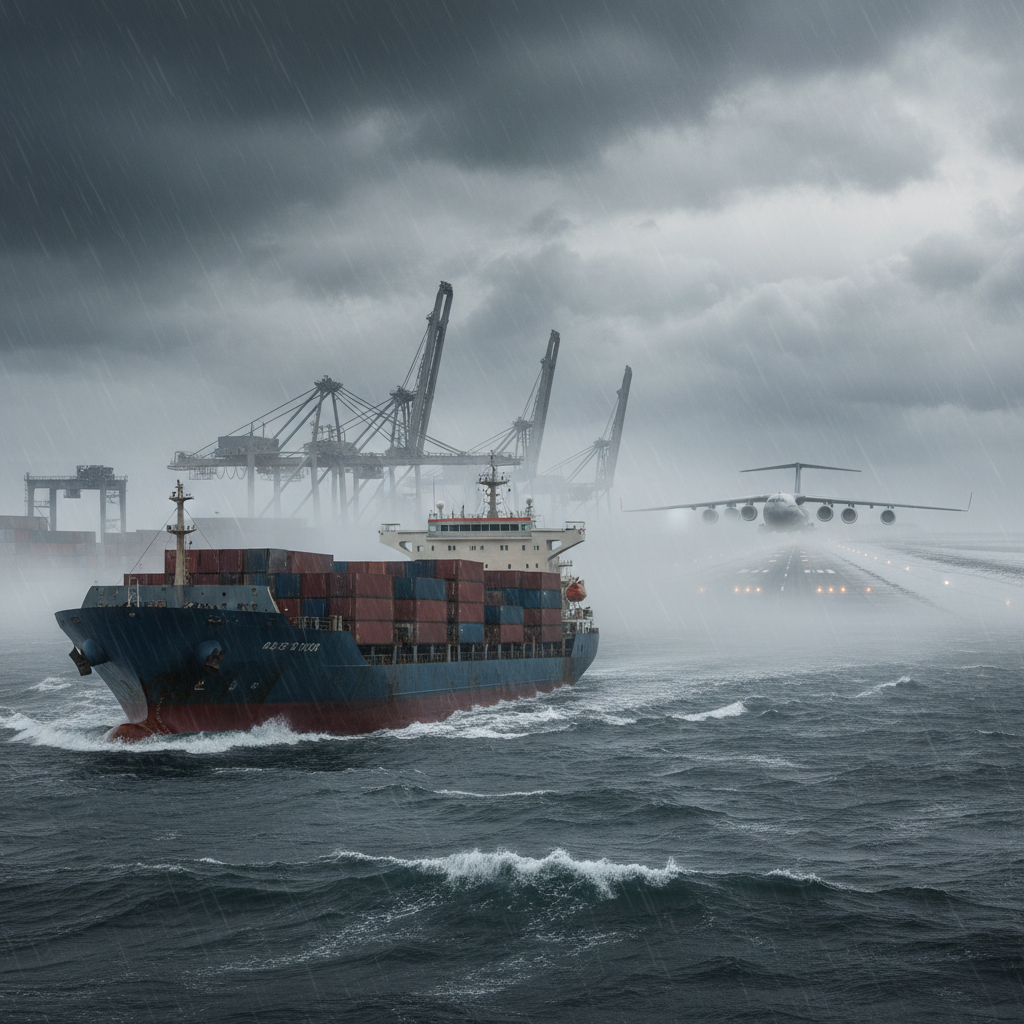
Weather phenomena exert a profound influence on the viability and efficiency of global shipping lanes, affecting everything from major oceanic routes to intricate inland networks. Severe storms, for instance, can force maritime vessels to alter courses, adding significant transit time and consuming additional fuel. Tropical cyclones in key regions like the Pacific and Atlantic can lead to widespread rerouting or even complete cessation of services for days, creating ripple effects that delay subsequent voyages and port calls. Similarly, dense fog can reduce visibility to critical levels, necessitating slow steaming or anchoring for safety, particularly in congested waterways or approaches to major ports. Arctic ice formation can render northern sea routes impassable for non-ice-strengthened vessels for extended periods, pushing traffic to longer, more southerly alternatives.
Overland, heavy snowfall can close mountain passes and major highways, bringing truck and rail freight to a standstill. Flooding, caused by torrential rains or storm surges, can submerge roads and railway lines, severing critical land bridges between production hubs and consumption markets. Extreme heatwaves can cause railway tracks to buckle, imposing speed restrictions on trains, while also impacting the performance and safety of road vehicles. These disruptions are not isolated; they often cascade, creating congestion at alternative routes and exacerbating delays across the entire network. The cumulative effect is a significant increase in lead times, operational costs, and inventory holding expenses for shippers.
Bottlenecks and Delays: Impact on Facilities
Logistics facilities, from bustling container ports to sprawling air cargo terminals and vast distribution centers, are highly susceptible to weather-related operational impediments. Ports, as critical intermodal transfer points, are particularly vulnerable. High winds can prevent cranes from operating safely, halting loading and unloading activities. Storm surges and heavy rainfall can flood port areas, damaging infrastructure, equipment, and cargo. In extreme cases, entire port operations may be suspended for safety reasons, leading to a backlog of vessels awaiting berth and cargo accumulating on docks. This creates significant congestion and extends dwell times, impacting the entire supply chain schedule.
Airports face similar challenges. Heavy snow and ice can close runways, ground aircraft, and delay de-icing operations, leading to flight cancellations and significant backlogs of air freight. Dense fog can reduce visibility below safe landing and takeoff minimums, causing diversions and delays. Thunderstorms and lightning can halt ramp operations, preventing cargo from being loaded or unloaded. Inland distribution centers and warehouses are not immune; power outages caused by severe weather can disrupt automated systems, lighting, and temperature-controlled storage, potentially damaging sensitive goods. Flooding can render access roads impassable, preventing trucks from reaching or leaving facilities, effectively isolating inventory and disrupting last-mile delivery. The cumulative impact on facilities translates directly into increased demurrage, detention charges, and ultimately, higher costs for shippers.
Mode-Specific Vulnerabilities to Atmospheric Conditions
Each mode of transport exhibits unique vulnerabilities to various weather phenomena, necessitating tailored risk management strategies.
Maritime Cargo: Ships are inherently exposed to the elements. High winds and rough seas can cause cargo shifting, damage to containers, and even loss of cargo overboard. Vessels may need to slow down, take longer routes, or seek shelter, all of which extend transit times. Fog can severely impair navigation, increasing collision risks. Extreme temperatures can affect the performance of vessel machinery and the integrity of temperature-sensitive cargo. Ice conditions in polar regions or inland waterways require specialized, ice-class vessels or complete route changes, adding complexity and cost.
Air Cargo: Air freight, while offering speed, is highly sensitive to atmospheric conditions. Strong headwinds can increase fuel consumption and flight duration. Thunderstorms, snow, and ice can lead to flight cancellations, diversions, or significant delays due to safety protocols and de-icing requirements. Volcanic ash, though less frequent, can ground entire fleets due to engine damage risks. These disruptions, while often shorter in duration than maritime delays, can have a magnified impact due to the time-critical nature of air cargo.
Road and Rail Freight: Overland transport faces distinct challenges. Heavy rainfall and flooding can make roads and rail lines impassable, causing detours or complete halts. Snow and ice create hazardous driving conditions, reducing speeds and increasing accident risks. Extreme heat can lead to road pavement buckling or railway track expansion, necessitating speed restrictions. High winds can be particularly dangerous for high-sided vehicles on bridges or open stretches. These conditions directly impact delivery schedules, driver safety, and fuel efficiency.
Mitigating Weather-Induced Supply Chain Risks
Shippers are not powerless against the forces of nature. Proactive planning and strategic implementation of resilience measures can significantly mitigate weather-induced disruptions:
- Diversification of Routes and Modes: Relying on a single shipping lane or transport mode increases vulnerability. Shippers should explore alternative routes and consider multimodal strategies to provide flexibility when primary pathways are compromised by weather.
- Strategic Inventory Buffers: While lean supply chains are cost-efficient, maintaining strategic buffer stock for critical goods in geographically diverse locations can absorb some of the impact from weather-related delays, preventing stockouts and production halts.
- Enhanced Communication and Collaboration: Establishing robust communication channels with carriers, logistics providers, and customers is paramount. Timely updates on weather forecasts and potential disruptions allow for quicker decision-making and expectation management.
- Leveraging Predictive Analytics: Utilizing weather forecasting services integrated with logistics planning can provide early warnings of potential disruptions, enabling preemptive action such as rerouting or rescheduling.
- Robust Contingency Planning: Developing detailed contingency plans for various weather scenarios, including alternative port calls, emergency warehousing, and backup transportation options, is essential for rapid response.
The MGS Advantage: Proactive Visibility in Unpredictable Climates
This is where a sophisticated shipment-visibility control tower platform, like MGS, becomes an indispensable asset. In an environment dominated by unpredictable weather, real-time, end-to-end visibility is the cornerstone of resilience. MGS empowers shippers with:
- Real-time Tracking and Monitoring: MGS provides granular, real-time location data for cargo across all modes, enabling shippers to see exactly where their shipments are relative to developing weather patterns. This immediate insight allows for rapid assessment of risk.
- Predictive Weather Integration: By integrating advanced weather forecasting data, MGS can overlay potential weather impacts onto planned routes and schedules. This proactive capability allows the platform to flag at-risk shipments before they are directly affected, enabling preemptive rerouting or rescheduling.
- Dynamic Route Optimization: When a primary lane or facility is compromised by weather, MGS can instantly analyze alternative routes, considering factors like transit time, cost, and current weather conditions, to recommend the most efficient and safest course of action.
- Automated Alerting and Communication: The platform can automatically trigger alerts to relevant stakeholders when shipments are delayed due to weather or when new weather warnings emerge along a shipment's path. This ensures all parties are informed and can coordinate responses efficiently.
- Performance Analytics: Post-event analysis through MGS provides valuable data on how weather impacts specific lanes, carriers, and modes. This intelligence can inform future network design, carrier selection, and risk mitigation strategies, building a more resilient supply chain over time.
By transforming raw data into actionable insights, an MGS control tower doesn't just track shipments; it provides the foresight and agility needed to navigate the increasingly volatile and weather-dependent landscape of global logistics, turning potential disruptions into manageable challenges.
Source: MarineLink — https://www.marinelink.com/news/seafarer-killed-gulf-oil-tanker-struck-544204