
Navigating Economic Headwinds: A Ground-Level View of Financial and Operational Resilience
An analysis of how manufacturers are tackling rising costs, technological shifts, and policy uncertainty to maintain solid demand and continued investment, focusing on key financial and operational levers.
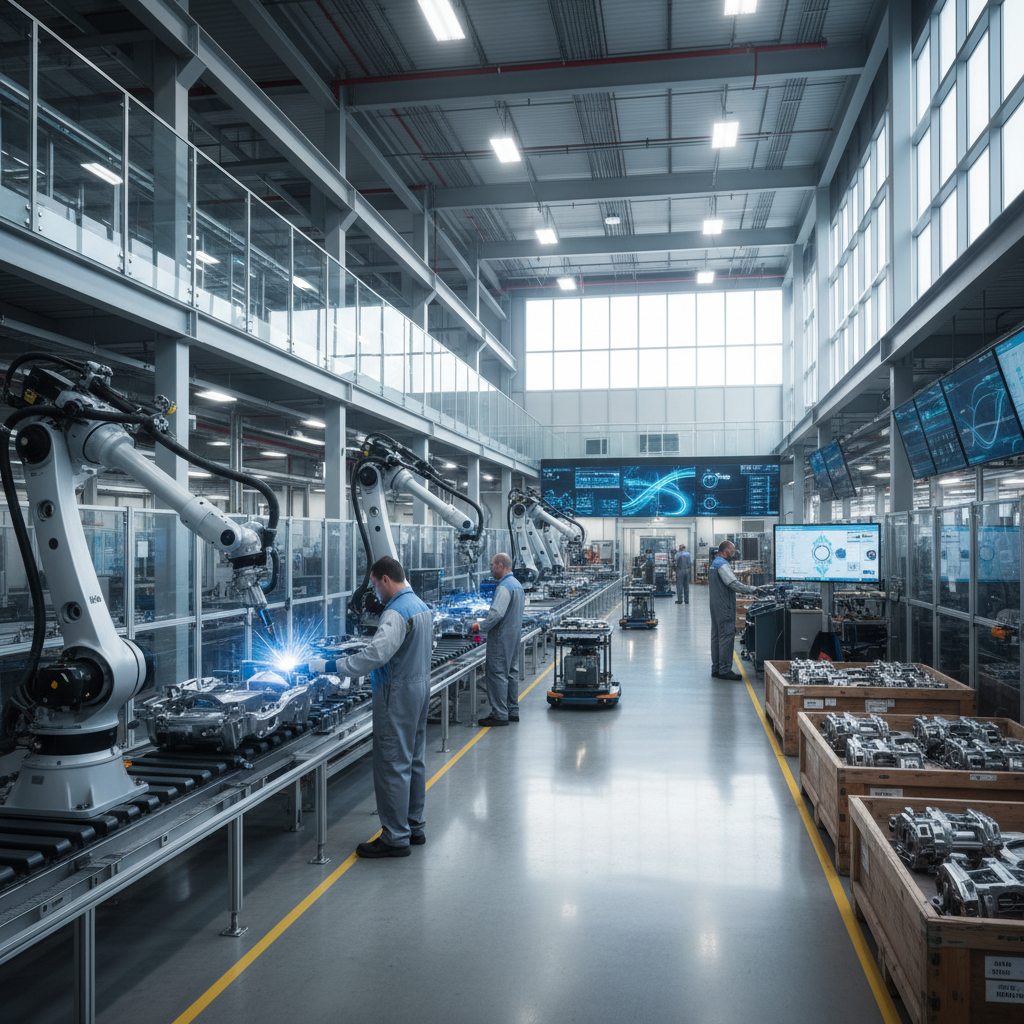
Operation efficiency
In an economic landscape characterized by dynamic shifts, operational efficiency emerges as a paramount driver of sustained financial health. The observation that businesses are contending with "changing technology" underscores a critical opportunity: leveraging innovation to streamline processes, enhance throughput, and reduce waste. For an auto-parts maker like Gestamp, this could translate into adopting advanced manufacturing techniques, such as automation in assembly lines or predictive maintenance for machinery, which minimizes downtime and maximizes asset utilization. The imperative to navigate "rising costs" further amplifies the need for efficiency; every operational improvement that reduces resource consumption or accelerates production directly mitigates cost pressures. For instance, optimizing material flow within a factory or reducing energy consumption per unit produced directly contributes to a healthier bottom line. The strategic integration of new technologies, therefore, is not merely an upgrade but a foundational shift towards more agile and cost-effective operations, ensuring that the business can continue to meet "solid demand" without disproportionately increasing its operational expenditure.
Effective operational efficiency also benefits significantly from enhanced supply chain visibility. A shipment-visibility control tower (MGS), for example, can provide real-time insights into the movement of raw materials and finished goods. This transparency allows businesses to proactively identify and resolve potential disruptions, optimize inventory levels, and refine production schedules. By reducing unexpected delays and improving the precision of logistics, an MGS directly contributes to smoother operations, fewer expedited shipments, and a more predictable operational environment, all of which are critical for maintaining efficiency amidst external uncertainties.
Cost reduction
The challenge of "rising costs" is a central theme for manufacturers, demanding a proactive and multi-faceted approach to cost reduction. This isn't just about cutting expenses but about strategically re-evaluating every input and process to identify areas for greater value. For a company like Gestamp, with its continuous "investment," managing the cost of new equipment, raw materials, and labor is crucial. Strategies could include value engineering of products to reduce material requirements, negotiating more favorable terms with suppliers, or implementing lean manufacturing principles to eliminate non-value-added activities. The goal is to absorb or offset increasing input costs without compromising product quality or production capacity. This requires a granular understanding of cost drivers and the agility to adapt purchasing and production strategies in response to market fluctuations.
The impact of "uncertain policy environment" can also manifest as increased compliance costs or tariffs, necessitating a flexible cost-reduction strategy that can pivot quickly. Furthermore, operational inefficiencies often mask hidden costs, such as excessive inventory carrying costs, rework, or expedited shipping fees. By addressing these underlying issues through process improvements and technology adoption, businesses can achieve sustainable cost reductions that bolster overall profitability. For instance, optimizing logistics through a shipment-visibility control tower (MGS) can significantly reduce freight costs, minimize demurrage and detention charges, and lower the financial burden associated with supply chain disruptions, directly contributing to the overarching cost reduction objectives.
Organizational productivity
Organizational productivity is intrinsically linked to a company's ability to navigate complex economic forces, particularly "changing technology" and an "uncertain policy environment." For manufacturers, this means empowering the workforce to adapt to new tools, processes, and market demands. Investing in employee training and development for new technologies ensures that the human capital can effectively leverage technological advancements, rather than being displaced by them. This could involve upskilling teams to operate advanced machinery or to analyze data from new digital systems, thereby enhancing their output and decision-making capabilities.
Furthermore, fostering a culture of continuous improvement and adaptability is vital when faced with an "uncertain policy environment." Organizations that can quickly pivot their strategies, reallocate resources, and empower employees to take initiative are better positioned to absorb shocks and capitalize on emerging opportunities. This includes optimizing workflows, reducing administrative overhead, and ensuring that every team member understands their contribution to the overall strategic objectives. Ultimately, enhanced organizational productivity ensures that the business can generate more value from its existing resources, allowing it to sustain "solid demand" and justify continued "investment" even when external conditions are challenging.
Cash flow optimization
Optimizing cash flow is paramount for businesses facing "rising costs" and undertaking continuous "investment." While "solid demand" provides a healthy revenue stream, the outflow of cash for operations and capital expenditures needs meticulous management. Rising costs can erode operating margins, reducing the cash generated from sales, while ongoing investment in new technology or capacity expansion requires significant capital deployment. Effective cash flow management involves accelerating receivables, optimizing inventory levels to reduce carrying costs, and strategically managing payables to maintain supplier relationships without tying up excessive working capital. For Gestamp, this could mean negotiating favorable payment terms with customers and suppliers, or implementing just-in-time inventory systems where feasible, to minimize cash tied up in stock.
The "uncertain policy environment" can introduce volatility, making robust cash flow forecasting and contingency planning critical. Businesses must maintain sufficient liquidity to weather unforeseen challenges or capitalize on sudden opportunities. A shipment-visibility control tower (MGS) can play a crucial role here by providing accurate, real-time data on inbound and outbound shipments. This allows for more precise inventory management, reducing the need for buffer stock and freeing up cash. Furthermore, by ensuring timely deliveries and reducing delays, an MGS can accelerate the cash conversion cycle, moving goods from production to customer invoicing and payment more efficiently, thereby directly enhancing working capital and overall cash flow.
Procurement savings
The challenge of "rising costs" places procurement at the forefront of financial strategy. For an auto-parts manufacturer, the cost of raw materials, components, and logistics can significantly impact overall profitability. Procurement savings are not merely about securing the lowest price but about achieving the best total cost of ownership (TCO) across the supply chain. This involves strategic sourcing, where suppliers are chosen not just for their current pricing but for their reliability, quality, and ability to innovate. Building strong, collaborative relationships with key suppliers can lead to more favorable terms, joint cost-reduction initiatives, and greater resilience against supply chain disruptions.
Leveraging technology in procurement, such as e-procurement platforms or advanced analytics, can identify opportunities for consolidation, negotiate better bulk discounts, and monitor market trends to anticipate price fluctuations. The "uncertain policy environment" might also necessitate diversifying the supplier base to mitigate geopolitical risks or tariff impacts, which can indirectly lead to savings by fostering greater competition. A shipment-visibility control tower (MGS) is particularly valuable in procurement by providing transparency into freight costs and performance. It allows businesses to identify inefficiencies in transportation, negotiate better rates with carriers based on actual data, and reduce costs associated with delays or lost shipments, thereby directly contributing to significant procurement savings.
Workforce optimization
Workforce optimization is a critical lever for businesses navigating both "changing technology" and "rising costs." As technology evolves, the nature of work transforms, requiring a workforce that is adaptable, skilled, and highly productive. For a manufacturer, this means strategically investing in training programs that equip employees with the competencies needed to operate new machinery, manage automated systems, and analyze data for process improvement. This not only enhances individual productivity but also ensures that the organization can fully capitalize on its technological investments.
In the face of "rising costs," optimizing the workforce also involves ensuring that labor resources are allocated efficiently to high-value activities. This could mean automating repetitive tasks to free up human talent for more complex problem-solving, innovation, or customer engagement. Furthermore, fostering a positive work environment, promoting employee engagement, and offering competitive compensation and benefits can reduce turnover, which is a hidden cost, and attract top talent. A well-optimized workforce is more resilient to the "uncertain policy environment" as it can quickly adapt to new regulations or market demands, contributing to sustained operational excellence and overall business success.
Revenue optimization
Despite the challenges of "rising costs," "changing technology," and an "uncertain policy environment," the presence of "solid demand" presents a clear opportunity for revenue optimization. This goes beyond simply selling more; it involves strategically maximizing the value generated from each sale and expanding market reach effectively. For an auto-parts manufacturer, this could mean diversifying product offerings to capture new segments, enhancing product features through technological advancements to justify premium pricing, or optimizing pricing strategies based on market elasticity and competitive positioning. The "continued investment" mentioned in the source suggests a proactive approach to enhancing capabilities, which can directly support revenue growth by improving product quality, expanding production capacity, or enabling faster time-to-market for new innovations.
Furthermore, understanding customer needs and market trends, potentially through data analytics, allows businesses to tailor their offerings and marketing efforts for maximum impact. In an "uncertain policy environment," agility in market entry and product adaptation can unlock new revenue streams or mitigate risks associated with existing markets. By focusing on high-value customers and optimizing the product mix, businesses can ensure that their "solid demand" translates into robust and sustainable revenue growth, supporting further investment and long-term financial stability.
High-growth opportunities
The narrative of "solid demand" and "investment continues" for an auto-parts maker like Gestamp, even amidst "rising costs," "changing technology," and an "uncertain policy environment," points to a strategic pursuit of high-growth opportunities. These opportunities are often found at the intersection of market demand and technological innovation. For instance, the shift towards electric vehicles (EVs) represents a significant technological change in the automotive sector. An auto-parts manufacturer that is investing in developing components for EVs or adapting its production capabilities for these new demands is positioning itself for substantial future growth.
High-growth opportunities also stem from market expansion, either geographically or into new product lines. The continued investment suggests confidence in scaling operations or developing new capabilities that can capture a larger share of existing markets or penetrate entirely new ones. Navigating the "uncertain policy environment" successfully could also unlock growth, for example, by aligning with government incentives for domestic manufacturing or green technologies. By strategically allocating capital and leveraging technological advancements, businesses can transform current challenges into catalysts for significant expansion and market leadership.
High-margin opportunities
Amidst the pressure of "rising costs," identifying and capitalizing on high-margin opportunities becomes crucial for financial resilience. "Changing technology" is a primary enabler here. For an auto-parts manufacturer, this could involve developing proprietary technologies or specialized components that offer superior performance, durability, or efficiency, thereby commanding premium pricing. Innovation that reduces production costs through automation or advanced materials, while maintaining or improving product quality, also expands margins.
Furthermore, strategic differentiation, driven by quality, brand reputation, or unique service offerings, allows businesses to move beyond commodity pricing. The "continued investment" can be directed towards research and development that yields patented designs or highly efficient production processes, creating a competitive advantage that supports higher margins. Even within an "uncertain policy environment," businesses that can adapt quickly to new regulations, perhaps by offering compliant, high-value solutions, can carve out niche markets with better profitability. By focusing on value creation and technological leadership, companies can not only protect but also expand their profit margins, ensuring robust financial performance despite external pressures.
Source: Bloomberg Markets — https://www.bloomberg.com/news/videos/2026-11-08/what-america-s-factories-reveal-about-the-economy-video