
Navigating the Storm: How Weather Disrupts Global Cargo Movement
Unpredictable and increasingly severe weather patterns pose a persistent and growing threat to the efficiency and reliability of global supply chains. From ocean routes to last-mile delivery, understanding and mitigating these disruptions is crucial for modern logistics.
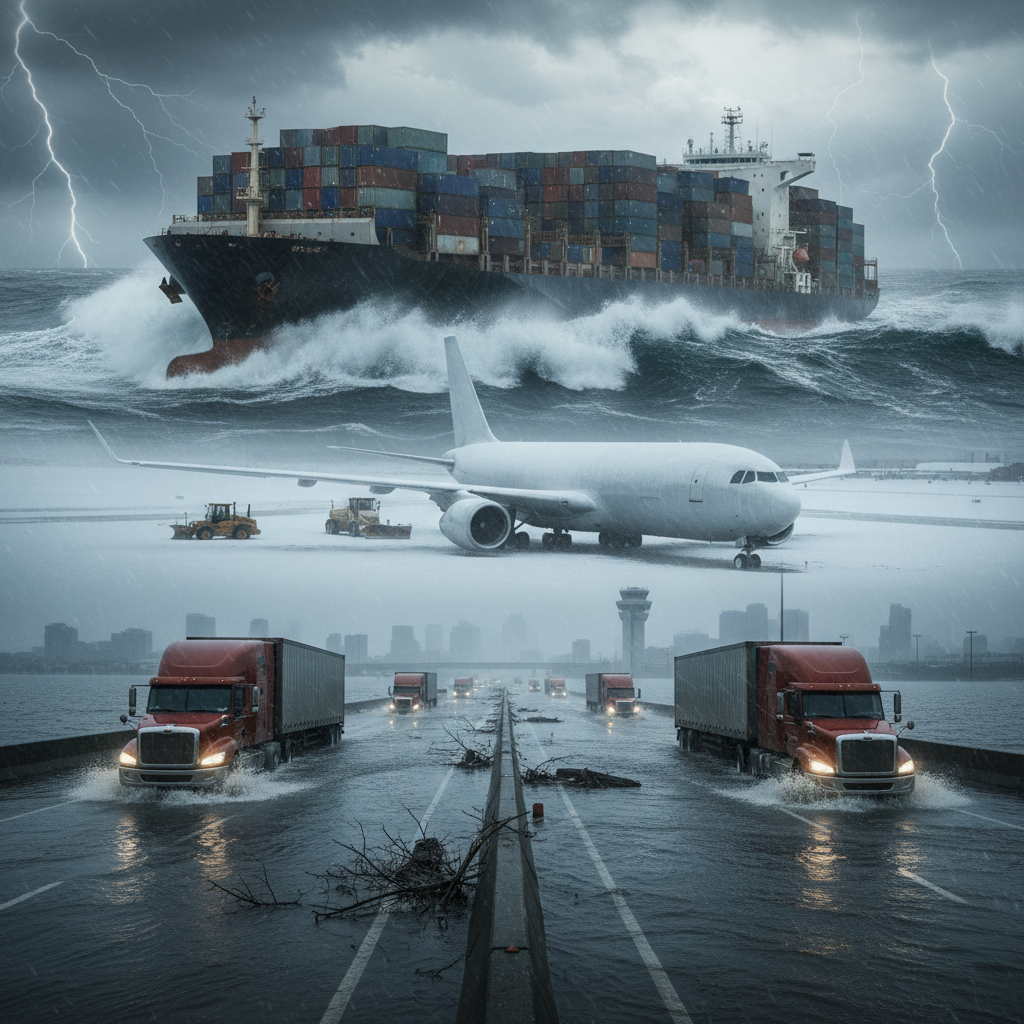
The Pervasive Impact of Weather on Supply Chains
Weather is an omnipresent, often underestimated, force shaping the landscape of global supply chains. Far from being mere inconveniences, meteorological phenomena can trigger significant disruptions, leading to delays, increased costs, and compromised cargo integrity. As climate patterns shift, the frequency and intensity of extreme weather events are on the rise, transforming what were once isolated incidents into systemic challenges. From blizzards paralyzing ground transport to hurricanes rerouting maritime vessels, the intricate web of logistics is constantly tested by nature's unpredictability. For supply chain analysts, understanding these dynamics is not just about reacting to events, but about anticipating and building resilience against a relentless force that impacts every stage of cargo movement.
Key Lanes and Modes Under Pressure
Weather's influence spans all major transportation modes and critical trade lanes:
Maritime Shipping: Ocean-going vessels are particularly vulnerable to severe storms, including hurricanes, typhoons, and cyclones, which necessitate extensive diversions, adding days or even weeks to transit times. High winds and rough seas can also lead to cargo damage or loss, while dense fog frequently causes port closures and delays in busy shipping lanes and choke points. Furthermore, extreme cold can lead to ice formation in critical waterways, like the Baltic Sea or the Great Lakes, forcing icebreaker assistance or complete route closures. These disruptions affect major trans-oceanic routes such as the Trans-Pacific and Trans-Atlantic, as well as crucial regional passages like the approaches to the Suez and Panama Canals.
Air Cargo: Air freight, while often chosen for its speed, is highly susceptible to atmospheric conditions. Severe thunderstorms, blizzards, and high winds can ground flights, close airports, and disrupt air traffic control operations. Volcanic ash plumes, though less frequent, can shut down vast swathes of airspace for extended periods, as seen in past events. Major air cargo hubs, often located in regions prone to specific weather phenomena, face constant operational challenges, leading to backlogs and missed connections. The ripple effect can delay high-value, time-sensitive shipments globally.
Road Freight: Ground transportation faces a myriad of weather-related obstacles. Heavy snowfall and ice can render roads impassable, leading to extensive closures and delivery halts, especially in mountainous regions or northern latitudes. Flooding from heavy rains can submerge roads, bridges, and underpasses, cutting off access to distribution centers and urban areas. Extreme heat, conversely, can cause road surfaces to buckle, impose weight restrictions on vehicles to prevent tire blowouts, and strain refrigeration units for temperature-sensitive goods. High winds can also pose a significant hazard to high-profile vehicles, leading to bridge closures or even overturns.
Rail Transport: Rail networks are robust but not immune. Heavy snow and ice can freeze switches and hinder train movement, while landslides and washouts caused by heavy rain or melting snow can completely block tracks. Extreme heat can lead to track buckling, necessitating speed restrictions to prevent derailments. These disruptions can cause significant delays in intermodal movements, where cargo transitions between rail and other modes, creating bottlenecks at key transfer points.
Facility and Operational Vulnerabilities
The impact of weather extends beyond transit, directly affecting the operational capacity and accessibility of critical logistics facilities:
Ports and Terminals: Storm surges and high winds can force the closure of ports, halting vessel berthing and cargo handling operations. Dense fog can reduce visibility to critical levels, preventing ships from entering or leaving port. These closures lead to vessel queues, significant berthing delays, and subsequent yard congestion as cargo accumulates. Cranes, essential for loading and unloading, may be shut down in high winds for safety reasons.
Airports: Beyond flight disruptions, severe weather impacts ground operations. Runways may be closed for de-icing or snow removal, ground handling equipment can be inoperable in extreme conditions, and cargo processing facilities can experience delays due to staff accessibility issues or power outages. This creates backlogs that can take days to clear.
Warehouses and Distribution Centers: While often inland, these facilities are not immune. Road closures due to weather can prevent trucks from reaching or leaving warehouses, creating inbound and outbound delays. Power outages can disrupt automated systems, temperature control, and security. Extreme temperatures can also affect the working conditions for staff, leading to absenteeism or reduced efficiency. For temperature-sensitive goods, a power outage can mean significant product loss.
Intermodal Hubs: These crucial transfer points, where cargo shifts between different modes, are particularly vulnerable. When one mode is disrupted by weather, cargo can accumulate rapidly, overwhelming the hub's capacity and causing cascading delays across the entire network. For instance, a rail line closure might force cargo onto already congested roads, or a port closure might lead to containers piling up at nearby rail yards.
An MGS shipment-visibility control tower becomes indispensable in these scenarios. By integrating real-time weather data with shipment tracking, it can provide immediate alerts for port closures, flight cancellations, road blockages, and estimated time of arrival (ETA) deviations. This proactive intelligence allows logistics teams to quickly assess the impact of a developing weather event on specific shipments and facilities, enabling swift decision-making.
Proactive Strategies for Shippers
Mitigating the pervasive impact of weather requires a multi-faceted and proactive approach, heavily reliant on advanced technology and strategic planning:
Enhanced Visibility and Predictive Analytics: The cornerstone of resilience is comprehensive visibility. Leveraging platforms like an MGS control tower allows shippers to monitor weather patterns globally, receive predictive alerts for potential disruptions, and understand the real-time location and status of their cargo. This capability enables early identification of at-risk shipments and allows for pre-emptive action. Predictive analytics can forecast the likely impact of weather events on specific lanes and facilities, offering lead time for adjustments.
Dynamic Route Optimization: With real-time weather intelligence from an MGS platform, shippers can dynamically adjust shipping routes, modes, or schedules to bypass affected areas. For maritime freight, this might mean rerouting vessels to avoid severe storms. For road transport, it could involve identifying alternative highway segments to circumvent flooded roads or heavy snow. This agility minimizes delays and ensures cargo continues its journey with minimal interruption.
Buffer Stock and Inventory Management: Strategically placing safety stock or maintaining adequate inventory levels at key distribution points can act as a buffer against weather-induced delays. While not a direct solution to transit issues, it ensures that critical components or high-demand goods remain available to customers even if a specific shipment is delayed. This strategy must be balanced against carrying costs, but for high-value or essential goods, it's a vital safeguard.
Diversification of Carriers and Modes: Relying on a single carrier or mode of transport increases vulnerability. By diversifying logistics partners and being prepared to switch between modes (e.g., from ocean to air, or road to rail where feasible), shippers gain flexibility. An MGS platform can help manage the complexity of multiple carriers and modes, providing a unified view of all shipments regardless of the underlying logistics provider.
Robust Contingency Planning: Developing comprehensive contingency plans for various weather scenarios is paramount. This includes identifying alternative ports or airports, establishing emergency storage solutions, and outlining clear communication protocols for all stakeholders. Regular drills and reviews of these plans ensure that teams are prepared to execute them effectively when disruptions occur.
Communication and Collaboration: Maintaining open and transparent communication with carriers, suppliers, and customers is crucial during weather events. A shared visibility platform like MGS facilitates this by providing a single source of truth for shipment status and potential delays, enabling all parties to make informed decisions and manage expectations effectively. Proactive communication can build trust and minimize the negative impact on customer relationships.
By integrating advanced visibility tools and adopting these proactive strategies, shippers can transform weather-related challenges from unpredictable crises into manageable operational adjustments, ensuring greater supply chain resilience in an increasingly volatile climate.
Source: gCaptain — https://gcaptain.com/iran-strikes-more-ship-engine-rooms-in-ramp-up-of-hormuz-attacks/