
Navigating the Storm: How Geopolitical Events Are Reshaping Global Cargo Movement
Escalating geopolitical tensions are fundamentally altering global trade, forcing supply chains to adapt to new realities. This MGS analyst brief explores the profound consequences on cargo routes, costs, and operational strategies, using the widening high-risk zones in the Black Sea as a stark illustration of the challenges facing international logistics.
Introduction
The global supply chain, inherently designed for efficiency and cost-effectiveness, finds itself increasingly vulnerable to the unpredictable forces of geopolitical events. While political shifts have always influenced trade, recent escalations have introduced a new layer of complexity and risk, demanding unprecedented levels of agility and visibility from logistics operations. The expansion of designated high-risk zones by marine insurance markets, as recently observed in the Black Sea due to ongoing conflict, serves as a potent example of how these macro-level events translate into tangible, immediate disruptions for cargo movement worldwide. For shipment-visibility control tower platforms like MGS, understanding and mitigating these impacts is paramount to maintaining resilient and predictable supply chains.
Impact on Shipping Routes and Transit Times
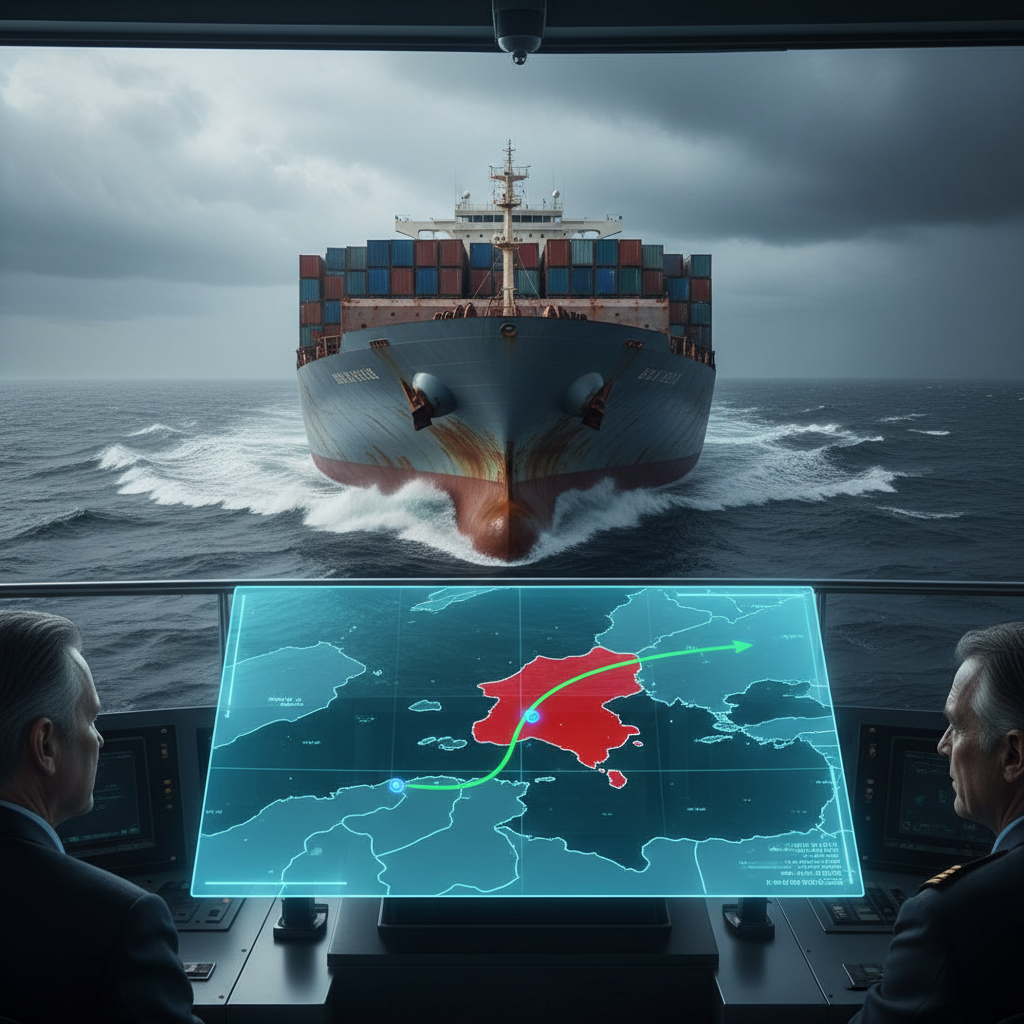
Geopolitical instability directly compels a re-evaluation of established shipping lanes. When regions become conflict zones or are deemed high-risk, vessels must seek alternative paths to ensure the safety of cargo, crew, and assets. The Black Sea scenario, where insurers are widening high-risk areas, forces carriers to either accept significantly higher costs for direct transit or embark on longer, more circuitous journeys. This rerouting has immediate consequences: extended transit times become the norm, adding days or even weeks to delivery schedules. For instance, cargo destined for or originating from ports within the Black Sea might need to be transshipped via less direct routes, potentially involving land bridges or different port hubs further afield. These longer routes inherently consume more fuel, increase operational hours for vessels, and strain crew rotations. The ripple effect can also lead to congestion in alternative ports or critical maritime chokepoints that were not designed for such increased traffic volumes. An MGS platform becomes indispensable here, offering real-time tracking that allows logistics managers to identify and evaluate new, viable routes, accurately predict revised Estimated Times of Arrival (ETAs), and proactively communicate delays to stakeholders. Its predictive analytics can model the impact of rerouting on downstream processes, enabling swift adjustments to inventory management and distribution plans.
Escalating Costs: Insurance, Fuel, and Operations
Perhaps one of the most immediate and substantial consequences of increased geopolitical risk is the sharp escalation in operational costs. The decision by marine insurance markets to widen high-risk zones, as seen in the Black Sea, directly translates into significantly higher insurance premiums for vessels operating in or transiting through these areas. This increased cost is invariably passed down the supply chain, impacting freight rates and ultimately the end consumer. Beyond insurance, longer shipping routes necessitated by rerouting lead to a substantial increase in fuel consumption, which is often one of the largest variable costs for carriers. Furthermore, operating in high-risk environments can demand additional security measures, such as armed guards or convoy protection, further inflating expenses. Crew wages may also increase for voyages through dangerous territories as a form of hazard pay. Port calls in congested alternative hubs can incur higher demurrage and detention charges due to extended waiting times. For businesses, these cumulative cost increases erode profit margins and can make certain trade lanes economically unviable. An MGS control tower provides crucial financial visibility, allowing companies to track these escalating costs in real-time against original budgets, identify the most cost-effective alternative routes, and understand the financial implications of every operational decision. This data-driven insight is vital for strategic pricing and risk assessment.
Airspace Restrictions and Air Cargo Dynamics
While the specific example of the Black Sea pertains to maritime routes, geopolitical events frequently trigger extensive airspace restrictions or closures. When airspace over a conflict zone or politically sensitive region becomes inaccessible, commercial airlines must reroute flights, often adding thousands of kilometers to their journeys. This directly impacts air cargo, which is typically utilized for time-sensitive or high-value goods where speed is paramount. Longer flight paths mean increased fuel burn, higher operational costs for airlines, and consequently, elevated air freight rates. The reduced capacity on direct routes, coupled with increased demand for alternative, longer routes, can create bottlenecks and further drive up prices. For critical components or perishable goods, these delays and cost increases can have severe repercussions on production schedules and product viability. An MGS platform, with its multimodal tracking capabilities, can monitor air cargo movements across altered flight paths, providing updated ETAs and facilitating rapid adjustments for downstream logistics, such as coordinating ground transportation or managing inventory at destination warehouses. This integrated view is essential for maintaining the integrity of time-critical supply chains.
Waterway Chokepoints and Congestion
Diversions from one high-risk maritime area inevitably place increased pressure on other, often already busy, waterway chokepoints. For example, if Black Sea traffic is significantly rerouted, it could lead to increased vessel movements through the Turkish Straits, or even further, through the Suez Canal, depending on the ultimate destination. These critical maritime passages have finite capacities, and sudden surges in traffic can lead to severe congestion, bottlenecks, and extended waiting times for vessels. Such delays at chokepoints not only add to transit times but also incur additional costs like demurrage, further exacerbating the financial strain on carriers and shippers. The unpredictability of these congestions makes planning incredibly difficult and can cascade into delays across multiple legs of a supply chain. An MGS control tower offers unparalleled visibility into global vessel movements, allowing logistics professionals to monitor traffic density at key chokepoints, anticipate potential congestion, and receive early warnings of impending delays. This foresight enables proactive decision-making, such as diverting vessels to less congested routes or adjusting port calls, thereby mitigating the impact of bottlenecks on overall supply chain flow.
Tariffs, Sanctions, and Trade Flow Disruption
Geopolitical tensions are often accompanied by the imposition of economic sanctions or retaliatory tariffs, which profoundly disrupt established trade flows. Sanctions can prohibit trade with specific countries, entities, or individuals, or ban the export/import of certain commodities. This forces companies to completely re-evaluate their sourcing and distribution strategies, seeking alternative suppliers or markets that are not subject to restrictions. The compliance burden also increases significantly, as companies must ensure their supply chains do not inadvertently involve sanctioned parties or goods. Tariffs, on the other hand, directly increase the cost of goods, making certain products less competitive and potentially shifting manufacturing or sourcing locations. These measures can lead to a fragmentation of global trade, creating regionalized supply chains and reducing overall efficiency. An MGS platform plays a crucial role in navigating this complex landscape by providing granular visibility into the origin and destination of goods, helping companies ensure compliance with evolving sanctions regimes. It can track goods subject to tariffs, enabling cost analysis for different sourcing options and supporting the identification of alternative suppliers or markets to maintain trade continuity.
Supply Chain Resilience and the Role of Visibility
In an era defined by persistent geopolitical volatility, supply chain resilience is no longer a strategic aspiration but an operational imperative. The ability to adapt quickly to unforeseen disruptions, whether they manifest as rerouted ships, closed airspaces, or new trade barriers, is critical for business continuity. This is precisely where the capabilities of a shipment-visibility control tower like MGS become indispensable. By providing end-to-end, real-time visibility across all modes of transport and every leg of a journey, MGS empowers logistics teams with the data and insights needed to make informed decisions rapidly. It moves beyond mere tracking to offer predictive analytics, identifying potential risks before they fully materialize, and scenario planning tools to evaluate the impact of various disruption responses. From monitoring vessel positions in high-risk zones to tracking air cargo across altered flight paths and ensuring compliance with evolving trade regulations, MGS acts as the central nervous system for a resilient supply chain. It enables proactive communication with partners, optimizes inventory levels to buffer against delays, and facilitates dynamic rerouting, ultimately transforming reactive crisis management into proactive risk mitigation.
Conclusion
The widening of high-risk zones in critical maritime areas like the Black Sea is a stark reminder that geopolitical events are not abstract political discussions but concrete forces reshaping the global economy. These tensions directly impact the fundamental mechanics of trade: dictating routes, inflating costs, and introducing unprecedented levels of uncertainty. For businesses reliant on global supply chains, the imperative is clear: embrace advanced technology that provides real-time, comprehensive visibility. Platforms like MGS are no longer just tools for efficiency; they are essential instruments for resilience, enabling organizations to navigate the complexities of a volatile world, mitigate risks, and maintain the flow of goods even amidst geopolitical storms. The ability to see, understand, and react swiftly to disruptions is the cornerstone of competitive advantage in this new, unpredictable global trade environment.
Source: Maritime Professional — https://www.maritimeprofessional.com/news/london-marine-insurance-market-widens-423042