
Geopolitical Headwinds: Why Supply Chain Visibility is Critical for Cargo Movement
Geopolitical events are no longer isolated incidents but a constant force reshaping global supply chains. From congested waterways to restricted airspaces and shifting trade policies, businesses face unprecedented challenges. This brief explores the profound impact on cargo movement and the imperative for advanced visibility.
Introduction: The New Normal of Disruption
The global supply chain landscape is in a state of perpetual flux, increasingly defined by geopolitical volatility. What were once considered rare, isolated disruptions have become a persistent feature, demanding a fundamental shift in how organizations manage their logistics and trade operations. The interconnectedness of the world means that political decisions, regional conflicts, and economic pressures in one corner of the globe can send immediate and profound ripples through cargo movement, impacting routes, transit times, costs, and ultimately, market access. This brief examines the multifaceted consequences of these geopolitical headwinds on trade and transport, underscoring the critical need for advanced supply chain visibility to navigate this new normal.
Waterway Bottlenecks and Route Diversions
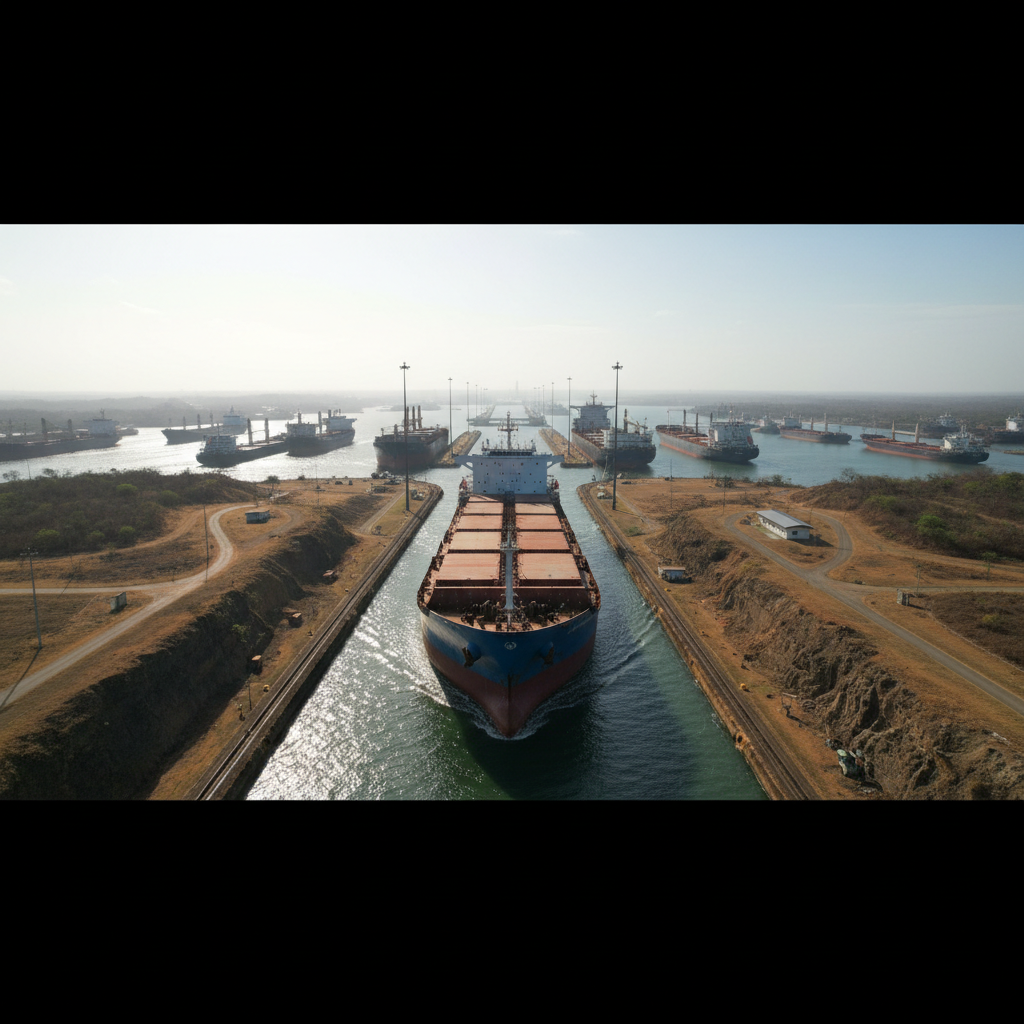
Critical maritime chokepoints are particularly vulnerable to geopolitical pressures and environmental stresses, leading to significant disruptions in global shipping routes. The Panama Canal, for instance, has recently exemplified this vulnerability, with reports indicating that a shipowner reportedly paid more than $5 million for a single transit slot. This extraordinary cost highlights the immense pressure on capacity and the extreme measures some shippers are forced to take to maintain schedules. Such bottlenecks compel carriers to consider lengthy and costly diversions, often adding thousands of nautical miles and weeks to transit times. Rerouting vessels around continents, such as the journey around the Cape of Good Hope, drastically increases fuel consumption, operational expenses, and carbon emissions. Furthermore, these extended voyages strain vessel capacity, leading to fewer available ships for other routes and potentially driving up freight rates across the board. The domino effect includes increased inventory holding costs for goods in transit, delayed delivery of raw materials and finished products, and a general erosion of supply chain predictability. For businesses relying on timely deliveries, these diversions translate directly into lost sales, production delays, and damaged customer relationships.
Airspace Restrictions and Air Cargo Impact
Geopolitical tensions frequently manifest as restrictions or closures of national airspaces, forcing air cargo operators to adopt significantly longer flight paths. The closure of key air corridors, often over conflict zones or politically sensitive regions, necessitates detours that add substantial mileage and flight hours to journeys. This directly translates into higher fuel consumption, increased operational costs for airlines, and extended transit times for high-value or time-sensitive cargo. Longer flights also impact crew duty limits, potentially requiring additional crew members or more frequent layovers, further escalating expenses and complicating scheduling. The reduced efficiency of air routes can lead to capacity constraints on certain trade lanes, as fewer flights can be operated within a given timeframe or with existing aircraft fleets. For industries reliant on air freight for just-in-time delivery or the transport of perishable goods, these airspace restrictions can cause significant delays, spoilage, and a surge in transport costs, ultimately impacting product availability and consumer prices.
Tariffs, Sanctions, and Trade Flow Realignments
Tariffs and sanctions are powerful geopolitical tools that directly reshape international trade flows, often with profound and immediate consequences for supply chains. The imposition of tariffs on specific goods from certain countries can render existing sourcing strategies economically unviable, forcing companies to seek alternative suppliers in different regions. This realignment is not instantaneous; it requires significant investment in new supplier vetting, qualification, and logistics setup. Similarly, sanctions can completely block trade with specific entities or nations, necessitating a complete overhaul of supply chains to avoid prohibited jurisdictions or components. These measures often lead to increased production costs as companies move away from established, optimized supply bases. They also drive a trend towards regionalization or 'friend-shoring,' where businesses prioritize suppliers in geopolitically aligned nations, even if it means higher costs or reduced efficiency. The result is a more fragmented and complex global trade network, characterized by increased administrative burdens, compliance risks, and a constant need for adaptability to evolving trade policies. Companies must continuously monitor geopolitical developments to anticipate and respond to these shifts, which can impact everything from raw material procurement to final product distribution.
The Ripple Effect: Costs, Delays, and Supply Chain Resilience
The cumulative impact of these geopolitical disruptions creates a profound ripple effect across the entire supply chain ecosystem. Increased operational costs, driven by longer routes, higher fuel prices, and elevated freight rates, inevitably translate into higher prices for consumers or reduced profit margins for businesses. Extended lead times, a direct consequence of waterway bottlenecks and airspace restrictions, necessitate larger inventory holdings, tying up capital and increasing warehousing expenses. This also makes forecasting more challenging and increases the risk of stockouts or obsolescence. Beyond the immediate financial implications, geopolitical events introduce a heightened level of uncertainty and risk, making long-term planning incredibly difficult. The imperative for supply chain resilience has never been greater. Organizations must move beyond traditional risk management to cultivate agile, adaptable supply chains capable of absorbing shocks and rapidly reconfiguring operations. This involves diversifying sourcing, building redundancy into logistics networks, and investing in technologies that provide the necessary insights to make informed decisions under pressure.
Leveraging Visibility for Proactive Management
In this era of persistent geopolitical disruption, a robust shipment-visibility control tower platform like MGS is no longer a luxury but a fundamental necessity. Such platforms provide real-time, end-to-end visibility into cargo movement across all modes of transport, enabling organizations to track shipments, monitor potential disruptions, and anticipate impacts. When a critical waterway faces congestion or an airspace is restricted, MGS can immediately highlight affected shipments, providing estimated new arrival times and identifying alternative routes. This allows supply chain managers to proactively communicate with customers, adjust production schedules, and explore alternative logistics solutions before delays escalate. Furthermore, by integrating data on tariffs and sanctions, MGS can help identify compliance risks and optimize routing to avoid prohibitive trade barriers. The predictive analytics capabilities of a control tower empower businesses to model the impact of various geopolitical scenarios, allowing for pre-emptive adjustments to inventory levels, sourcing strategies, and distribution networks. Ultimately, MGS transforms raw data into actionable intelligence, providing the agility and foresight required to navigate the complex and volatile landscape of modern global trade.
Source: Maritime Professional — https://www.maritimeprofessional.com/news/panama-canal-stress-worst-dead-422976