
Navigating the Storm: Asia-North America Tradelane Faces Peak Disruption Risk
Ocean freight disruptions are escalating on critical Asia-North America and Asia-Europe routes, driven by reduced carrier capacity and booking challenges. This brief explores the far-reaching impacts on global supply chains, financial implications for stakeholders, and how advanced visibility platforms can empower strategic decision-making in an increasingly volatile environment.
How this impacts the global supply chain
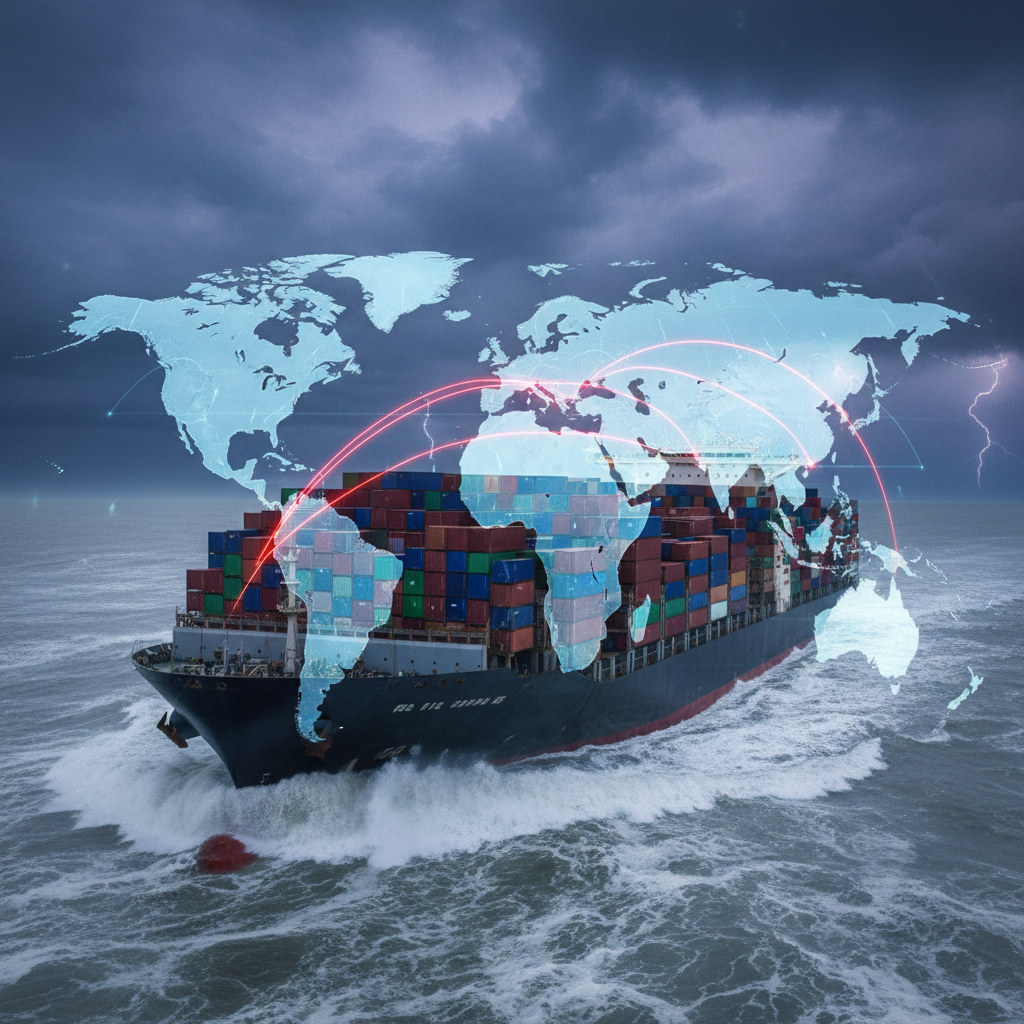
The global supply chain faces escalating turbulence, particularly across the vital Asia-North America and Asia-Europe ocean tradelanes. Recent assessments highlight an elevated risk of disruption, stemming from reduced carrier capacity and growing difficulty in securing vessel bookings. This situation, projected to intensify over the coming weeks (specifically weeks 45-48), directly threatens the predictability and efficiency of international logistics.
For global supply chain flows, this translates into potential bottlenecks and diversions. Cargo on established routes may face delays or require re-routing, leading to extended transit times and impacting lead times for manufacturers and retailers. The tightening capacity on the transpacific route signals a challenging period for goods from Asian production hubs destined for North American markets, potentially forcing a re-evaluation of shipping strategies towards multi-modal solutions or air freight, albeit at higher costs.
Operationally, logistics teams will encounter heightened complexity in scheduling and execution. The reduced reliability of ocean transport necessitates more robust contingency planning and agility. Inventory management strategies will come under scrutiny; businesses may need to increase safety stock, incurring higher holding costs, or face greater risk of stockouts, potentially halting production or missing sales. Port operations could also experience increased pressure, compounding delays. The overall effect is a less fluid, more unpredictable movement of goods, demanding proactive, data-driven approaches.
Global financial impact
The current environment of reduced ocean freight capacity and booking difficulties carries substantial financial implications for all participants in global trade. Shippers are likely to bear the brunt, facing increased freight costs as demand outstrips supply. Beyond direct charges, potential demurrage and detention fees arise from port delays. More critically, missed delivery deadlines can result in lost sales revenue, damage to customer relationships, and contractual penalties. The need for higher safety stock ties up working capital and increases warehousing expenses, eroding profit margins. Manufacturers also face costly production stoppages from delayed inbound components.
Carriers, while potentially benefiting from higher rates, incur operational costs managing disrupted schedules, re-routing vessels, and dealing with congestion. Maintaining service levels in a volatile market also presents a challenge, with potential long-term reputational impacts.
At a broader economic level, increased logistics costs contribute to inflationary pressures, passed down to consumers. Persistent uncertainty can dampen international trade volumes and deter investment in global supply chains, as businesses seek to de-risk operations. The cumulative effect is a less efficient and more expensive global trading system, impacting economic growth and stability.
How MGS can help navigate today's global trade environment
In an environment characterized by reduced carrier capacity and booking challenges, a sophisticated shipment-visibility control tower like MGS becomes an indispensable tool for navigating global trade complexities. MGS delivers real-time, end-to-end visibility across the logistics network, empowering operators with the information needed for informed, proactive decisions.
When critical tradelanes like Asia-North America and Asia-Europe are flagged for high disruption risk, MGS provides immediate insights into the status and location of all in-transit shipments. This allows logistics teams to identify potential delays or deviations as they occur, rather than reacting after the fact. For instance, if a vessel on a high-risk route is delayed, MGS can trigger automated alerts, enabling operators to assess the impact on downstream processes and initiate mitigation strategies promptly.
Crucially, MGS supports the strategic imperative that “carrier selection matters” by providing granular performance data. The platform tracks and analyzes carrier reliability, on-time performance, and historical booking success rates across various lanes. This data moves beyond simple rate comparisons, allowing shippers to evaluate carriers based on their proven ability to deliver goods on time, even in challenging conditions. By understanding which carriers consistently perform better on high-risk routes, MGS users can make data-driven choices, prioritizing reliability to protect their supply chain.
Demand–supply analysis & improvement
The current ocean freight landscape, particularly on the Asia-North America and Asia-Europe routes, clearly illustrates a significant imbalance between demand and supply. “Reduced carrier capacity” directly points to a contraction in vessel space, while “difficulty securing bookings” indicates that demand for shipping services outstrips this diminished supply. This creates a challenging market for shippers, impacting reliability and cost.
To navigate this demand-supply mismatch, several concrete levers can be pulled. Firstly, data-driven carrier selection is paramount. Shippers must leverage historical performance data – easily accessible through platforms like MGS – to identify carriers with a proven track record of reliability and on-time delivery, even during periods of high disruption. This strategic shift prioritizes supply chain resilience.
Secondly, proactive booking and planning become critical. Securing space well in advance mitigates the risk of being left without options, requiring better forecasting. Thirdly, optimizing container utilization ensures every booked slot is used to its maximum potential. Finally, exploring alternative routing or modal options can alleviate pressure on congested ocean lanes, providing necessary flexibility when primary routes are compromised. Focusing on these areas enhances the ability to move goods reliably.
ROI-focused resilience
Investing in supply chain resilience, especially given heightened disruption risks on key tradelanes, yields significant returns by protecting against quantifiable financial losses. The core message that “carrier selection matters” for “getting your goods on time” directly frames resilience in terms of return on investment.
Consider the investment in selecting more reliable carriers or adopting advanced visibility platforms like MGS. This outlay protects against substantial risks. For instance, avoiding a single stockout event due to delayed inbound components can prevent production line stoppages, costing hundreds of thousands in lost output and idle labor. The ROI here is the avoided cost of production downtime. Similarly, ensuring on-time delivery of finished goods prevents lost sales revenue; an investment in reliability directly safeguards top-line growth.
Resilience investments also significantly reduce the need for costly expedited shipping when ocean shipments are delayed. The substantial cost difference between standard ocean freight and emergency air freight for critical shipments makes upfront investment in a robust, visible supply chain a clear cost-avoidance strategy. Avoiding customer penalties, maintaining strong brand reputation, and fostering loyalty through consistent service also represent valuable returns. By leveraging data from platforms like MGS, businesses can quantify carrier performance, allowing for precise ROI calculation. This transforms resilience into a strategic financial decision, ensuring every investment protects against measurable risk.
Source: The Loadstar — https://theloadstar.com/carrier-selection-matters-when-it-comes-to-getting-your-goods-on-time/