
Geopolitical Tensions Drive Up Shipping Costs, Reshaping Global Trade Routes
MSC's extension of piracy and Suez surcharges across the Mediterranean and Black Sea signals deepening maritime disruption. This brief analyzes the escalating operational costs, altered maritime pathways, and heightened supply chain volatility, emphasizing the critical need for advanced shipment visibility.
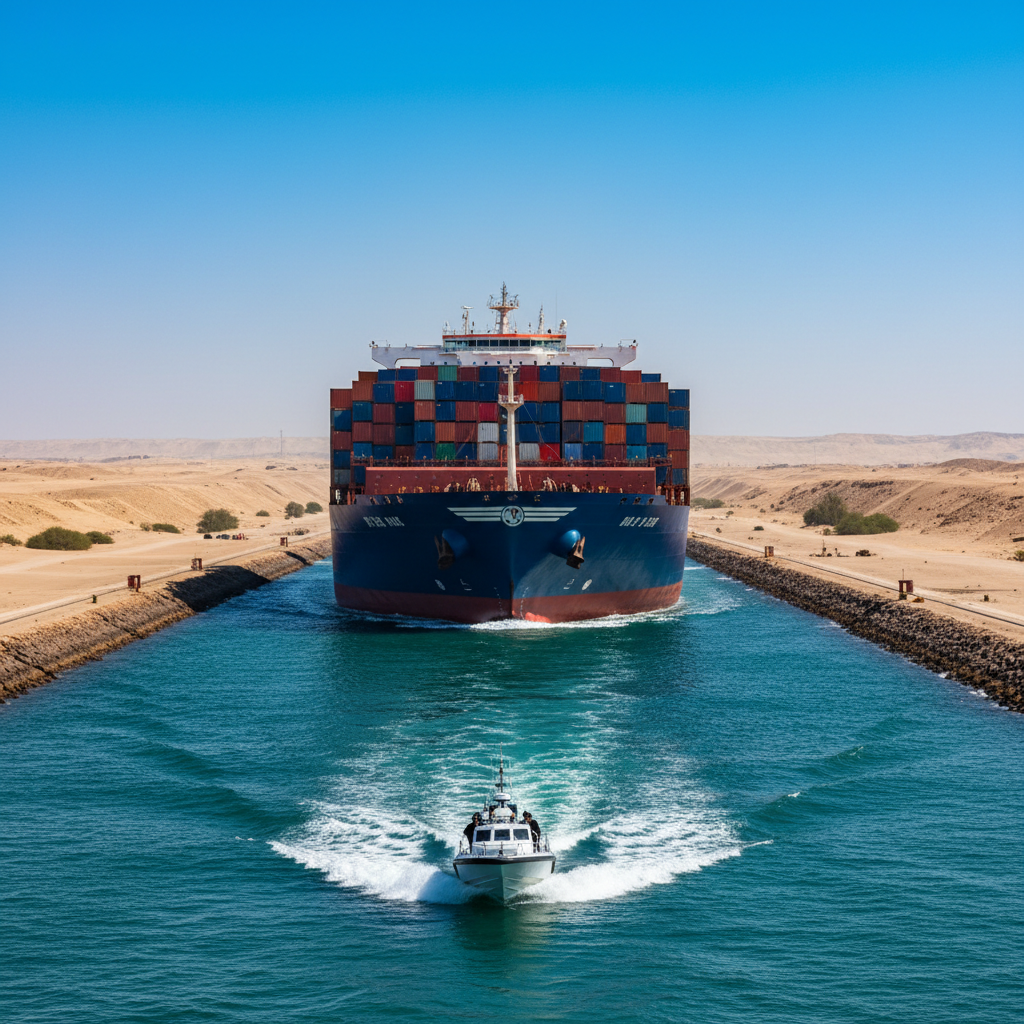
Geopolitical events continue to exert significant pressure on global supply chains, manifesting in tangible consequences for trade and transport. A recent development, the extension of piracy and Suez Canal surcharges by a major carrier across all remaining Mediterranean and Black Sea ports, underscores the pervasive nature of these disruptions. This move, affecting cargo originating from Asia and destined for a wide swath of regions including the West Mediterranean, East Mediterranean, Adriatic, North Africa, and the Black Sea, highlights a complex interplay of risks that are fundamentally reshaping the economics and operational dynamics of international shipping.
Escalating Operational Costs
The most immediate and direct consequence of these extended surcharges is a significant increase in operational costs for shippers. Piracy risk surcharges are levied to offset the heightened security measures, insurance premiums, and potential losses associated with operating in high-risk zones. Similarly, Suez Canal surcharges often reflect either increased transit fees imposed by canal authorities due to operational challenges, or, more commonly in the context of geopolitical instability, the additional costs incurred by carriers when navigating a potentially hazardous passage. These costs are not absorbed by carriers; they are passed directly onto shippers, becoming an integral part of the landed cost of goods. For businesses, this translates into higher expenditure on freight, eroding profit margins, and potentially necessitating price adjustments for end consumers. The widespread application across such a critical trade artery means that a vast array of goods, from raw materials to finished products, will see their transport costs rise. This inflationary pressure can ripple through entire economies, impacting procurement strategies, inventory valuation, and ultimately, consumer purchasing power. For a shipment-visibility control tower, real-time tracking of these surcharges and their application to specific routes becomes crucial for accurate cost forecasting and financial planning.
Altered Maritime Pathways and Transit Durations
The imposition of a Suez Canal surcharge, particularly when coupled with piracy risks, strongly indicates that the traditional, most efficient maritime pathways are either compromised or deemed too risky without additional compensation. While the source material does not explicitly state route diversions, the very existence of such a surcharge implies that carriers are either facing increased risks within the Suez Canal passage or are being compelled to consider alternative, longer routes. Should carriers opt to bypass the Suez Canal due to escalating threats or prohibitive costs, vessels would be forced to navigate around the Cape of Good Hope. This significantly extends transit times, adding weeks to voyages between Asia and Europe/Mediterranean regions. Longer transit times lead to increased fuel consumption, higher operational expenses for vessels, and a substantial delay in goods reaching their destinations. This disruption directly impacts inventory management strategies, particularly for businesses relying on just-in-time (JIT) or lean supply chain models. Extended lead times necessitate larger safety stocks, tying up capital and increasing warehousing costs. Furthermore, the predictability of delivery schedules diminishes, making it challenging for businesses to meet customer commitments and manage production lines. An MGS shipment-visibility control tower becomes indispensable here, providing real-time updates on vessel positions, predicted arrival times, and potential route changes, allowing businesses to proactively adjust their logistics and inform stakeholders.
Supply Chain Resilience Under Pressure
The extension of these surcharges across such a broad and vital geographical area fundamentally challenges the resilience of global supply chains. The unpredictability of geopolitical events, combined with the swift and widespread implementation of such cost adjustments, introduces a high degree of volatility. Businesses are forced to contend with an environment where freight costs can change rapidly and significantly, and where established transit times are no longer guaranteed. This constant state of flux makes long-term planning exceedingly difficult and strains existing supply chain models that thrive on stability and predictability. Companies must now build greater flexibility and redundancy into their logistics networks, which often comes at an additional cost. The ability to quickly adapt to new surcharges, assess the viability of alternative routes, and manage the consequent impact on inventory and customer expectations becomes paramount. Without robust strategies and tools, businesses risk significant operational inefficiencies, financial losses, and reputational damage. A sophisticated shipment-visibility control tower offers a critical advantage by providing the data and insights needed to understand, predict, and respond to these dynamic disruptions, enhancing overall supply chain resilience.
Regional Economic Repercussions
The broad scope of these surcharges, encompassing the West Mediterranean, East Mediterranean, Adriatic, North Africa, and Black Sea regions, implies significant economic repercussions for these areas. These regions are crucial nodes in global trade, serving as gateways for goods entering and leaving Europe, Africa, and parts of Asia. Increased shipping costs and potentially longer transit times make trade with these regions more expensive and less efficient. For economies within these areas, this could mean higher import costs for essential goods and raw materials, fueling domestic inflation. Conversely, their exports become less competitive on the global market due to higher freight components. Industries reliant on timely and cost-effective maritime transport, such as manufacturing, retail, and agriculture, will face particular challenges. The cumulative effect could be a slowdown in economic activity, reduced investment, and a shift in trade flows as businesses seek more stable or less costly alternatives. The stability of regional markets and the livelihoods of businesses operating within them are directly impacted by these logistical pressures, underscoring the deep connection between geopolitical events and economic well-being.
Leveraging Visibility for Mitigation
In an environment characterized by escalating costs, unpredictable routes, and heightened risks, the role of a shipment-visibility control tower becomes more critical than ever. An MGS platform provides real-time, end-to-end visibility into cargo movements, offering a single source of truth for all stakeholders. When surcharges are announced or routes are disrupted, an MGS system can immediately flag affected shipments, calculate revised estimated times of arrival (ETAs), and provide data-driven insights into the financial impact. This proactive intelligence allows businesses to make informed decisions rapidly: whether to absorb costs, adjust pricing, explore alternative carriers or modes, or communicate potential delays to customers. Beyond mere tracking, a control tower can integrate data on geopolitical developments, port congestion, and carrier advisories, offering predictive analytics that anticipate disruptions before they fully materialize. This foresight enables businesses to optimize inventory levels, re-route shipments strategically, and manage exceptions effectively, mitigating the financial and operational fallout from geopolitical events. By transforming raw data into actionable intelligence, a shipment-visibility control tower empowers organizations to navigate the complexities of a volatile global trade landscape with greater agility and confidence.
Source: Container News — https://container-news.com/msc-extends-piracy-and-suez-surcharges-across-mediterranean/