
Navigating the New Normal: Port Congestion, Capacity Crunches, and Geopolitical Headwinds
Global supply chains are once again grappling with significant disruptions, as port congestion intensifies, Transpacific capacity tightens, and geopolitical uncertainties cast a shadow over critical trade routes like the Suez Canal. This brief analyzes the multifaceted impacts on global trade and how advanced visibility platforms like MGS are essential for resilience.
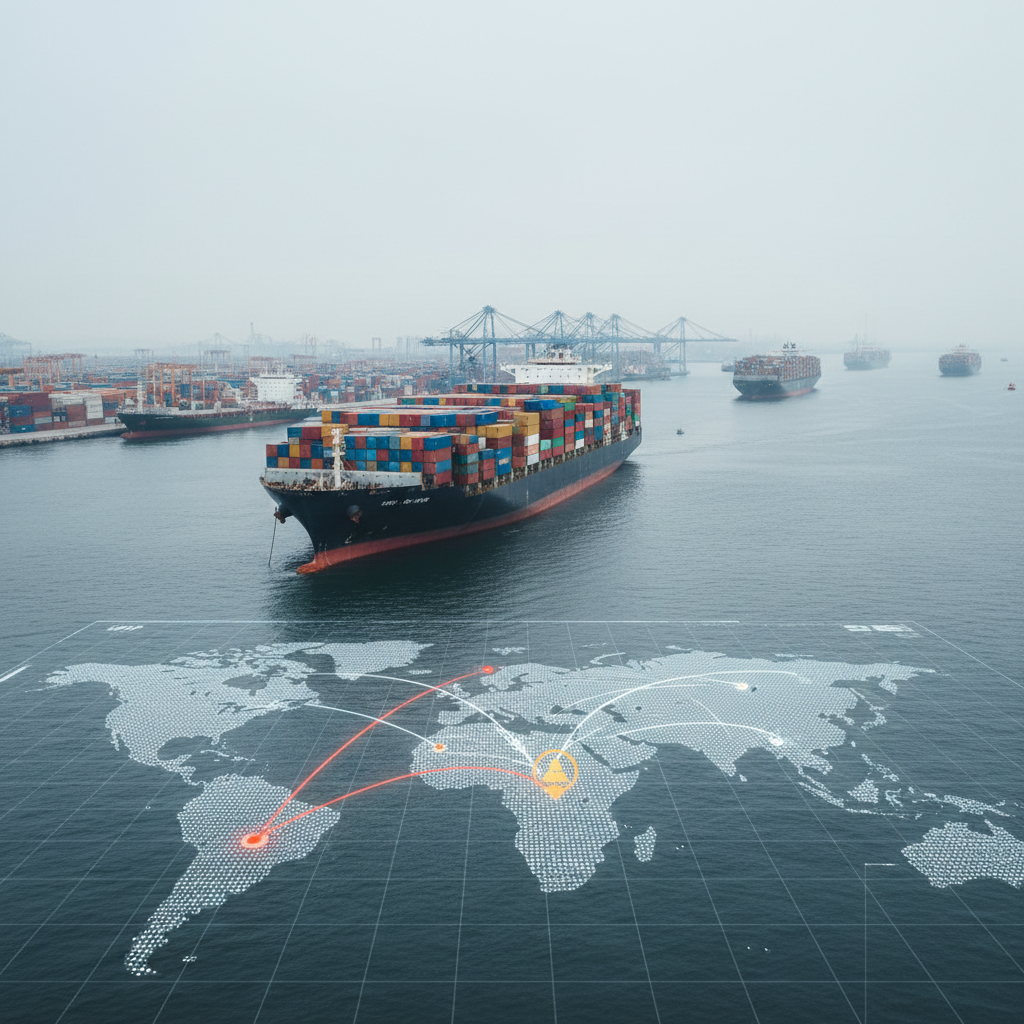
How this impacts the global supply chain
Global supply chains are currently navigating a turbulent landscape characterized by persistent operational bottlenecks, dynamic routing challenges, and a fundamental imbalance in shipping capacity. The confluence of growing port congestion, the shifting dynamics around the Suez Canal, and a severe Transpacific capacity crunch is creating a complex web of disruptions that reverberate across international trade.
Flows and Routes: Port congestion directly impedes the smooth flow of goods, forcing vessels to endure extended waiting periods at anchorages. This not only delays cargo but also disrupts liner schedules, leading to a domino effect of missed connections and further delays down the line. The situation around the Suez Canal, described as 'returns' amid 'geopolitical uncertainty,' suggests a volatile environment for this critical maritime chokepoint. This could imply a return to previous disruptions or a heightened state of alert, compelling carriers to constantly re-evaluate routing strategies. While the Suez offers a shorter transit for East-West trade, geopolitical risks might push some traffic towards longer, more costly routes around the Cape of Good Hope, adding days and fuel expenses to journeys. The Transpacific capacity crunch means that even if a vessel successfully navigates its route, finding space for cargo on this vital trade lane becomes a significant hurdle, leading to rolled shipments and prolonged lead times for goods destined for major consumer markets.
Capacity: The available capacity in the global shipping network is being significantly eroded by these factors. Port congestion, in essence, acts as a 'phantom' reduction in capacity; vessels are physically present but rendered unproductive while waiting, effectively removing them from active service. This exacerbates the 'Transpacific capacity crunch,' where demand for shipping space far outstrips the physical availability of vessels and containers. 'Shifting capacity' is a direct consequence, as carriers strategically reallocate their fleets to more profitable or less congested routes, inadvertently creating capacity shortages on other, less prioritized lanes. This dynamic allocation, while a necessary business decision for carriers, creates unpredictability for shippers and can lead to uneven service levels across different trade corridors. The interplay of these factors means that the effective operational capacity of the global fleet is considerably less than its theoretical maximum, leading to tighter markets and increased competition for space.
Operations: For logistics and supply chain operations, these developments translate into a heightened state of complexity and unpredictability. Delays at ports necessitate constant re-planning and adjustment of downstream logistics, from warehousing to last-mile delivery. Increased vessel dwell times contribute to higher operational costs for carriers, which are often passed on to shippers. The need for agile scheduling and contingency planning becomes paramount. Furthermore, the pressure on port infrastructure intensifies, leading to potential labor shortages, equipment imbalances, and slower turnaround times. Air cargo, while typically a more expensive alternative, may experience increased demand as shippers seek to bypass ocean delays, putting additional strain on air freight capacity and driving up rates. Overall, the current environment demands a more resilient and adaptable operational framework to mitigate the impact of these systemic disruptions.
Global financial impact
The current state of global shipping and air cargo, marked by congestion, capacity shortages, and geopolitical risks, carries substantial financial implications for all stakeholders involved in international trade.
For Shippers: The most immediate and significant financial burden for shippers is the surge in freight rates, particularly on the Transpacific lane where capacity is severely constrained. This directly increases the cost of goods, potentially leading to higher consumer prices and contributing to inflationary pressures. Beyond freight costs, delays due to port congestion result in increased demurrage and detention charges for containers held beyond free time. Longer transit times necessitate higher inventory holding costs, as goods spend more time in transit or waiting, tying up capital. The unpredictability of arrivals can lead to stockouts, lost sales opportunities, and damaged customer relationships. Furthermore, the geopolitical uncertainty surrounding routes like the Suez Canal can lead to increased insurance premiums for cargo, adding another layer of cost and risk to international shipments.
For Carriers: While elevated freight rates can boost revenue, carriers also face significant cost increases. Extended waiting times at congested ports mean higher fuel consumption, increased crew costs, and reduced vessel utilization, diminishing operational efficiency. Rerouting vessels due to geopolitical risks or congestion (e.g., around the Cape of Good Hope) significantly increases fuel expenses and extends voyage durations. Higher insurance premiums for operating in certain regions or for their vessels are also a factor. Managing 'shifting capacity' efficiently requires sophisticated network planning and can incur repositioning costs for empty containers. While the current market allows for higher pricing, the underlying operational inefficiencies and risks eat into potential profits and demand substantial investment in fleet management and contingency planning.
For Trade at Large: The cumulative effect of these financial pressures is a broader impact on global trade and economic stability. Higher logistics costs contribute to global inflation, affecting purchasing power and economic growth. The reduced predictability and reliability of supply chains can deter international investment and trade, as businesses become more risk-averse. Industries reliant on just-in-time inventory models are particularly vulnerable, facing production halts and increased operational costs. This environment can also lead to trade diversion, where countries or companies seek to localize supply chains or shift sourcing to mitigate risks, potentially altering established trade patterns. Ultimately, the financial strain on individual entities aggregates into a significant drag on global economic activity, highlighting the interconnectedness of logistics and economic prosperity.
How MGS can help navigate today's global trade environment
In an environment defined by port congestion, capacity crunches, and geopolitical uncertainty, a shipment-visibility control tower like MGS becomes an indispensable tool for maintaining operational continuity and strategic advantage.
Addressing Port Congestion: MGS provides real-time, granular visibility into vessel movements, estimated times of arrival (ETAs), and port queue status. This allows operators to anticipate potential delays at congested ports well in advance. With this foresight, MGS users can proactively communicate with consignees, adjust downstream logistics schedules (e.g., trucking, warehousing), or even explore alternative discharge ports or multimodal options if delays become unmanageable. Predictive analytics within MGS can highlight emerging congestion hotspots, enabling pre-emptive action rather than reactive crisis management.
Mitigating Geopolitical Uncertainty and Suez Dynamics: Geopolitical events can rapidly alter the viability of critical trade routes. MGS offers comprehensive tracking capabilities that monitor vessels traversing sensitive regions, including the Suez Canal. In the event of security alerts, route deviations, or unforeseen disruptions, MGS can immediately flag these incidents. This empowers supply chain managers to assess the impact on their specific shipments, initiate contingency plans, and communicate updated timelines to stakeholders. For instance, if a vessel is forced to reroute, MGS can track the new, longer journey, providing accurate, updated ETAs and allowing for recalculation of inventory levels and delivery schedules.
Navigating Transpacific Capacity Crunch and Shifting Capacity: The Transpacific capacity crunch makes securing and managing shipping space incredibly challenging. MGS provides a consolidated view of all in-transit and planned shipments across various carriers and modes. This single source of truth helps shippers understand the real-time status of their cargo on constrained lanes, identify where delays are occurring, and assess the impact of carrier capacity shifts on their specific orders. By having a clear picture of all outstanding shipments, MGS users can make more informed decisions about future bookings, prioritize critical cargo, and negotiate more effectively with carriers based on accurate data. For carriers and logistics providers, MGS can aid in optimizing vessel utilization and managing customer expectations by providing transparent updates on cargo status and potential delays.
Overall Operational Resilience: Beyond specific disruptions, MGS fosters overall supply chain resilience by transforming raw data into actionable insights. It reduces information asymmetry across the supply chain, enabling more collaborative decision-making. By providing a unified platform for tracking, monitoring, and analyzing shipment data, MGS allows organizations to move from a reactive posture to a proactive one, identifying risks before they fully materialize and optimizing operations in a constantly evolving global trade environment. This data-driven approach is crucial for maintaining agility and responsiveness in today's volatile market.
Demand–supply analysis & improvement
The current global trade environment, as highlighted by the 'Transpacific capacity crunch' and 'shifting capacity,' is a clear manifestation of significant imbalances between demand and supply, particularly within the ocean freight sector. Understanding these dynamics is crucial for developing effective improvement levers.
Demand Dynamics: The 'Transpacific capacity crunch' explicitly points to a situation where demand for shipping services on this critical trade lane is outstripping the available supply. This robust demand is likely fueled by several factors: strong consumer spending in key import markets, ongoing efforts by businesses to replenish inventories that were depleted during earlier disruptions, and potentially a 'peak season' surge that is more pronounced due to underlying market tightness. The mention of 'global shipping and air cargo' suggests that demand pressures are not confined to ocean freight alone, with air cargo potentially absorbing some spillover demand from congested sea routes, further tightening capacity across modes.
Supply Dynamics: On the supply side, 'shifting capacity' indicates that carriers are actively reallocating their assets to maximize profitability and respond to market forces. While this is a rational business decision, it can create localized shortages and exacerbate the capacity crunch in other areas. Port congestion, a recurring theme, acts as a significant drag on effective supply. When vessels are stuck waiting outside ports, they are not actively transporting goods, effectively reducing the available capacity of the global fleet. This 'phantom' reduction in supply means that even if there are theoretically enough vessels, their operational availability is compromised. The 'Suez returns' dynamic adds another layer of complexity; if the Suez Canal becomes a more reliable or preferred route, it could theoretically free up some capacity previously deployed on longer routes. However, if 'geopolitical uncertainty' persists, the perceived risk might still limit its full utilization or necessitate additional security measures, impacting transit times and operational costs.
Concrete Improvement Levers:
-
For Shippers: To navigate these demand-supply imbalances, shippers can implement several strategies. Diversifying sourcing locations can reduce reliance on a single, potentially congested trade lane. Utilizing multimodal transport options, such as sea-air combinations, can offer flexibility and speed for urgent cargo, bypassing purely ocean-based bottlenecks. Booking freight significantly further in advance becomes critical to secure space. Building strategic inventory buffers, especially for critical components or high-demand finished goods, can mitigate the impact of extended lead times. Leveraging platforms like MGS provides enhanced visibility, allowing shippers to make more informed booking decisions, track cargo against fluctuating ETAs, and react swiftly to unexpected delays by re-prioritizing or rerouting shipments.
-
For Carriers: Carriers can improve supply utilization by optimizing vessel schedules to minimize port waiting times and enhance operational efficiency. Strategic deployment of new vessel capacity, where available, can directly address shortages on key lanes. Investing in data analytics and forecasting tools, potentially integrated with platforms like MGS, can help predict demand fluctuations more accurately and manage vessel space more effectively. Collaborative efforts with ports to improve berth allocation and turnaround times are also crucial.
-
For Ports and Infrastructure: Ports play a pivotal role in alleviating supply-side pressures. Investments in automation, expanding yard capacity, improving gate efficiency, and enhancing coordination between terminal operators, truckers, and rail providers can significantly reduce vessel dwell times and improve cargo flow. Digitalization initiatives that streamline documentation and communication can also contribute to faster throughput.
-
Cross-Supply Chain Collaboration: Ultimately, improving the demand-supply equilibrium requires greater collaboration and data sharing across the entire supply chain ecosystem. Enhanced communication between shippers, carriers, ports, and logistics providers, facilitated by neutral platforms or shared data environments, can lead to more accurate demand forecasting, better resource allocation, and a more resilient global logistics network overall.