
Airfreight Capacity Crunch Drives Shift to Express, Reshaping Global Supply Chain Costs and Operations
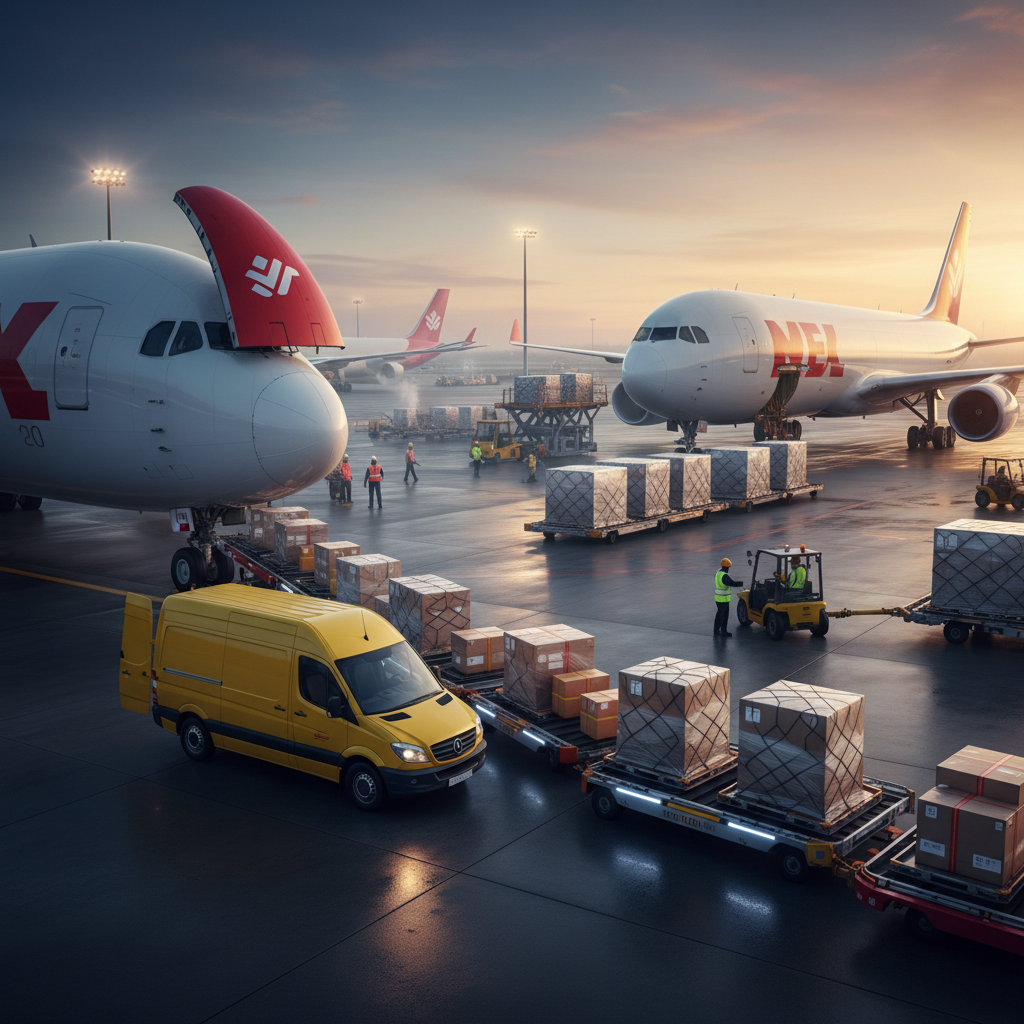
Recent reports from DHL indicate a significant increase in airfreight revenues and profits, alongside a notable trend: airfreight capacity constraints are pushing some cargo volumes into premium express services. This dynamic is reshaping global supply chain flows, elevating operational costs for shippers, and underscoring the critical need for real-time visibility and agile response mechanisms.
How this impacts the global supply chain
The observed shift of cargo volumes from traditional airfreight into express services, as highlighted by DHL's recent performance, signals a significant recalibration within global supply chain operations. This development is not merely an internal adjustment for a single carrier but reflects broader systemic pressures on air cargo capacity. When standard airfreight lanes become constrained, shippers are compelled to seek alternative, often faster but pricier, solutions like express delivery to maintain delivery schedules and meet customer expectations. This directly impacts global supply chain flows by creating a two-tiered system: mission-critical or time-sensitive goods are prioritized on premium express routes, while less urgent, but still air-bound, cargo faces potential delays or increased costs on standard services.
Operationally, this trend introduces increased complexity. Supply chain managers must now contend with a more volatile air cargo landscape, where booking standard airfreight might be less reliable. This could lead to a greater reliance on dynamic routing decisions, potentially involving multiple carriers or even hybrid transport solutions to bridge gaps. The pressure on express networks intensifies, demanding greater efficiency and scalability from providers. For businesses, this means a potential re-evaluation of inventory management strategies; holding more buffer stock might become a consideration if standard airfreight lead times become unpredictable, or conversely, a greater investment in premium express services for just-in-time models. Ultimately, the global supply chain becomes more susceptible to cost fluctuations and operational bottlenecks, as the premium segment absorbs overflow from the standard airfreight market, impacting everything from manufacturing schedules to retail replenishment cycles.
Global financial impact
The financial ramifications of this market dynamic are substantial and multifaceted, affecting shippers, carriers, and the broader trade environment. For carriers like DHL, the scenario presents a clear financial upside. The reported increase in airfreight revenues by 30.4% to €1.5 billion and a rise in gross profits by 28.4% to €321 million in the third quarter underscore a robust demand environment where capacity is at a premium. This indicates that carriers are successfully leveraging market conditions to achieve stronger financial performance, likely through higher freight rates and more efficient capacity utilization.
Conversely, for shippers, this trend translates directly into elevated logistics costs. The necessity to shift cargo from standard airfreight to express services, driven by capacity constraints, means paying a premium for speed and guaranteed delivery. While the specific cost differential isn't detailed in the provided information, express services are inherently more expensive due to their expedited handling, dedicated networks, and often door-to-door service. This increased expenditure on transportation directly impacts a company's landed cost of goods, potentially eroding profit margins or necessitating price adjustments for end consumers. For industries with tight margins or high-volume, low-value goods, these increased freight costs can be particularly challenging, influencing sourcing decisions, market competitiveness, and even product viability.
At a macro level, the overall cost of global trade is likely to see an upward trend. As a greater proportion of air cargo moves through more expensive express channels, the aggregate logistics spend across various industries will rise. This could contribute to inflationary pressures on imported goods and potentially influence trade flows as businesses seek to mitigate these higher costs through nearshoring or regionalization strategies. The financial benefits reaped by carriers are a direct reflection of the increased financial burden borne by shippers and, ultimately, the end consumer in a constrained air cargo market.
How MGS can help navigate today's global trade environment
In an environment characterized by airfreight capacity constraints and the subsequent shift to express services, a shipment-visibility control tower like MGS becomes an indispensable tool for navigating complexity and mitigating financial and operational risks. The core challenge for shippers is the lack of real-time insight into how these market dynamics are impacting their specific shipments and overall supply chain performance. MGS addresses this by providing comprehensive, end-to-end visibility across all modes of transport, including both standard airfreight and express services.
Firstly, MGS allows operators to track the exact status and location of every shipment, regardless of whether it's on a standard air cargo flight or an expedited express service. This is critical when capacity issues force last-minute mode changes. By consolidating data from various carriers and logistics partners, MGS can immediately highlight if a shipment initially planned for standard airfreight has been rerouted to express, or if it's experiencing delays due to capacity shortages. This real-time intelligence empowers supply chain teams to proactively communicate with customers, adjust production schedules, or explore alternative solutions before issues escalate.
Secondly, MGS's analytical capabilities can help identify patterns and quantify the impact of these shifts. By correlating shipment data with market intelligence, MGS can reveal which lanes are most affected by capacity constraints, which products are most frequently shifted to express, and the associated cost implications. This data-driven insight is crucial for strategic decision-making, such as optimizing carrier selection, renegotiating contracts, or even re-evaluating sourcing locations to avoid consistently problematic routes. For instance, if MGS consistently shows certain high-value components are being moved via express at a significant premium, it can trigger an analysis into whether a different inventory strategy or a more resilient transport plan is warranted for those specific items.
Furthermore, MGS can facilitate better cost management. By providing a clear overview of actual transit times versus planned, and the specific costs incurred for express services, businesses can accurately assess the return on investment for premium shipping. This transparency helps in validating whether the higher cost of express truly translates into the required speed and reliability, preventing unnecessary expenditure. In essence, MGS transforms opaque market challenges into actionable insights, enabling operators to make informed decisions that protect margins and maintain service levels amidst a dynamic and often unpredictable air cargo landscape.
Demand–supply analysis & improvement
The source material clearly illustrates a significant imbalance in the air cargo market: demand for airfreight is outstripping available capacity, compelling some volumes to migrate to express services. This dynamic is a classic case of supply-side constraints driving up the value and utilization of premium alternatives. The reported increases in DHL's airfreight revenues and profits, alongside the explicit mention of its express division picking up additional business due to airfreight capacity constraints, are direct evidence of this demand-supply tension. Shippers need the speed and reliability of air transport, but the standard service cannot always accommodate this need, pushing them towards the more expensive, but available, express option.
This situation reveals several improvement levers for supply chain operators. Firstly, enhanced demand forecasting and planning are crucial. Businesses need to better anticipate their airfreight needs and communicate them further in advance to carriers and freight forwarders. This proactive approach can help secure capacity on standard services before it becomes critically scarce. Secondly, diversification of transport modes becomes an even more vital strategy. While airfreight offers speed, exploring multi-modal solutions that combine sea-air or rail-air options could provide a cost-effective middle ground for goods that aren't hyper-urgent but still require faster transit than pure ocean freight. This can alleviate pressure on the pure air cargo market.
Thirdly, a focus on network optimization and consolidation can yield benefits. By consolidating shipments where possible, businesses can maximize the utilization of available airfreight capacity, potentially reducing the need for costly express services. This also extends to optimizing warehouse locations and distribution networks to minimize the need for long-haul airfreight for final mile delivery. Finally, fostering stronger, more collaborative relationships with carriers and freight forwarders can lead to more favorable capacity allocations and better visibility into future capacity outlooks. These improvements aim to either reduce reliance on constrained airfreight or optimize its use, thereby mitigating the financial impact of the demand-supply imbalance and enhancing overall supply chain resilience.