
Iraq Reroutes Oil Exports Overland to Syria as Hormuz Disruptions Persist
Geopolitical tensions in the Strait of Hormuz force Iraq to revive a decades-old overland desert route, trucking crude oil from Basra to Baniyas, impacting costs and regional logistics.
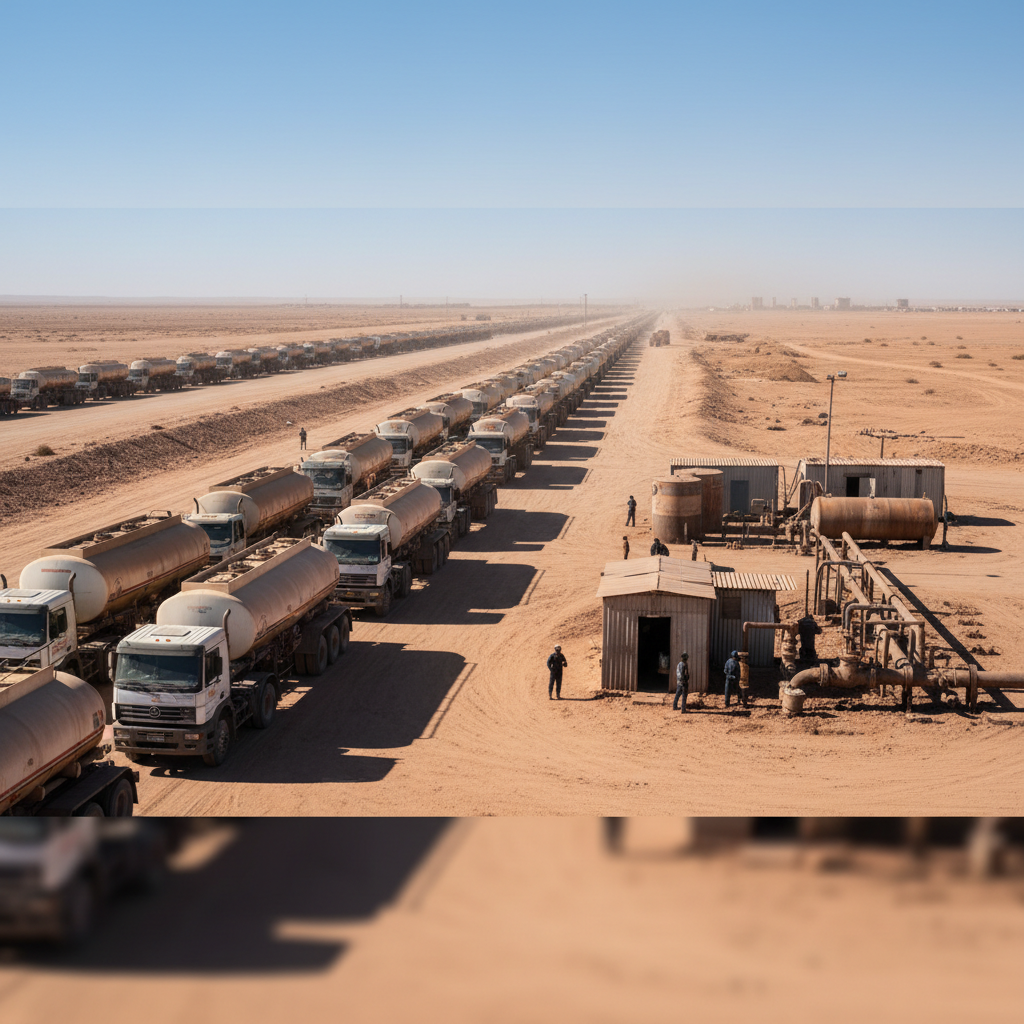
Iraq's Overland Oil Shift Bypasses Maritime Chokepoint
The ongoing instability impacting the Strait of Hormuz has compelled Iraq to activate a long-dormant overland route for its crude oil exports, a move with immediate and far-reaching consequences for regional trade and transport. Instead of relying on traditional maritime channels through the Persian Gulf, hundreds of tanker trucks are now queuing at a depot near Basra, preparing to transport Iraqi crude across the desert to the Syrian port of Baniyas. This operational pivot signifies a direct response to the perceived risks and disruptions in a critical global shipping lane, forcing a re-evaluation of established supply chain methodologies for a key commodity. The decision to revive a route largely unused for decades highlights the severity of the maritime security challenges and the urgent need for alternative logistics solutions.
This shift from sea to land transport introduces a new set of operational complexities and inefficiencies. Maritime shipping, particularly for bulk commodities like crude oil, benefits from economies of scale, lower per-unit costs, and established infrastructure. The transition to trucking necessitates a massive mobilization of vehicles, drivers, and support infrastructure. The sheer volume of oil typically moved by a single tanker ship would require thousands of truck journeys, creating significant logistical bottlenecks at loading and unloading points. Furthermore, the condition of a desert route unused for decades implies potential for poor road surfaces, requiring extensive maintenance or leading to slower transit times and increased wear and tear on vehicles. Security along such an extended overland corridor also becomes a concern, potentially requiring additional resources and planning to safeguard cargo and personnel. This immediate operational adjustment underscores the vulnerability of concentrated maritime chokepoints and the lengths to which nations will go to maintain export flows.
Higher Costs and Longer Transit Times for Iraqi Crude
The economic implications of this overland rerouting are substantial, directly impacting the cost structure of Iraqi oil exports. Trucking crude oil over long distances is inherently more expensive than pipeline or sea transport. Fuel consumption for hundreds of heavy-duty trucks traversing desert terrain will be significantly higher than for a single tanker ship. Labor costs, including drivers' wages, maintenance crews, and security personnel, will also escalate. These increased operational expenses will inevitably translate into higher landed costs for Iraqi crude at its destination, potentially affecting its competitiveness in the global market. While the exact premium is not specified, the difference between established, efficient maritime routes and an emergency overland alternative is typically considerable.
Beyond direct costs, the shift to trucking introduces significant delays and reduces overall supply chain predictability. The capacity of an overland truck fleet, even a large one, cannot match the volume moved by a single Very Large Crude Carrier (VLCC). This means a slower throughput of oil, potentially impacting delivery schedules and contractual obligations. The journey from Basra to Baniyas via an overland desert route will involve multiple border crossings, customs procedures, and potential transit delays, all contributing to extended lead times. For a commodity like crude oil, where market prices can fluctuate rapidly, prolonged transit times introduce additional financial risk. This situation exemplifies how geopolitical disruptions can force a trade-off between supply chain reliability and cost efficiency, with the latter often being sacrificed to ensure continuity of supply. The long-term viability of such a high-cost, high-effort solution depends heavily on the duration and intensity of the maritime disruptions.
Regional Supply Chains Seek Decades-Old Alternatives
The revival of an overland route largely unused for decades signals a broader trend of regional supply chains seeking resilience through diversification, even if it means reactivating older, less efficient pathways. This strategic pivot by Iraq is not an isolated incident but rather a symptom of increased volatility in traditional maritime corridors. When established routes become unreliable due to geopolitical tensions, the economic imperative to maintain trade flows drives innovation, or in this case, a return to historical alternatives. The use of a desert route highlights the adaptability, albeit costly, of supply chain managers when faced with existential threats to their primary transport arteries.
This development could prompt other nations and industries in the region to reassess their own reliance on vulnerable chokepoints. Investing in and maintaining diverse transport infrastructure, including pipelines, rail networks, and robust overland trucking routes, may become a more significant strategic priority. While the immediate focus is on oil, the principle extends to other critical goods. The long-term implications include potential shifts in regional trade patterns, with greater emphasis on land-based logistics corridors that bypass maritime flashpoints. However, developing and securing such infrastructure requires substantial investment and cross-border cooperation, which can be challenging in politically sensitive areas. The current situation in Iraq serves as a stark reminder that supply chain resilience often comes at a premium, demanding proactive planning and the willingness to utilize unconventional solutions when traditional methods are compromised.
Overland Routes Signal Enduring Maritime Volatility
The decision by Iraq to truck crude oil overland to Syria, reviving a route unused for decades, unequivocally demonstrates the persistent and escalating nature of maritime disruptions in the Strait of Hormuz. This costly and logistically complex pivot is a direct consequence of geopolitical instability forcing nations to prioritize supply continuity over traditional cost efficiencies. It highlights a broader trend where established global trade arteries are increasingly vulnerable, compelling supply chain managers to explore and invest in alternative, often less optimal, transport corridors to maintain critical cargo movement.
Source: Maritime Professional — https://www.maritimeprofessional.com/news/iraq-trucks-exports-overland-amidst-424302