
Hurricane Isaias: Navigating the Supply Chain Storm in the Gulf
Hurricane Isaias is severely impacting U.S. Gulf Coast operations, shutting down nearly two-thirds of oil production and triggering widespread evacuations. This brief analyzes the cascading effects on key logistics lanes, facilities, and modes, offering strategic insights for shippers to mitigate disruption with advanced visibility.
Introduction
As Hurricane Isaias intensifies and sets its course for an anticipated landfall along the northern Gulf Coast, the immediate and far-reaching implications for global supply chains are becoming starkly clear. The U.S. Gulf of Mexico, a critical nexus for energy production, manufacturing, and international trade, is bracing for significant disruption. Initial reports confirm that nearly two-thirds of the region's vital oil production has already been halted, a precursor to the broader logistical challenges now unfolding. This event underscores the inherent vulnerabilities of complex supply networks to severe weather phenomena and highlights the urgent need for proactive strategies and real-time visibility.
The widespread evacuations currently underway further complicate the operational landscape, impacting labor availability, road accessibility, and the overall capacity for normal business operations. For supply chain professionals, understanding the specific points of impact—from maritime lanes to land-based facilities and various transport modes—is paramount to navigating this evolving crisis effectively. An MGS shipment-visibility control tower becomes an indispensable tool in such scenarios, offering the granular data and predictive insights necessary to adapt swiftly and minimize economic fallout.
Affected Lanes
The primary arteries of commerce in the Gulf region are immediately vulnerable. Maritime lanes within the Gulf of Mexico are experiencing severe restrictions, with port closures or heightened readiness levels impacting vessel movements. Major shipping channels, particularly those leading to deepwater ports along the northern Gulf Coast, will likely see significant delays or complete cessation of traffic. This includes critical routes for tankers, bulk carriers, and container ships. Coastal shipping and barge traffic on the Intracoastal Waterway will also be severely curtailed due, not only to direct weather impacts but also to potential debris, storm surge, and infrastructure damage.
Road networks are already under pressure due to widespread evacuations. Major interstates and state highways serving coastal areas are being converted to one-way traffic for evacuation, or are subject to closures due to flooding, high winds, or debris. This directly impacts drayage operations to and from ports, last-mile delivery, and long-haul trucking routes connecting the Gulf region to inland distribution hubs. Fuel availability and driver safety become paramount concerns. Similarly, rail lines serving the industrial complexes and ports of the Gulf Coast face potential service suspensions, track damage from flooding or washouts, and operational delays as rail yards are secured or evacuated.
Affected Facilities
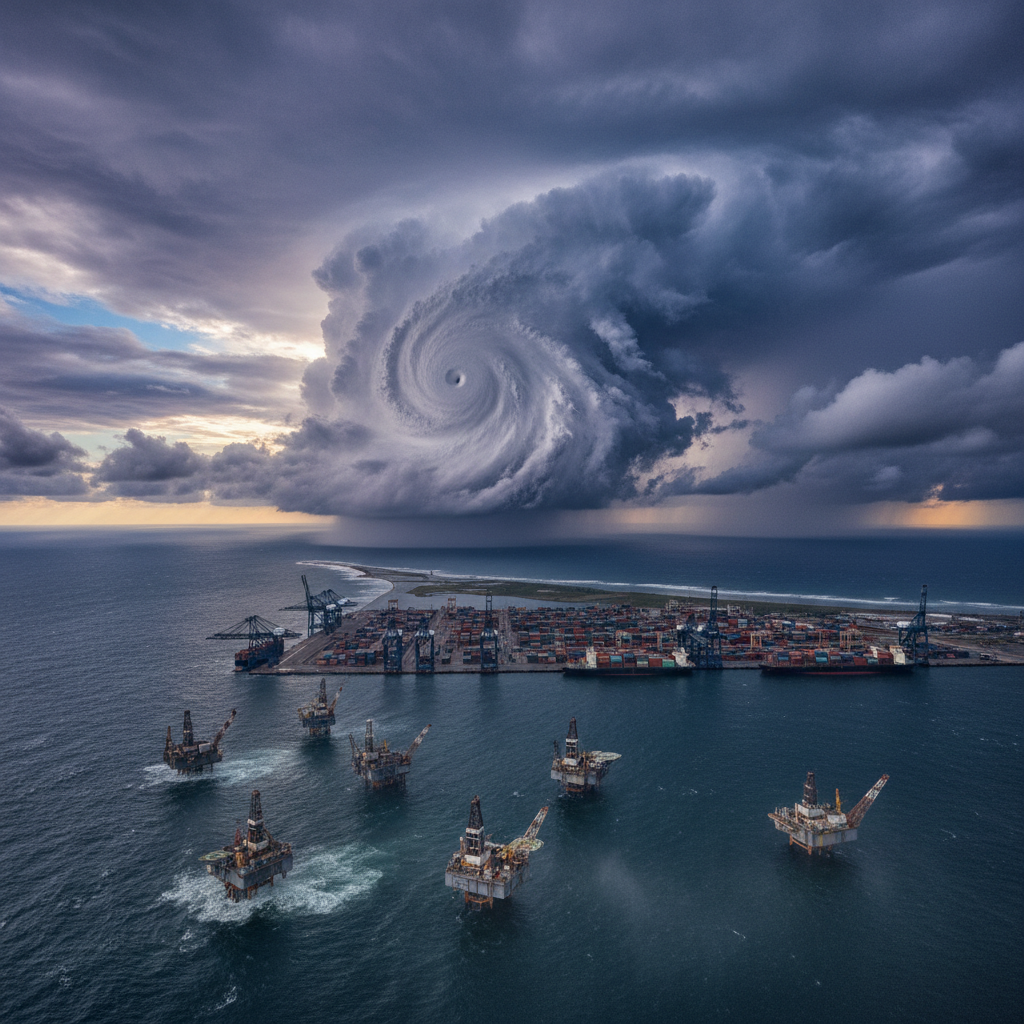
The impact on facilities is multifaceted, beginning with the explicitly mentioned offshore oil production platforms. With nearly two-thirds of U.S. Gulf of Mexico oil production already shut down, the ripple effect on energy supply and related industries is substantial. These platforms are typically evacuated and secured well in advance of a hurricane's arrival, leading to immediate production halts.
Onshore, major port facilities along the northern Gulf Coast—including container terminals, bulk cargo berths, and liquid bulk facilities—are preparing for or are already under closure orders. This affects not only vessel loading and unloading but also the movement of cargo within port complexes and to/from adjacent intermodal yards. Refineries and petrochemical plants, densely concentrated along the Gulf Coast, are also vulnerable. Beyond direct storm damage, they face operational shutdowns due to power outages, labor shortages from evacuations, and disruptions to raw material supply or finished product distribution. Warehouses, distribution centers, and manufacturing plants in the storm's path or evacuation zones will also cease operations, leading to inventory backlogs or critical shortages further down the supply chain.
Affected Modes
Every mode of transportation serving the Gulf Coast is subject to disruption. Maritime transport is perhaps the most immediately and severely impacted, with vessels rerouted, anchored, or held at bay, leading to significant schedule slippage and port congestion once operations resume. This affects all types of vessels, from crude oil tankers and chemical carriers to container ships and offshore support vessels.
Road freight faces challenges from road closures, reduced visibility, high winds, and potential flooding, making transit unsafe or impossible. This directly impacts the movement of goods into and out of the affected region, creating bottlenecks and delays for both inbound raw materials and outbound finished products. Rail freight services will also be curtailed, with potential track damage, power outages affecting signaling, and operational adjustments to ensure crew and equipment safety. While less directly mentioned, air cargo operations at airports within the storm's path will likely experience flight cancellations and ground stoppages, affecting time-sensitive shipments.
Affected Commodities
The most immediate and significant commodity impact is on crude oil and refined petroleum products. With nearly two-thirds of U.S. Gulf of Mexico oil production shut down, global energy markets will react, and the availability of fuel for transport and industrial processes will be affected. This disruption extends to petrochemical feedstocks, as many chemical plants in the region rely on these inputs. Consequently, the production and distribution of a wide array of chemicals, plastics, and industrial gases will face delays.
Beyond energy and chemicals, the Gulf Coast handles a substantial volume of bulk commodities such as grains, fertilizers, construction materials, and steel. Disruptions to port operations will delay the export and import of these critical goods. Furthermore, containerized cargo, encompassing a vast range of manufactured goods and consumer products, will be subject to significant delays as major container ports cease operations, leading to potential stockouts and supply chain ripple effects across various industries.
Shipper Actions
In the face of such widespread disruption, proactive measures are crucial for shippers. Real-time visibility is the cornerstone of effective response. Leveraging an MGS shipment-visibility control tower allows shippers to monitor the precise location and status of their cargo across all modes, overlaying critical weather data, port statuses, and road closure information. This enables immediate identification of impacted shipments and potential bottlenecks.
Proactive communication with carriers, logistics partners, and customers is vital. Shippers should establish clear lines of communication to receive updates on service suspensions, re-routing options, and revised ETAs. Based on real-time data, diversion and rerouting strategies can be swiftly executed. This might involve rerouting vessels to alternative ports on the Atlantic or even Pacific coasts, shifting cargo from truck to rail for longer hauls around affected areas, or consolidating shipments to optimize available capacity.
Inventory management becomes critical; shippers should assess current stock levels, prioritize urgent shipments, and consider expediting critical inbound materials before the storm hits, or delaying non-essential outbound cargo. Activating contingency plans that outline alternative transportation providers, warehousing options, and communication protocols is essential. Post-storm, the MGS control tower will be instrumental in assessing infrastructure damage, monitoring port reopening schedules, and managing the inevitable backlog, allowing for prioritized recovery efforts and optimized resource allocation to mitigate ongoing delays and costs.
Source: gCaptain — https://gcaptain.com/hurricane-isaias-shuts-down-nearly-two-thirds-of-gulf-oil-production/