
Global Port Strike Paralysis: Navigating Supply Chain Disruptions with Visibility
Dockworker strikes across 113 ports in 22 countries are causing severe shipping disruptions. This MGS Insight brief analyzes the affected lanes, facilities, and modes, offering strategic mitigation advice for shippers leveraging real-time visibility.
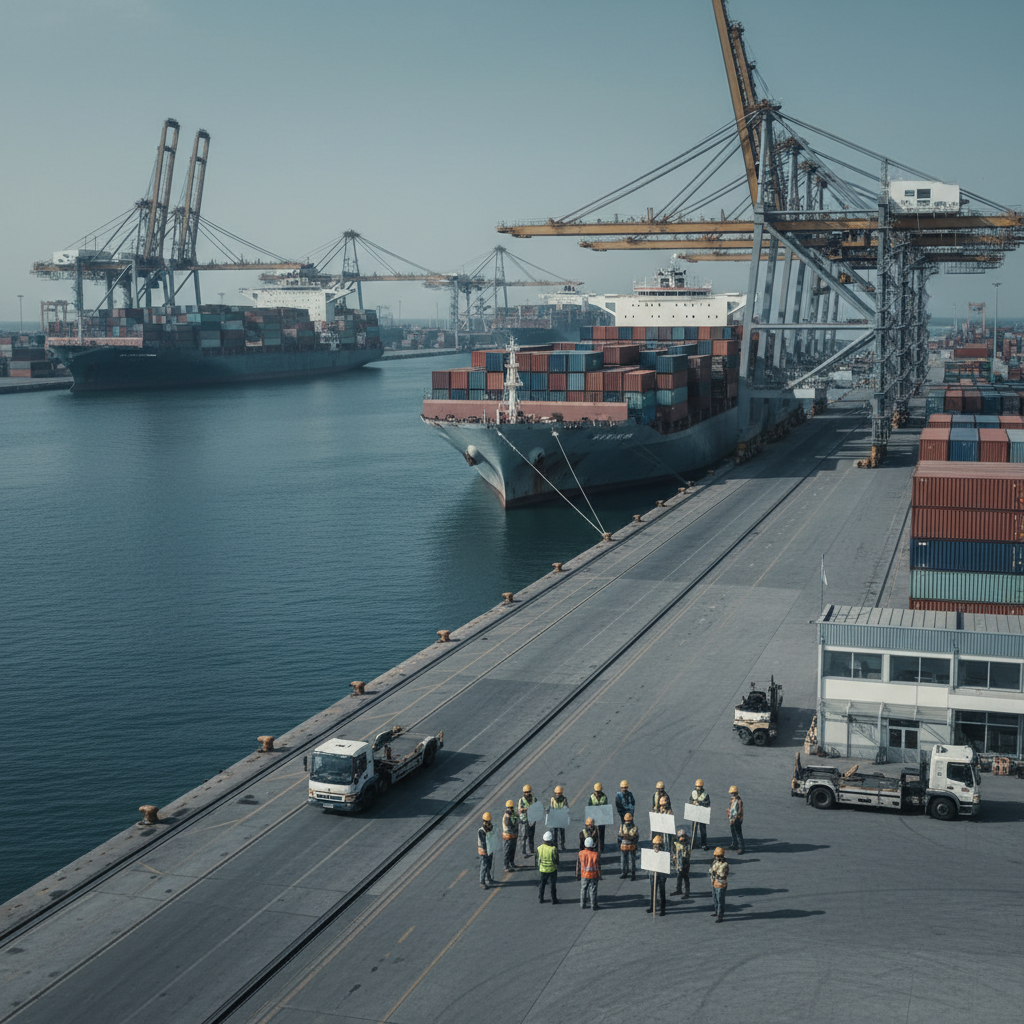
As an MGS supply-chain analyst, the recent widespread industrial action by dockworkers presents a critical challenge to global cargo movement. Far from being isolated incidents, these coordinated protests are creating significant bottlenecks and delays across vital trade arteries, demanding immediate attention and strategic responses from shippers worldwide.
The Unfolding Port Paralysis
On Friday, a significant wave of dockworker strikes commenced, or continued, across Europe and beyond, bringing substantial disruption to maritime shipping and ferry services. The core grievances driving these protests are multifaceted: a strong objection to the use of their ports for arms shipments and a profound concern over the number of seafarers killed in ongoing conflicts, specifically cited from the Gulf to the Black Sea. Adding to the complexity, strikers across the affected regions are also advocating for improved pay rates, underscoring a broader set of labor demands.
The scale of this industrial action is particularly alarming. The strike encompasses an impressive 113 ports spread across 22 different countries. This widespread participation indicates a highly coordinated effort, impacting a substantial portion of the global maritime network. Such a broad-based disruption, driven by both geopolitical and economic factors, creates an unpredictable and volatile environment for supply chain operations, far exceeding the impact of localized labor disputes. Shippers must recognize this as a systemic shock rather than an isolated event, necessitating a comprehensive and agile response.
Impacted Trade Lanes and Geographic Scope
The geographical reach of these strikes is extensive, explicitly stated as occurring 'across Europe and beyond.' This phrase signifies that the disruption is not confined to a single region but rather affects a vast interconnected network of trade routes. European trade lanes, both intra-continental and those connecting Europe to other global markets, are at the epicenter of this paralysis.
For instance, critical East-West trade routes, typically bringing goods from Asia via the Suez Canal into major European hubs, will experience severe backlogs. Vessels unable to berth or unload will be forced to wait at anchor, incurring demurrage charges and throwing carefully planned schedules into disarray. Similarly, European exports destined for North America, Africa, or Asia will face significant delays in departure, impacting downstream supply chains globally.
Beyond major container routes, the disruption to 'ferries' implies a significant impact on short-sea shipping and roll-on/roll-off (RoRo) cargo movements, which are crucial for intra-European logistics and the movement of vehicles and project cargo. The involvement of 22 countries means that virtually all major European maritime gateways, and their connecting hinterland logistics networks, are under threat of severe congestion and operational slowdowns. The ripple effect will extend to land-based transport modes as well, as goods cannot be transferred to rail or road for onward distribution, leading to a cascading series of delays across the entire supply chain.
Facilities Under Strain
The primary facilities bearing the brunt of this industrial action are the ports themselves. With 113 ports affected, the operational capacity of a significant portion of the global maritime infrastructure is severely compromised. This includes a wide array of port terminals:
- Container Terminals: These facilities, vital for global trade, will see a dramatic reduction in throughput. Cranes may sit idle, yard operations will slow, and gate movements for trucks will be severely restricted. This leads to vessel queues at sea and mounting container backlogs within the port area, exacerbating existing congestion issues.
- Bulk and Breakbulk Terminals: Operations for raw materials, agricultural products, and project cargo will also be halted, affecting manufacturing inputs and construction projects.
- RoRo Terminals: Directly impacted by the disruption to ferries, these terminals handle vehicles and other wheeled cargo, which will face significant delays in loading and unloading.
Beyond the direct port facilities, the strike's impact extends to adjacent logistics infrastructure. Warehouses and distribution centers reliant on timely port clearances will face inventory imbalances – either overstocked due to inability to ship out, or understocked due to delayed inbound cargo. The mention of 'ferries' also highlights the specific strain on ferry terminals, which are crucial multimodal hubs for both passenger and freight transport, particularly in regions like the English Channel, the Baltic Sea, and the Mediterranean.
Modes of Transport Affected
The strike directly targets and disrupts two primary modes of transport, with significant knock-on effects for others:
- Maritime Shipping: This is the most directly impacted mode. All forms of sea-borne cargo, from containerized goods to bulk commodities and specialized project cargo, face severe delays. Vessels may be rerouted, forced to anchor for extended periods, or even skip port calls entirely, leading to additional costs and longer transit times. The global shipping schedule, already fragile, will be further destabilized.
- Ferry Services: Explicitly mentioned as disrupted, ferry operations are critical for short-sea shipping, particularly in Europe. This impacts not only passenger travel but also a substantial volume of freight, including time-sensitive goods and vehicles. The cessation or severe reduction of ferry services can isolate regions and disrupt just-in-time supply chains reliant on these connections.
Indirectly Affected Modes:
- Road Transport: Trucks waiting to pick up or deliver cargo at affected ports will face long queues and delays, leading to increased fuel costs, driver hours issues, and missed delivery windows. The efficiency of last-mile delivery and first-mile collection is severely compromised.
- Rail Freight: Intermodal rail services, which connect ports to inland distribution hubs, will also be disrupted. If containers cannot be offloaded from ships, they cannot be loaded onto trains, leading to congestion at rail yards and delays across the rail network.
- Air Freight: While not directly impacted, increased demand for air freight as an alternative for urgent cargo will likely lead to higher rates and reduced capacity, especially for high-value or time-critical shipments that cannot endure maritime delays.
Strategic Mitigation for Shippers
In the face of such widespread and complex disruptions, shippers must adopt proactive and data-driven strategies. A shipment-visibility control tower platform like MGS becomes an indispensable tool for navigating this volatile landscape:
-
Enhanced Real-time Visibility: The immediate priority is understanding the exact location and status of all cargo. An MGS platform provides real-time tracking of vessels, containers, and shipments, allowing shippers to identify which specific ports and lanes are most affected and where their cargo is currently stalled. This granular visibility is crucial for making informed decisions quickly.
-
Proactive Route and Port Diversion: With MGS, shippers can analyze alternative routes and evaluate the feasibility of diverting cargo to less affected ports. The platform can provide insights into potential new transit times, associated costs, and the availability of onward transport from alternative gateways. While diversions incur additional costs, they can prevent complete supply chain breakdowns for critical shipments.
-
Dynamic Inventory Management: Shippers should leverage MGS data to assess the impact on inventory levels. This involves identifying critical stock at risk of delay and adjusting safety stock levels or expediting future orders. For inbound goods, understanding delays allows for proactive communication with production teams to adjust manufacturing schedules, minimizing idle time or missed production targets.
-
Modal Shift Assessment: For cargo that can tolerate higher costs, MGS can assist in evaluating the viability of shifting from sea to air for high-value or time-sensitive goods. For intra-European movements, exploring rail or road alternatives to disrupted short-sea or ferry routes can be analyzed, with MGS tracking the new multimodal journey.
-
Optimized Communication and Collaboration: A control tower platform acts as a central hub for all supply chain stakeholders. It enables seamless communication with carriers, freight forwarders, and customers, ensuring everyone has access to the most current information regarding delays, reroutes, and revised ETAs. This transparency builds trust and facilitates coordinated responses.
-
Contingency Planning and Scenario Analysis: Leveraging historical and real-time data from MGS, shippers can refine their contingency plans for future disruptions. The platform's analytical capabilities can help model various scenarios, such as extended strike durations or the spread to additional ports, allowing for more robust and resilient supply chain designs.
The current dockworker strikes underscore the inherent vulnerabilities in global supply chains. By embracing advanced shipment visibility and control tower capabilities, shippers can transform these challenges into opportunities for enhanced resilience, informed decision-making, and ultimately, sustained operational continuity.
Source: MarineLink — https://www.marinelink.com/news/dockworkers-strike-continues-friday-544040