
Strait of Hormuz Mine Attack: Geopolitical Risks Reshape Supply Chain Dynamics
An overnight limpet mine attack on a tanker in the Strait of Hormuz signals escalating geopolitical risks, threatening vital global shipping lanes and forcing supply chain stakeholders to re-evaluate their strategies for cargo movement, visibility, and resilience.
Executive Summary
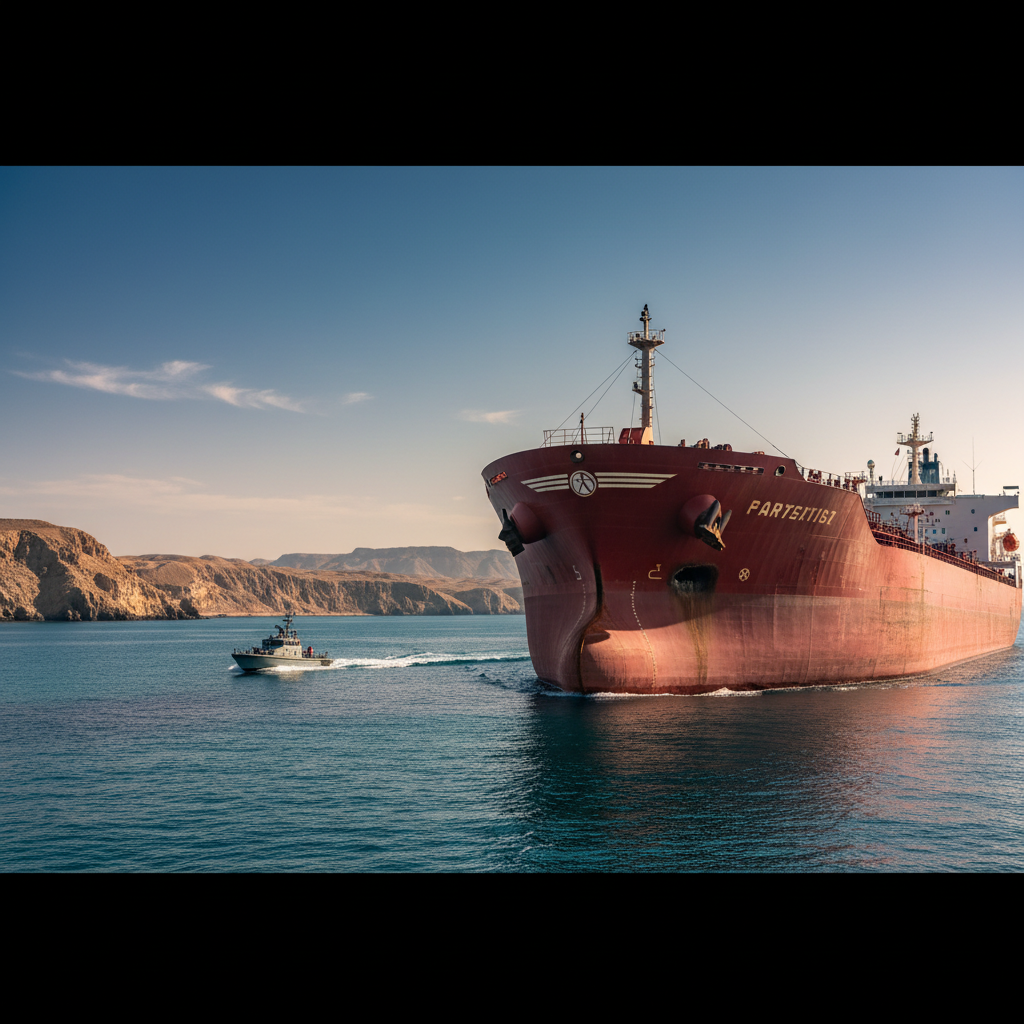
Overnight Thursday, a significant incident unfolded in the Strait of Hormuz: a tanker was struck by a limpet mine in an attack attributed to Iranian forces, as reported by UK intelligence. This event is not an isolated occurrence but rather the latest in a series of escalating geopolitical tensions in a region critical to global trade. The Strait of Hormuz, a narrow maritime choke point, is indispensable for the transit of a substantial portion of the world's energy supplies. Such an attack immediately introduces heightened risk and uncertainty into global supply chains, particularly for maritime cargo. Shippers and logistics professionals must now contend with increased security concerns, potential disruptions to vessel movements, and the broader implications for commodity prices and freight costs. The incident underscores the urgent need for enhanced visibility and agile response mechanisms to navigate an increasingly volatile global shipping landscape.
Affected Lanes and Facilities
The primary lane affected is the Strait of Hormuz itself, a waterway of immense strategic importance connecting the Persian Gulf to the Arabian Sea and beyond. Approximately one-fifth of the world's total petroleum consumption and a quarter of global liquefied natural gas (LNG) transits through this strait daily. Its narrowest point is only about 21 nautical miles wide, with shipping lanes just two miles wide in each direction, making it exceptionally vulnerable to disruption. Any incident here creates a bottleneck that can ripple across global trade routes. Facilities directly impacted include major oil terminals and ports within the Persian Gulf, such as those in Saudi Arabia (e.g., Ras Tanura), the UAE (e.g., Fujairah, Jebel Ali), Qatar (e.g., Ras Laffan), and Kuwait. Vessels departing or arriving at these facilities must pass through the Strait, placing their schedules and security at immediate risk. Even ports outside the immediate Gulf region, but reliant on its energy exports or imports, will feel the secondary effects through altered shipping patterns and increased costs.
Affected Modes and Cargo Types
The most directly affected mode of transport is maritime shipping, specifically crude oil tankers, product tankers carrying refined petroleum, and LNG carriers. These vessels are the primary targets and the most frequent users of the Strait of Hormuz for their high-value, critical cargo. The incident directly impacts the flow of energy commodities, which are fundamental to global economies. Beyond energy, other cargo types are also indirectly affected. Container ships, bulk carriers transporting dry goods, and even roll-on/roll-off (Ro-Ro) vessels also utilize the Strait for regional trade or as part of longer intercontinental routes. While not direct targets, these vessels face increased security risks, higher insurance premiums, and potential delays due to enhanced naval patrols or security protocols. The ripple effect can extend to air cargo if urgent shipments are diverted from sea, and even to land-based logistics as fuel prices fluctuate, impacting trucking and rail costs globally.
Immediate Impact on Supply Chains
The immediate impact on supply chains is multifaceted. Firstly, there's an instant surge in perceived risk, leading to a sharp increase in war risk insurance premiums for vessels operating in the region. This directly translates to higher operational costs for carriers, which are inevitably passed on to shippers through surcharges. Secondly, vessel operators may implement stricter security measures, potentially slowing transit times or requiring vessels to travel in convoys, leading to schedule delays. Thirdly, the threat of further attacks can lead to temporary diversions or cancellations of services by some carriers, further disrupting established shipping lanes. This creates uncertainty for delivery schedules and inventory management. For energy markets, the incident can cause immediate price spikes for crude oil and natural gas, impacting manufacturing costs and consumer prices globally. Shippers face the challenge of rapidly reassessing their risk exposure, identifying alternative routes or modes where feasible, and managing stakeholder expectations regarding potential delays and increased costs.
Short-Term Outlook and Mitigation Strategies
In the short term, the outlook for the Strait of Hormuz region remains volatile, with continued elevated geopolitical risk. Shippers must prioritize real-time visibility and proactive communication. Key mitigation strategies include: 1. Enhanced Monitoring: Utilize shipment visibility platforms to track vessels in transit through or near the Strait of Hormuz in real-time, receiving immediate alerts on any incidents or deviations. 2. Risk Assessment and Diversification: Conduct rapid assessments of current and planned shipments through the region. Explore alternative sourcing or routing options, even if they incur higher costs or longer lead times, to reduce reliance on this single choke point. 3. Carrier Communication: Maintain close contact with carriers and freight forwarders to understand their updated security protocols, revised schedules, and any new surcharges. 4. Inventory Management: Consider holding slightly higher safety stock for critical components or finished goods that rely on supply chains passing through the region, to buffer against potential delays. An MGS shipment-visibility control tower is invaluable here, providing the granular data needed to identify at-risk shipments, predict potential delays, and model the impact of rerouting decisions, enabling swift and informed responses.
Long-Term Implications and Resilience Building
Beyond the immediate crisis, the limpet mine attack in the Strait of Hormuz highlights deeper, long-term implications for global supply chain resilience. It underscores the inherent vulnerability of relying on critical maritime choke points in geopolitically unstable regions. Long-term strategies for resilience building must include: 1. Supply Chain Diversification: Actively pursuing diversification of sourcing locations and manufacturing hubs to reduce dependence on single regions or transit routes. 2. Near-shoring/Friend-shoring: Exploring options to bring production closer to consumption markets or to countries with stable geopolitical relationships. 3. Investment in Alternative Logistics Infrastructure: Supporting the development of alternative energy transport routes (e.g., pipelines bypassing the Strait of Hormuz) or multimodal corridors that offer flexibility. 4. Robust Risk Management Frameworks: Implementing comprehensive risk management systems that incorporate geopolitical analysis, scenario planning, and contingency measures for major disruptions. This incident serves as a stark reminder that geopolitical stability is a critical, yet often overlooked, component of supply chain security.
MGS Control Tower Advantage
In an environment characterized by sudden geopolitical disruptions like the Strait of Hormuz mine attack, an MGS shipment-visibility control tower becomes an indispensable tool for supply chain professionals. It provides unparalleled, real-time end-to-end visibility across all modes of transport, allowing shippers to track every vessel, container, or package. When an incident occurs, the MGS platform can immediately pinpoint all affected or potentially affected shipments, offering predictive analytics on revised estimated times of arrival (ETAs) and identifying optimal rerouting options. This capability enables proactive decision-making, such as diverting cargo before it enters a high-risk zone, communicating transparently with customers about potential delays, and optimizing inventory levels to mitigate stockouts. By consolidating data from multiple sources and providing actionable insights, an MGS control tower transforms a reactive crisis response into a strategic, data-driven approach to maintaining supply chain continuity and resilience in the face of unpredictable global events.
Source: The Maritime Executive — https://maritime-executive.com/article/tanker-hit-by-limpet-mine-attack-in-strait-of-hormuz