
Geopolitical Diesel Ban: Ripple Effects on Global Cargo Movement and Supply Chain Resilience
A major nation's decision to extend its diesel export ban until year-end, albeit with a quota system for specific commitments, sends significant ripples across global trade and transport. This insight brief explores the non-political consequences for shipping routes, energy markets, and the operational challenges faced by logistics providers, underscoring the critical need for advanced shipment visibility in navigating such volatility.
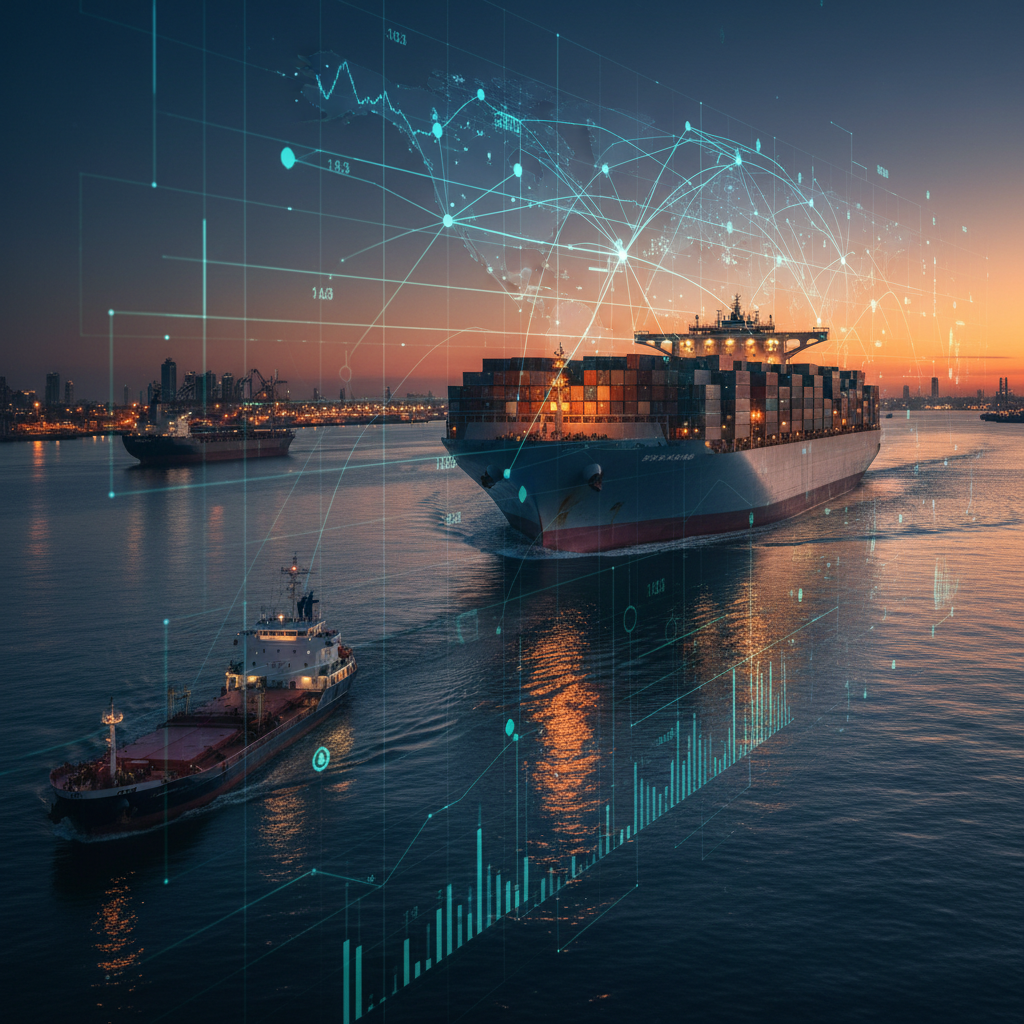
Geopolitical decisions, even those seemingly focused on domestic supply or specific bilateral agreements, invariably send powerful shockwaves through the intricate web of global commerce. The recent extension of a significant nation's diesel export ban until the end of the year, despite provisions for a quota system to fulfill certain international commitments, exemplifies how such actions can fundamentally alter the landscape for cargo movement and supply chain stability. This analysis focuses purely on the trade and transport implications, detaching from the political motivations, to highlight the tangible impact on routes, waterways, and the operational realities for businesses worldwide.
Impact on Global Energy Markets & Shipping Routes
Diesel is not merely a fuel; it is the lifeblood of global logistics and industrial activity. Its widespread use powers everything from heavy-duty trucks and trains to agricultural machinery, industrial generators, and, crucially, maritime vessels through bunker fuel. A major exporter's decision to restrict its supply creates an immediate and profound supply shock. This scarcity inevitably leads to price volatility in global energy markets, directly translating into increased operational costs for carriers across all modes of transport. For maritime shipping, the impact is particularly acute. Vessels navigating international waters rely heavily on accessible and affordable bunker fuel. A disruption from a key supplier forces shipping lines to seek alternative bunkering locations, potentially diverting from optimal routes, increasing transit times, and burning more fuel in the process. This rerouting not only adds to fuel consumption but also strains port infrastructure at alternative supply points, leading to potential congestion and further delays. The introduction of a 'quota system' for specific export commitments further complicates market dynamics, creating a bifurcated supply landscape where some flows are geopolitically directed rather than market-driven. This can lead to inefficiencies, artificial shortages in certain regions, and an overall distortion of global shipping patterns as carriers adjust to an unpredictable and non-transparent supply environment. The cumulative effect is higher freight rates, longer lead times, and a less predictable global shipping network.
Consequences for Downstream Industries & Supply Chains
The ripple effects of a diesel export ban extend far beyond the immediate energy and transport sectors, permeating virtually every downstream industry and supply chain. Manufacturers, for instance, rely on diesel-powered logistics to bring in raw materials and ship out finished goods. Any increase in transport costs due to fuel price hikes or rerouting directly inflates their operational expenses, which are often passed on to consumers, contributing to inflationary pressures. The agricultural sector, heavily dependent on diesel for farm machinery, faces similar challenges, potentially impacting food production costs and availability. Construction projects, mining operations, and even retail distribution networks, all powered by or reliant on diesel-fueled equipment and transport, will experience varying degrees of disruption. Beyond cost, the unpredictability of fuel availability can lead to significant operational challenges. Businesses might face delays in receiving critical components or delivering products, risking production stoppages, stockouts, and missed delivery windows. The 'until year-end' timeframe, while providing some clarity on duration, still represents a substantial period of sustained uncertainty, forcing businesses to re-evaluate their energy procurement strategies, explore alternative transport modes, or even consider adjusting production schedules to mitigate risks. This highlights a broader vulnerability within global supply chains, where a single commodity's disruption can cascade into widespread economic instability.
Operational Challenges for Carriers and Logistics Providers
For carriers and logistics providers, operating in an environment marked by geopolitical export bans presents a complex array of operational challenges. The fundamental unpredictability of fuel availability and pricing makes strategic planning and cost forecasting incredibly difficult. Route optimization, a cornerstone of efficient logistics, becomes a dynamic and constantly evolving task. Traditional routes might become economically unviable or logistically impossible if preferred bunkering or refueling points are affected by shortages or exorbitant prices. This necessitates real-time adjustments, often leading to longer routes, increased fuel consumption, and higher labor costs. Furthermore, the risk of demurrage and detention charges escalates significantly if vessels or trucks are delayed at ports or depots awaiting fuel, adding further financial strain. Contractual obligations become harder to meet, leading to potential penalties or renegotiations with clients. The complexity introduced by a 'quota system' means that logistics providers might need to navigate a two-tiered market – one for general supply and another for specific, politically mandated commitments – adding layers of administrative burden and uncertainty. While the source doesn't directly mention airspace restrictions, geopolitical tensions often lead to broader operational challenges for air cargo, including increased insurance premiums, longer flight paths to avoid conflict zones, and heightened security protocols, all contributing to higher costs and reduced efficiency. The cumulative effect is a significant erosion of operational margins and an increased need for robust contingency planning and adaptive management strategies.
Role of Shipment Visibility in Mitigating Disruptions
In an environment characterized by such profound geopolitical volatility and its downstream effects on cargo movement, the role of advanced shipment visibility platforms, like MGS, becomes not just beneficial but absolutely critical. Real-time, end-to-end visibility provides the foundational intelligence needed to navigate these disruptions proactively. By continuously tracking the movement of cargo, vessels, and vehicles, an MGS platform can offer early warnings of potential delays caused by fuel shortages, rerouting, or port congestion. This allows logistics managers to identify at-risk shipments, assess the impact on estimated times of arrival (ETAs), and communicate proactively with all stakeholders. Furthermore, an MGS platform can integrate data on global fuel prices and bunker availability, enabling carriers to make more informed decisions about refueling stops and route adjustments. This data-driven approach supports dynamic risk assessment, allowing businesses to model different scenarios and develop contingency plans on the fly – whether it's identifying alternative transport modes, securing emergency fuel supplies, or re-prioritizing urgent shipments. For instance, if a vessel is en route to a region experiencing diesel scarcity, the platform can alert operators to divert to an alternative port with confirmed supply, minimizing delays. In the context of a 'quota system,' visibility can help track specific shipments allocated under these quotas, ensuring compliance and optimizing their movement. Ultimately, MGS empowers businesses to transform reactive responses into proactive strategies, enhancing supply chain resilience and minimizing the financial and operational fallout from unpredictable geopolitical events like an extended diesel export ban.
Source: Maritime Professional — https://www.maritimeprofessional.com/news/russia-extends-diesel-export-until-423957