
Port of Los Angeles Rail Dwell Times Exceed Nine Days as Global Trade Routes Shift
Geopolitical events are causing significant disruptions to global cargo movement, leading to extended rail dwell times at key ports like Los Angeles. Learn how route diversions, tariffs, and sanctions create bottlenecks and cascade into inland logistics, impacting trade and transport efficiency.
Global Rerouting Pressures Port of Los Angeles Rail Operations
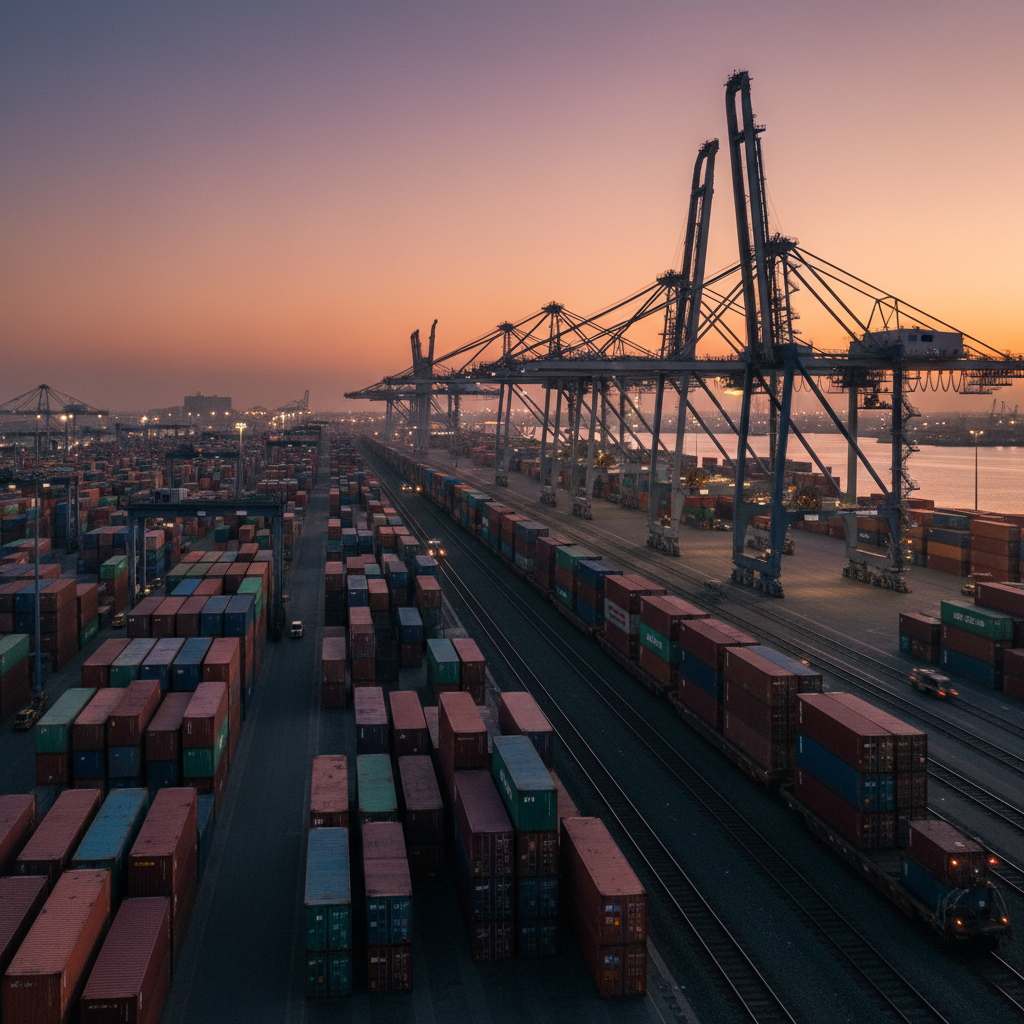
Geopolitical events frequently force significant alterations to established cargo movement patterns, directly impacting port efficiency and inland logistics. When major waterways become high-risk zones or are entirely blocked, vessels must reroute, often adding thousands of miles and weeks to transit times. For instance, ongoing disruptions in critical maritime chokepoints compel ships to take longer, alternative paths around continents. This leads to an irregular flow of vessels, causing them to arrive in clusters rather than according to planned schedules at destination ports. Such bunching overwhelms port infrastructure, particularly the capacity for offloading containers onto rail. The Port of Los Angeles, a key gateway for trans-Pacific trade, has recently experienced this strain, with wait times for idle containers destined for rail transport reaching over nine days. This extended dwell time is a direct consequence of the port's inability to process inbound cargo at the rate it arrives, a situation often exacerbated by the ripple effects of global route diversions. The sheer volume of delayed arrivals can quickly exhaust available berths, cranes, and yard space. Airspace restrictions, while affecting a different mode of transport, also contribute to overall supply chain volatility. When air cargo routes are deemed unsafe or become subject to political restrictions, some shippers may shift goods to ocean freight, further increasing pressure on already strained port systems. The cumulative effect is a bottleneck at the interface between sea and land, where the efficiency of rail operations becomes a crucial determinant of overall cargo velocity. The extended holding of containers on terminal property not only consumes valuable space but also delays the onward movement of goods, creating a backlog that can take weeks to clear, impacting inventory levels and delivery schedules for businesses across various sectors. This situation highlights the interconnectedness of global events and local operational performance.
Tariffs and Sanctions Reshape Trade Flows, Creating New Bottlenecks
Beyond direct physical disruptions to routes, geopolitical policies like tariffs and sanctions significantly reshape global trade flows, often with unforeseen consequences for transport infrastructure. The imposition of new tariffs can trigger a rush of imports or exports as companies attempt to beat deadlines, leading to sudden surges in cargo volume at specific ports or border crossings. This "front-loading" of shipments can temporarily overwhelm port and customs processing capabilities, creating immediate congestion. Conversely, sanctions can force businesses to abandon established supply chains, compelling them to seek alternative sourcing countries or export markets. This realignment often involves less efficient routes, new customs procedures, and unfamiliar logistics partners, all of which can introduce delays and increase handling times. For example, if a country faces sanctions, cargo destined for or originating from that region might be held indefinitely at intermediate ports, tying up container assets and terminal space. Even if the cargo is rerouted, the new path might lead to ports that are not equipped to handle the sudden increase in volume or specific types of goods, creating new points of congestion. These policy-driven shifts in trade patterns can destabilize the delicate balance of port operations and inland transport networks. The Port of Los Angeles's elevated rail dwell times, while not solely attributable to tariffs or sanctions, illustrate how any disruption that alters the predictable flow of goods can strain terminal capacity and intermodal connections. The need for companies to adapt quickly to evolving trade policies means that logistics networks must absorb these changes, often resulting in localized inefficiencies and delays that propagate through the supply chain, increasing costs for shippers and ultimately consumers. This constant adaptation requires significant flexibility from transport providers.
Inland Logistics Face Cascading Delays from Port Congestion
The consequences of geopolitical disruptions at sea and policy shifts on trade flows do not end at the port gate; they cascade deeply into inland logistics networks. When ports experience elevated dwell times, such as the over nine days reported for rail-bound containers at the Port of Los Angeles, it creates a severe bottleneck for the entire intermodal system. Containers sitting idle on terminal property consume valuable space, reducing the port's capacity to receive new cargo from arriving vessels. This backlog then extends to the rail network itself. A shortage of available railcars and locomotives can develop as equipment is tied up waiting for containers to be loaded or unloaded. Chassis, essential for moving containers between the port and rail ramps or warehouses, also become scarce. This scarcity forces truckers to wait longer for equipment, increasing drayage costs and further delaying the movement of goods to their final destinations. The ripple effect means that goods take longer to reach distribution centers, factories, and ultimately, consumers. For manufacturers, this translates into production delays, stockouts, and increased inventory holding costs, potentially disrupting production lines. Retailers face empty shelves and missed sales opportunities, impacting revenue. The predictability of supply chains diminishes, making planning and inventory management significantly more challenging for businesses of all sizes. The Port of Los Angeles's situation highlights how a localized operational issue, potentially exacerbated by broader geopolitical pressures, can have far-reaching implications for the efficiency and cost-effectiveness of an entire nation's supply chain infrastructure, leading to higher freight rates and reduced reliability.
Interconnected Global Events Drive Localized Logistics Strain
The elevated rail dwell times at the Port of Los Angeles, reaching over nine days for idle containers, serve as a clear indicator of how global geopolitical events translate into tangible operational challenges for cargo movement. These disruptions, whether from altered shipping routes, trade policy shifts, or strained inland networks, create a complex web of delays and inefficiencies that impact the entire supply chain.
- Watch for changes in major maritime chokepoint security and transit times over the next six months.
- Monitor new tariff announcements or sanction implementations by major trading blocs in the coming year.
- Observe port investment in rail infrastructure and automation projects at key gateways like the Port of Los Angeles.
- Track intermodal rail capacity and equipment availability across North America in the next quarter.
Source: Supply Chain Dive — https://www.supplychaindive.com/news/port-of-los-angeles-grapples-with-elevated-rail-dwell-times/874553/