
Geopolitical Tides: The Ripple Effect of Disrupted Grain Exports on Global Supply Chains
A significant drop in Russian seaborne grain exports from the Azov-Black Sea basin highlights the profound impact of geopolitical events on global trade. This brief analyzes the consequences for shipping routes, costs, and supply chain resilience.
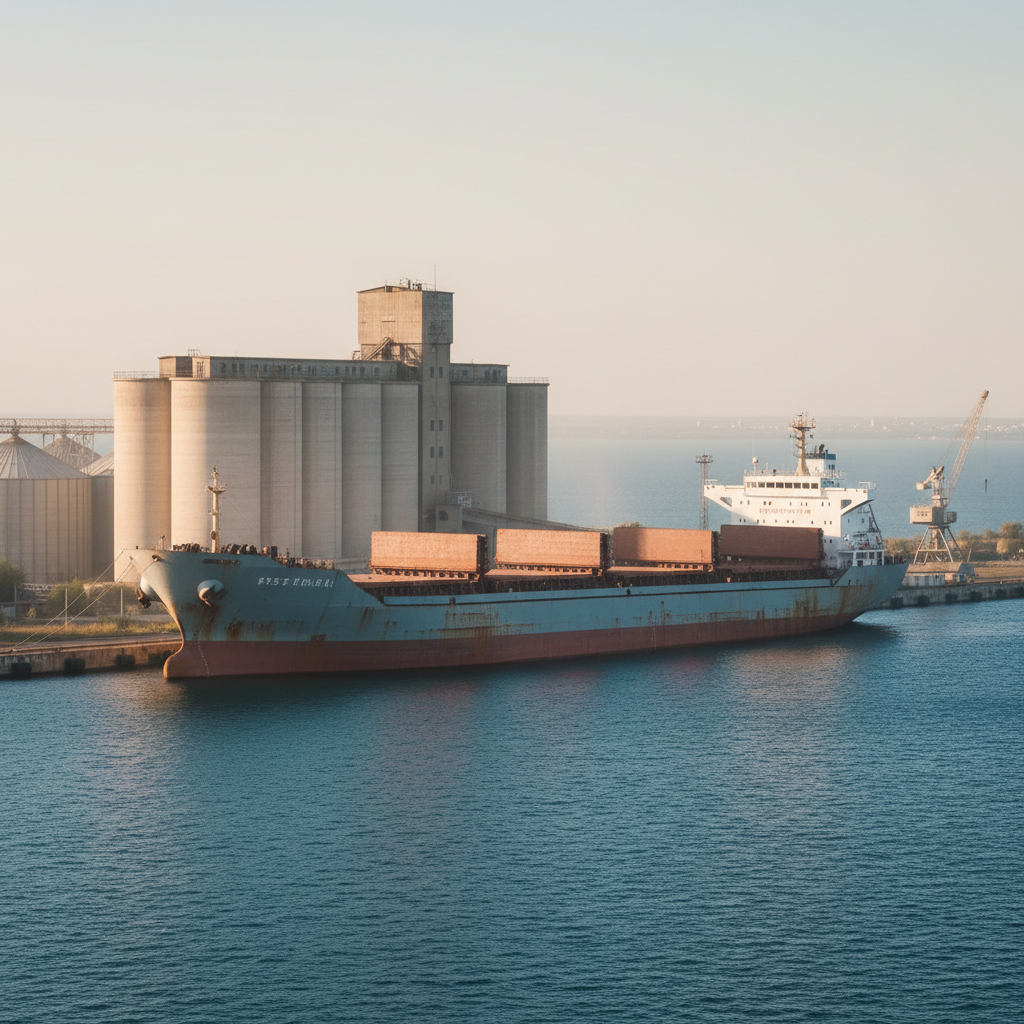
Impact on specific trade lanes/routes
Geopolitical shifts are fundamentally redrawing the map of global trade, particularly evident in the maritime sector. The recent substantial decline in Russian seaborne grain exports, specifically a 61.9% year-on-year reduction in September to almost 2.0 million metric tons, serves as a stark illustration. This precipitous drop is primarily attributed to disruptions within the critical Azov-Black Sea basin ports. This region, historically a pivotal artery for agricultural commodities, now faces significant operational challenges, directly impacting the viability and reliability of established trade lanes. Shippers and carriers that once relied on these routes for efficient grain transport are compelled to re-evaluate, leading to a cascade of effects across the broader maritime network. The diminished activity in a key export region forces a re-prioritization of vessel deployment and cargo aggregation, shifting pressure to alternative ports and corridors that may not be equipped to handle sudden surges in volume.
Changes in shipping capacity and availability
The 61.9% reduction in seaborne grain exports from the Azov-Black Sea basin has immediate and tangible consequences for shipping capacity. A significant decrease in cargo volume from a major exporting region means that vessels previously dedicated to this trade lane are either idled, redeployed to other routes, or face reduced utilization. This creates a complex dynamic: while there might be an apparent surplus of available vessels in the immediate vicinity of the disrupted region, the overall global balance of capacity shifts. For instance, if these vessels are rerouted to less efficient or longer journeys to pick up alternative cargo, their effective capacity to serve the global market diminishes. Conversely, the sudden absence of a large volume of cargo can lead to a localized oversupply of shipping capacity, potentially depressing freight rates for the few remaining active routes in the area, while simultaneously increasing demand and rates in regions now tasked with filling the supply gap. This uneven distribution of capacity creates inefficiencies and unpredictability for global shipping lines.
Increased transit times and delays
Disruptions in established trade lanes, such as those observed in the Azov-Black Sea basin, inevitably lead to increased transit times and delays across the supply chain. When a primary export route becomes less viable or inaccessible, cargo owners must seek alternative pathways. These alternatives often involve longer distances, more complex logistical arrangements, or routing through congested ports that were not originally designed for the diverted volumes. For grain shipments, this could mean vessels taking circuitous routes around conflict zones, waiting longer for berths at alternative ports, or facing additional inspections and bureaucratic hurdles. Each of these factors adds days, if not weeks, to transit times. Such delays have a compounding effect, impacting inventory management, cash flow, and the freshness or quality of perishable goods. For a shipment visibility control tower like MGS, real-time tracking of these rerouted vessels and updated estimated times of arrival (ETAs) becomes paramount, enabling proactive communication with stakeholders and allowing for adjustments to downstream logistics.
Higher shipping costs (freight rates, insurance premiums)
The economic fallout of geopolitical disruptions on cargo movement is most acutely felt in increased shipping costs. The challenges in the Azov-Black Sea basin, for example, directly contribute to elevated expenses for several reasons. Firstly, longer transit times due to rerouting translate into higher fuel consumption and operational costs for carriers. Secondly, the perceived risk associated with operating in or near conflict-affected areas leads to a significant surge in war risk insurance premiums, which are passed on to shippers. Thirdly, the imbalance in supply and demand for vessels on alternative, safer routes can drive up freight rates as competition for available capacity intensifies. Furthermore, potential port congestion at diversion points can incur demurrage charges for delayed vessels. These cumulative cost increases ultimately impact the final price of commodities, affecting consumers and potentially contributing to inflationary pressures globally. For MGS users, understanding these cost escalations in real-time is crucial for accurate landed cost calculations and strategic sourcing decisions.
Shift in sourcing and supply chain strategies
The sustained disruption of a major commodity flow, such as the 61.9% reduction in Russian seaborne grain exports, compels a fundamental re-evaluation of sourcing and supply chain strategies. Importers who previously relied on the Azov-Black Sea region for grain must now diversify their supplier base, seeking out new agricultural producers in different geographical locations. This shift can lead to the development of entirely new trade relationships and the strengthening of existing ones with alternative suppliers. However, establishing new sourcing channels often involves higher initial costs, different quality standards, and new logistical challenges. Companies may also opt to increase their inventory holdings as a buffer against future disruptions, which ties up capital and incurs storage costs. The long-term implication is a move towards more resilient, albeit potentially more complex and costly, multi-source supply chains designed to mitigate the risks associated with over-reliance on any single region or supplier.
Risk mitigation strategies for shippers
In an era defined by geopolitical volatility, effective risk mitigation is no longer optional but essential for shippers. The scenario of drastically reduced grain exports from a critical region underscores the need for robust strategies. Shippers must prioritize enhanced visibility into their entire supply chain, from origin to destination. This includes comprehensive monitoring of geopolitical developments, real-time tracking of cargo movements, and dynamic assessment of potential route disruptions. Diversification of suppliers and shipping routes is a key tactic, ensuring that the failure of one channel does not cripple operations. Furthermore, building strong relationships with multiple carriers and logistics providers can offer flexibility in times of crisis. For a shipment visibility control tower like MGS, providing predictive analytics on potential disruptions, offering scenario planning tools for alternative routes, and enabling rapid communication across the supply chain are invaluable. This empowers shippers to make informed, agile decisions, minimizing the impact of unforeseen events and maintaining continuity of supply.
Long-term implications for global trade flows
The persistent disruption of significant trade flows, exemplified by the substantial drop in Russian grain exports, carries profound long-term implications for global trade structures. Over time, these disruptions can lead to a permanent re-calibration of trade routes, with new corridors emerging and old ones diminishing in importance. The global distribution of commodities, particularly staples like grain, can be permanently altered, affecting food security in importing nations and economic stability in exporting regions. Furthermore, such events can accelerate the trend towards regionalization of supply chains, as countries seek to reduce their dependence on distant and potentially volatile sources. This could foster new trade blocs and agreements, reshaping geopolitical alliances based on economic necessity. The cumulative effect is a more fragmented and potentially less efficient global trading system, where resilience and adaptability become paramount over traditional notions of cost optimization and just-in-time delivery. The MGS platform, by providing an overarching view of these evolving dynamics, becomes a critical tool for businesses and governments to navigate this new global trade landscape.
Source: Maritime Professional — https://www.maritimeprofessional.com/news/seaborne-grain-exports-from-russia-423860