
Geopolitical Tides: Navigating Disruption in Global Cargo Movement
Geopolitical events are increasingly reshaping the global logistics landscape, forcing supply chains to adapt to new realities. This brief examines the tangible consequences of these disruptions on cargo movement, from altered routes and restricted airspace to complex tariff regimes and sanctions, and highlights how advanced shipment visibility platforms are crucial for maintaining trade flow.
Introduction
In an increasingly interconnected yet volatile world, geopolitical events are no longer distant news but immediate drivers of change within global supply chains. From regional conflicts to shifting alliances and economic policy shifts, the repercussions reverberate across every facet of cargo movement. For supply chain professionals, these events translate directly into operational challenges: longer transit times, increased costs, heightened risks, and a constant need for adaptability. This analysis delves into the practical consequences of these geopolitical shifts on the mechanisms of global trade and transport, underscoring the imperative for robust visibility and agile response capabilities.
Impact on Airspace and Routes
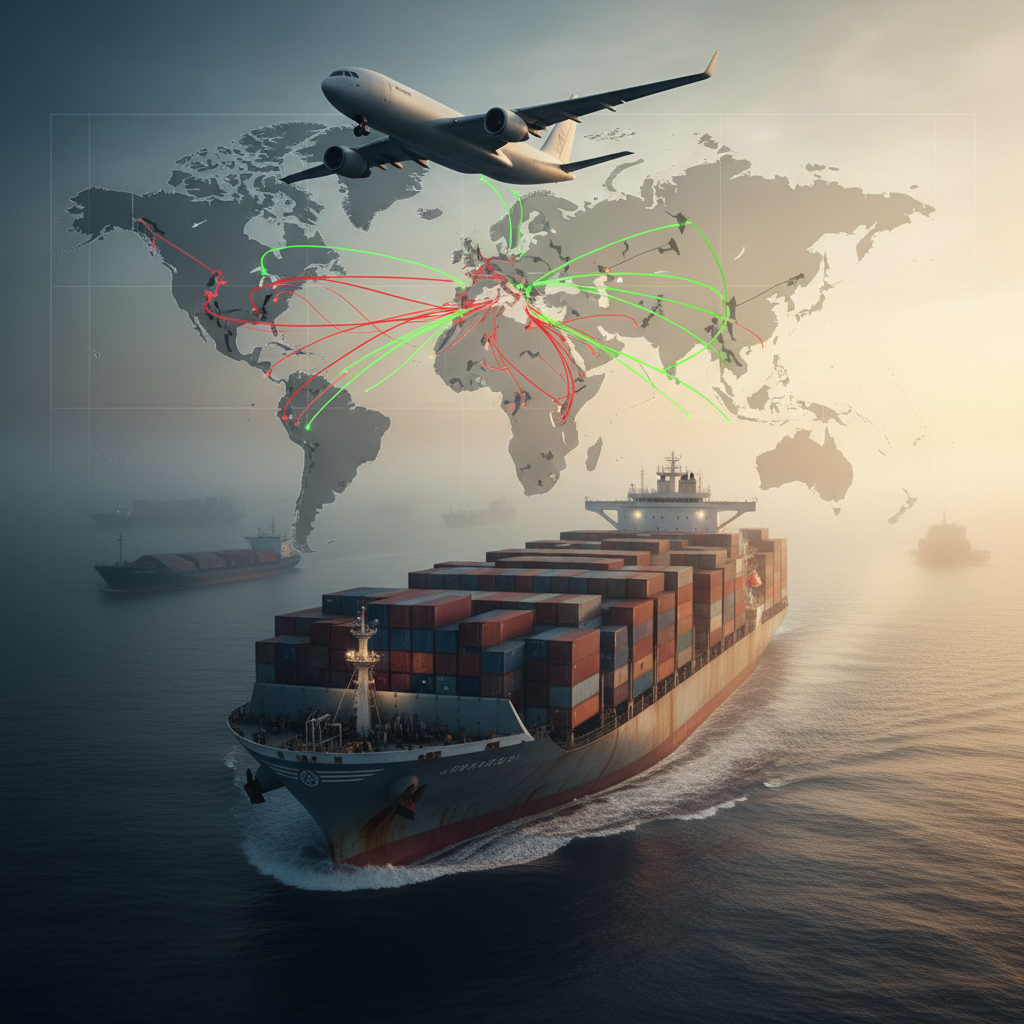
Geopolitical tensions frequently manifest as restrictions or outright closures of national or regional airspace. When airspace becomes a no-fly zone for specific carriers or origins/destinations, commercial and cargo airlines are forced to reroute. The immediate consequence is a significant increase in flight distance and duration. For example, flights between Europe and parts of Asia have seen considerable detours, adding thousands of kilometers to journeys that once followed more direct paths. This extended travel time directly translates into higher fuel consumption, increased operational costs for airlines, and subsequently, higher freight rates for shippers. Furthermore, longer routes can necessitate additional crew, maintenance checks, and layovers, further complicating scheduling and reducing overall capacity efficiency. For time-sensitive cargo, such as pharmaceuticals or high-value electronics, these delays can have critical implications for product integrity, market delivery, and inventory management. The ripple effect extends to airport congestion at alternative hubs and potential bottlenecks in ground handling, creating a complex web of interconnected delays.
Impact on Waterways and Maritime Transport
Critical maritime chokepoints and major shipping lanes are particularly vulnerable to geopolitical instability. Naval presence, security threats, or direct conflict can render traditional routes unsafe or economically unviable. When key waterways become high-risk zones, shipping companies must make difficult decisions: either navigate through dangerous waters at increased insurance premiums and risk exposure or reroute vessels around entire continents. The latter, while safer, dramatically extends transit times, often by weeks, and significantly inflates fuel costs. This not only impacts the cost of goods but also throws off meticulously planned inventory schedules, leading to stockouts or overstock situations. Port operations can also be disrupted by sanctions, labor disputes linked to geopolitical sentiments, or even cyberattacks, leading to congestion, delays in cargo loading and unloading, and diversions to less efficient ports. The cumulative effect is a less predictable and more expensive maritime transport landscape, impacting everything from raw material delivery to finished goods distribution.
Tariffs and Sanctions as Trade Barriers
Tariffs and sanctions are economic tools frequently deployed in response to geopolitical events, and their impact on cargo movement is profound and immediate. Tariffs, essentially taxes on imported goods, directly increase the cost of trade, making certain goods less competitive or entirely uneconomical to import. This can lead to shifts in sourcing strategies, as companies seek alternative suppliers in countries not subject to the tariffs, potentially disrupting established supply chains and requiring new logistical arrangements. Sanctions, on the other hand, are more restrictive, often prohibiting trade in specific goods, technologies, or with designated entities or countries. These measures necessitate rigorous compliance checks, as any violation can lead to severe penalties. Businesses must meticulously track the origin, transit, and final destination of their goods, as well as the identities of all parties involved in the transaction, to ensure adherence. This creates an intricate web of regulatory complexity, often requiring companies to re-evaluate their entire supplier and customer base, leading to significant changes in trade flows and potentially isolating markets or industries.
Consequences for Global Trade and Transport
The cumulative effect of these disruptions is a significant increase in volatility and uncertainty across global trade and transport. Supply chains are becoming longer, more expensive, and less reliable. Increased transit times, whether by air or sea, translate into higher working capital requirements as goods spend more time in transit. Elevated freight rates, fuel surcharges, and insurance premiums directly impact the landed cost of goods, often passed on to the consumer, contributing to inflationary pressures. The complexity introduced by sanctions and tariffs necessitates greater investment in compliance, legal expertise, and diversified sourcing strategies, which can be costly and time-consuming. Furthermore, the reduced predictability of delivery schedules makes just-in-time inventory models riskier, pushing companies towards holding larger safety stocks, which ties up capital and increases warehousing costs. The overall landscape is one where resilience, adaptability, and real-time information are no longer competitive advantages but fundamental requirements for survival.
The Role of Shipment Visibility Control Towers (MGS)
In this environment of heightened geopolitical risk, a robust shipment-visibility control tower platform like MGS becomes an indispensable asset. Real-time, end-to-end visibility across all modes of transport allows organizations to proactively identify and respond to disruptions. When airspace is closed or a shipping lane becomes hazardous, MGS can immediately flag affected shipments, calculate revised ETAs based on alternative routes, and provide actionable insights for re-routing decisions. This capability extends to monitoring vessels and flights, alerting to deviations, and providing predictive analytics on potential delays before they become critical. For compliance with tariffs and sanctions, an MGS platform can integrate with regulatory databases, offering automated checks against restricted entities, origins, or destinations, thereby reducing the risk of inadvertent violations. By consolidating data from carriers, ports, and customs, MGS empowers supply chain teams with a single source of truth, enabling swift communication with stakeholders, optimizing inventory management in response to delays, and facilitating agile decision-making to mitigate the financial and operational fallout of geopolitical events. It transforms reactive crisis management into proactive risk mitigation, ensuring business continuity amidst global turbulence.
Conclusion
The interplay between geopolitics and global supply chains is a defining characteristic of the current economic era. The disruptions to airspace, waterways, tariffs, and sanctions create a complex and challenging environment for trade and transport. While the political drivers are beyond the scope of supply chain management, the consequences demand a strategic and technologically advanced response. Embracing comprehensive shipment visibility and control tower capabilities is no longer a luxury but a necessity for organizations aiming to navigate these turbulent waters, maintain operational efficiency, and ensure the resilience of their global trade networks.
Source: Atlantic Council — https://www.atlanticcouncil.org/insight-impact/in-the-news/russia-sanctions-database-cited-in-forbes-article-on-the-war-in-ukraine/