
Escalating Maritime Security Risks: The Strait of Hormuz Threat to Global Supply Chains
October has marked a concerning peak in attacks on commercial shipping within the Strait of Hormuz and its adjacent waters, making it the worst month for such incidents since 2017. This surge in geopolitical instability presents critical challenges for global supply chains, directly impacting vital maritime lanes, creating operational complexities, and necessitating urgent strategic responses from shippers worldwide.
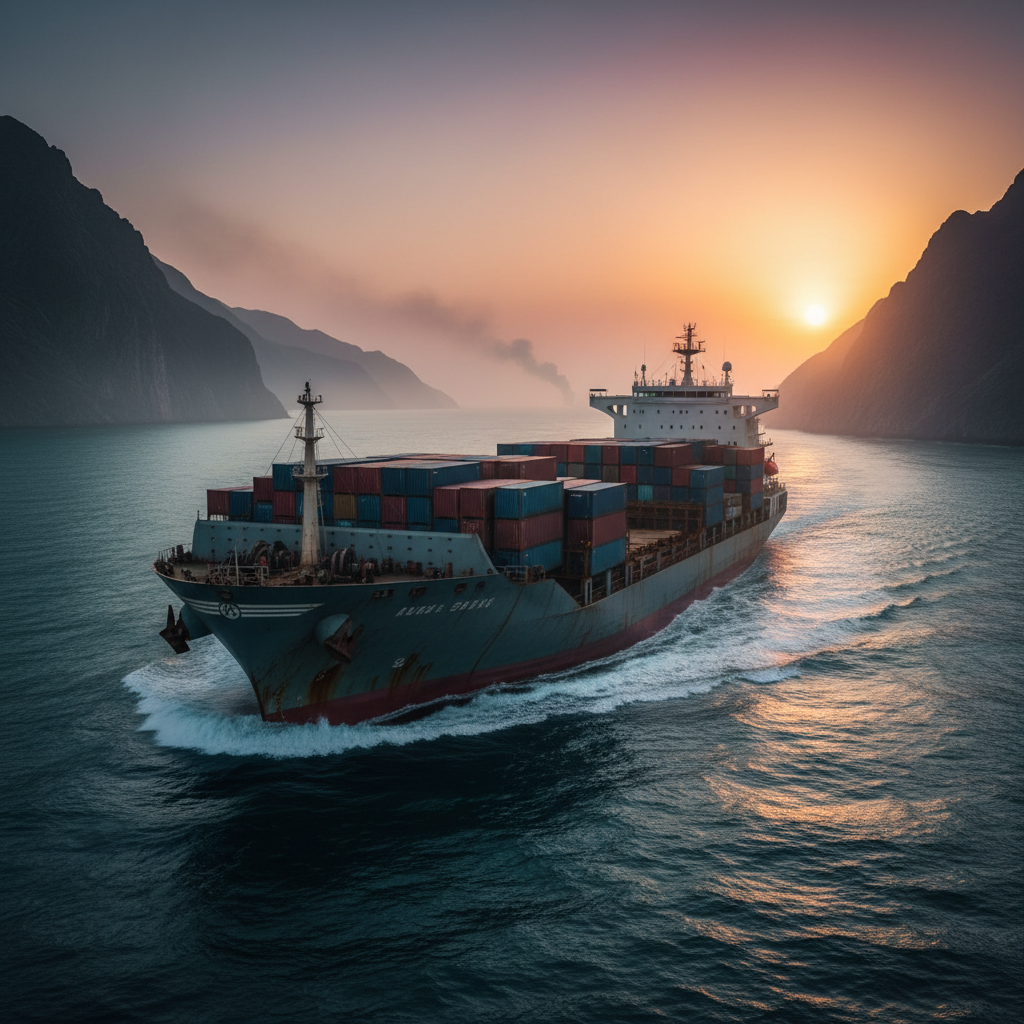
The Unfolding Crisis in the Strait of Hormuz
The global supply chain faces a persistent and evolving array of disruptions, ranging from natural disasters to economic shifts. However, a recent and alarming development in a critical maritime chokepoint underscores the profound impact of geopolitical instability. Data compiled by a Washington-based think tank, which has diligently tracked maritime security incidents globally since 2017, reveals a significant escalation in attacks on commercial shipping in the Strait of Hormuz and nearby waterways. Specifically, October has emerged as the worst month on record for these incidents. This surge in hostile activity introduces a new layer of complexity and risk for international trade, demanding immediate attention and strategic adaptation from all stakeholders in the logistics ecosystem.
The Strait of Hormuz, a narrow passage connecting the Persian Gulf to the Arabian Sea, is arguably the world's most important oil transit chokepoint. Its strategic significance extends beyond energy, as it facilitates a substantial volume of global cargo movement. The increase in attacks, characterized by this recent 'worst month' in October, signifies a heightened threat environment. These incidents can range from direct assaults on vessels to harassment, seizures, or the deployment of naval mines, all designed to disrupt safe passage. The implications are far-reaching, affecting not just the immediate region but also global trade routes and commodity markets.
Critical Maritime Lanes and Modes Under Threat
The primary lanes affected by this escalating crisis are, unequivocally, the Strait of Hormuz itself and the broader network of nearby waterways that feed into and out of the Persian Gulf. This region is a vital artery for international commerce, particularly for crude oil and liquefied natural gas (LNG) shipments, but also for a diverse range of containerized and bulk cargo. Any disruption here has a ripple effect across continents.
The mode of transport overwhelmingly impacted is commercial maritime shipping. Tankers, bulk carriers, and container ships, which form the backbone of global trade, are directly exposed to these security risks. The sheer volume of traffic through this strait means that even isolated incidents can create widespread apprehension and operational bottlenecks. The threat compels shipping companies to re-evaluate their risk profiles, potentially leading to increased security measures, changes in vessel routing, or even temporary suspensions of service, all of which contribute to delays and higher costs.
Impact on Regional and Global Facilities
The escalating security concerns in the Strait of Hormuz have significant repercussions for port facilities both within the Persian Gulf region and those globally dependent on traffic through this chokepoint. Ports such as Jebel Ali (UAE), Dammam (Saudi Arabia), and Bandar Abbas (Iran) are directly exposed to the immediate operational challenges. Increased security checks, potential delays in vessel entry and exit, and the diversion of ships can lead to congestion and reduced efficiency at these critical regional hubs.
Globally, facilities that rely on a steady flow of goods from or through the Persian Gulf face indirect but substantial impacts. This includes major transshipment hubs in Europe, Asia, and Africa that process cargo originating from or destined for the region. Delays at the source or along the primary transit route mean delayed arrivals at destination ports, disrupting berth schedules, inland logistics, and manufacturing supply chains. The unpredictability introduced by these attacks makes capacity planning and just-in-time inventory management significantly more challenging for port operators and their associated logistics networks.
Operational and Financial Repercussions for Shippers
The heightened threat environment in the Strait of Hormuz translates into a cascade of operational and financial repercussions for shippers. Firstly, increased insurance premiums are an immediate and direct cost. War risk insurance surcharges for vessels transiting the region can surge, significantly inflating freight costs. Secondly, rerouting becomes a critical consideration. While avoiding the strait might mitigate security risks, it often means taking longer, more circuitous routes around the Arabian Peninsula, such as via the Cape of Good Hope. Such diversions add thousands of nautical miles to a journey, leading to significantly extended transit times, higher fuel consumption, and consequently, increased operational expenses.
Beyond direct costs, shippers face supply chain volatility and uncertainty. Delayed deliveries can disrupt manufacturing schedules, lead to stockouts, and impact customer satisfaction. The potential for cargo damage or loss due to incidents, though rare, adds another layer of financial risk. Furthermore, the need for enhanced onboard security, including armed guards or escort vessels, can incur additional expenses. These factors collectively erode profit margins, complicate inventory management, and necessitate a more robust approach to risk assessment and mitigation across the entire supply chain.
Proactive Strategies and the Role of Visibility Platforms
In the face of escalating maritime security risks, shippers must adopt proactive strategies to safeguard their cargo and maintain supply chain resilience. Key actions include:
- Enhanced Risk Assessment: Continuously monitoring geopolitical developments and threat levels in critical maritime regions. This involves staying informed through intelligence reports and maritime security advisories.
- Contingency Planning: Developing robust alternative routing plans for high-risk areas. This means pre-identifying viable, albeit potentially longer and more expensive, routes and understanding their logistical implications.
- Diversification of Sourcing and Shipping: Where feasible, diversifying supply origins or shipping lines can reduce over-reliance on single chokepoints or carriers.
- Collaboration and Communication: Working closely with carriers, freight forwarders, and insurance providers to understand risk exposure and available mitigation options.
This is where a shipment-visibility control tower platform like MGS becomes indispensable. MGS empowers shippers with real-time, end-to-end visibility into their cargo's journey, even through volatile regions. This granular visibility is crucial for:
- Early Warning and Incident Response: MGS can provide immediate alerts regarding incidents or security advisories affecting specific vessels or lanes. This allows shippers to react swiftly, potentially diverting vessels before they enter a high-risk zone.
- Dynamic Route Optimization: With real-time data on vessel positions, weather patterns (which can compound geopolitical risks), and port congestion, MGS enables dynamic adjustments to routes, helping to navigate around identified threats or delays.
- Predictive Analytics for Delays: By integrating various data streams, MGS can offer predictive insights into potential delays stemming from security incidents, allowing shippers to proactively communicate with downstream partners and manage expectations.
- Scenario Planning and Simulation: The platform can simulate the impact of various disruption scenarios, such as a prolonged closure or heightened risk in the Strait of Hormuz, helping shippers evaluate the costs and benefits of alternative strategies.
- Improved Communication and Collaboration: A centralized platform ensures all stakeholders have access to the same, up-to-date information, fostering better decision-making and coordinated responses during crises.
By leveraging advanced visibility and analytical capabilities, shippers can transform reactive responses into proactive risk management, mitigating the severe operational and financial impacts of geopolitical disruptions like those currently unfolding in the Strait of Hormuz.
Source: MarineLink — https://www.marinelink.com/news/strait-hormuz-ship-attacks-reach-new-high-543880