
Navigating the Tides of Change: Geopolitical Ripples in Feeder Networks
Geopolitical events are continuously reshaping global trade routes. This brief analyzes how strategic adjustments in feeder services, like Maersk's recent decisions in the Peru Feeder, reflect broader efforts by carriers to maintain network agility and reliability amidst a volatile environment, and the critical role of shipment visibility.
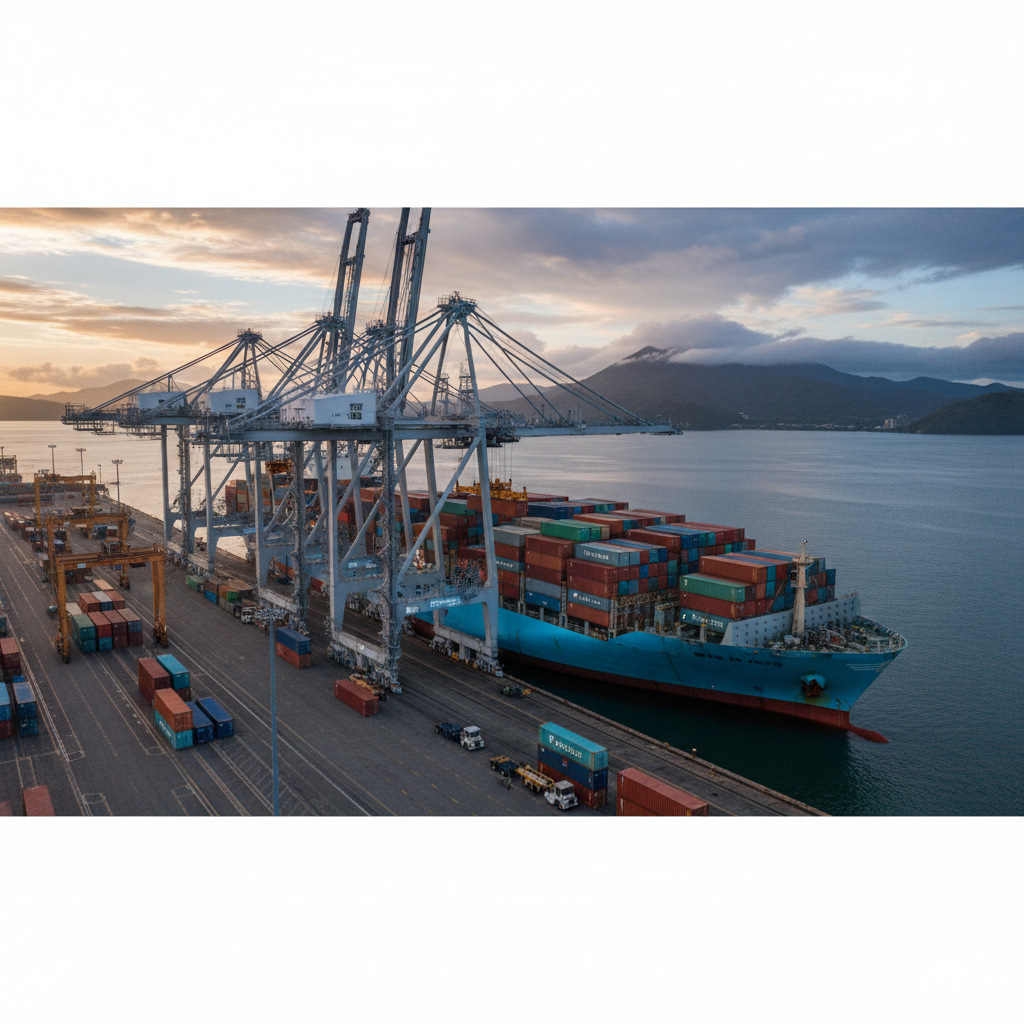
In the intricate web of global supply chains, even seemingly localized adjustments to shipping services can signal deeper currents of change, often driven by the complex interplay of geopolitical dynamics. While the recent announcement of Maersk reinstating its Buenaventura call on the Peru Feeder service, alongside retaining the Pisco seasonal stop, might appear as a routine operational decision, it underscores the continuous need for carriers to adapt their networks in response to an ever-shifting global landscape. This insight brief examines the implications of such strategic route modifications, not from a political standpoint, but through the lens of their tangible consequences for trade and transport, and the critical role of real-time visibility in navigating these shifts.
Evolving Trade Routes and Network Adjustments
Global trade routes are under constant evaluation and modification by carriers striving to optimize efficiency, maintain service reliability, and adapt to external pressures. The reinstatement of Buenaventura, Colombia, on Maersk's Peru Feeder service, effective November, is a prime example of such an adjustment. This move suggests a renewed strategic importance for the port or perhaps a stabilization of conditions that previously influenced its service status. Similarly, the decision to retain the seasonal call at Pisco, Peru, until at least January 2027, highlights a flexible approach to market demand and operational viability. These aren't isolated incidents but rather components of a broader strategy where carriers continuously assess and recalibrate their networks. Geopolitical considerations, while not always explicitly stated as the direct cause of every route change, form a persistent backdrop, influencing decisions related to port access, security, regional stability, and economic viability. When major global arteries face disruption due to geopolitical tensions, the ability to pivot, establish new connections, or reinforce existing ones becomes paramount. This constant flux in routing is a direct consequence of the imperative to build resilience and ensure uninterrupted cargo flow, even when traditional pathways become less predictable or viable. Carriers must be agile, ready to re-route or adjust schedules, to mitigate risks and capitalize on emerging opportunities in a dynamic global environment.
Strategic Capacity Deployment and Service Reliability
The operational decisions regarding vessel deployment and service frequency are critical indicators of a carrier's strategic response to market demands and external volatilities. The Peru Feeder service, operating weekly with two container ships of approximately 2,800 TEU capacity, reflects a carefully calibrated approach to serving the Panamanian-Colombian-Peruvian corridor. This specific capacity and frequency are tailored to meet the trade volume and logistical requirements of the region, ensuring a consistent and reliable link. In an era where geopolitical events can lead to significant disruptions on major trunk lines – forcing rerouting, increasing transit times, and escalating costs – the stability and predictability of feeder services become even more crucial. These regional links are essential for connecting goods from smaller ports to larger transshipment hubs like Balboa, Panama, which then feed into global networks. Carriers are under pressure to ensure that their deployed assets are optimally utilized to maintain service integrity and minimize the ripple effects of broader international disruptions. The choice of vessel size for such feeder routes often reflects a delicate balance between cost-efficiency, port infrastructure limitations, and the need to provide adequate capacity to support regional trade, all while navigating an uncertain global landscape.
Regional Connectivity in a Globalized System
The significance of regional trade lanes, such as the one connecting the Panamanian hub of Balboa with ports in Colombia and Peru, cannot be overstated. These feeder services act as vital arteries, channeling goods from local markets to global supply chains and vice-versa. The continuity of services to ports like Buenaventura and Pisco ensures that local economies remain robustly connected to international trade, minimizing the impact of broader international disruptions. Geopolitical events, by their nature, can introduce instability and uncertainty into global shipping patterns. When major trade routes are affected, the reliability and efficiency of regional connections become even more critical. They provide stability for local industries, ensuring the consistent flow of essential goods, raw materials, and finished products within specific geographic areas. The strategic decisions made by carriers regarding these regional services are therefore not just about optimizing a single route; they are about sustaining economic lifelines and fostering resilience within a globalized system that is increasingly susceptible to external shocks.
Enhancing Visibility Amidst Operational Flux
For shippers and consignees, the continuous evolution of trade routes and service adjustments poses significant challenges. Changes in port calls, route modifications, or schedule alterations can lead to unexpected delays, increased operational costs, and missed market opportunities if not managed effectively. This is precisely where an MGS shipment-visibility control tower becomes an indispensable asset. As carriers like Maersk adjust their services in response to market dynamics or geopolitical influences, an MGS platform provides end-to-end, real-time tracking of cargo movement. It offers predictive analytics to anticipate potential delays or disruptions and delivers proactive alerts regarding any service changes. For instance, if a carrier modifies a route or omits a port call due to unforeseen circumstances—which could be a direct or indirect consequence of geopolitical events—an MGS control tower can immediately update all relevant stakeholders. This allows businesses to swiftly re-plan their logistics, inform their customers, and mitigate potential financial impacts. By transforming uncertainty into actionable intelligence, an MGS control tower empowers supply chain professionals to maintain resilience, adapt to operational flux, and ensure the continuous flow of goods even in the most dynamic global trade environments.
In conclusion, the strategic adjustments made by carriers in their feeder networks, exemplified by Maersk's recent decisions in the Peru Feeder service, are indicative of a broader industry-wide effort to navigate the complexities introduced by geopolitical dynamics. These operational changes underscore the critical need for agility, robust regional connectivity, and advanced visibility tools to ensure the continuous and efficient movement of cargo across an ever-evolving global trade landscape.
Source: Container News — https://container-news.com/maersk-reinstates-buenaventura-on-peru-feeder/