
Geopolitical Tensions Reshape Maritime Trade: The Imperative of Supply Chain Visibility
Recent geopolitical events, particularly drone strikes off Romania and Bulgaria, are fundamentally altering global cargo movement. This brief analyzes the cascading consequences for maritime routes, operational costs, and trade flows, underscoring the critical need for real-time shipment visibility in navigating an increasingly volatile landscape.
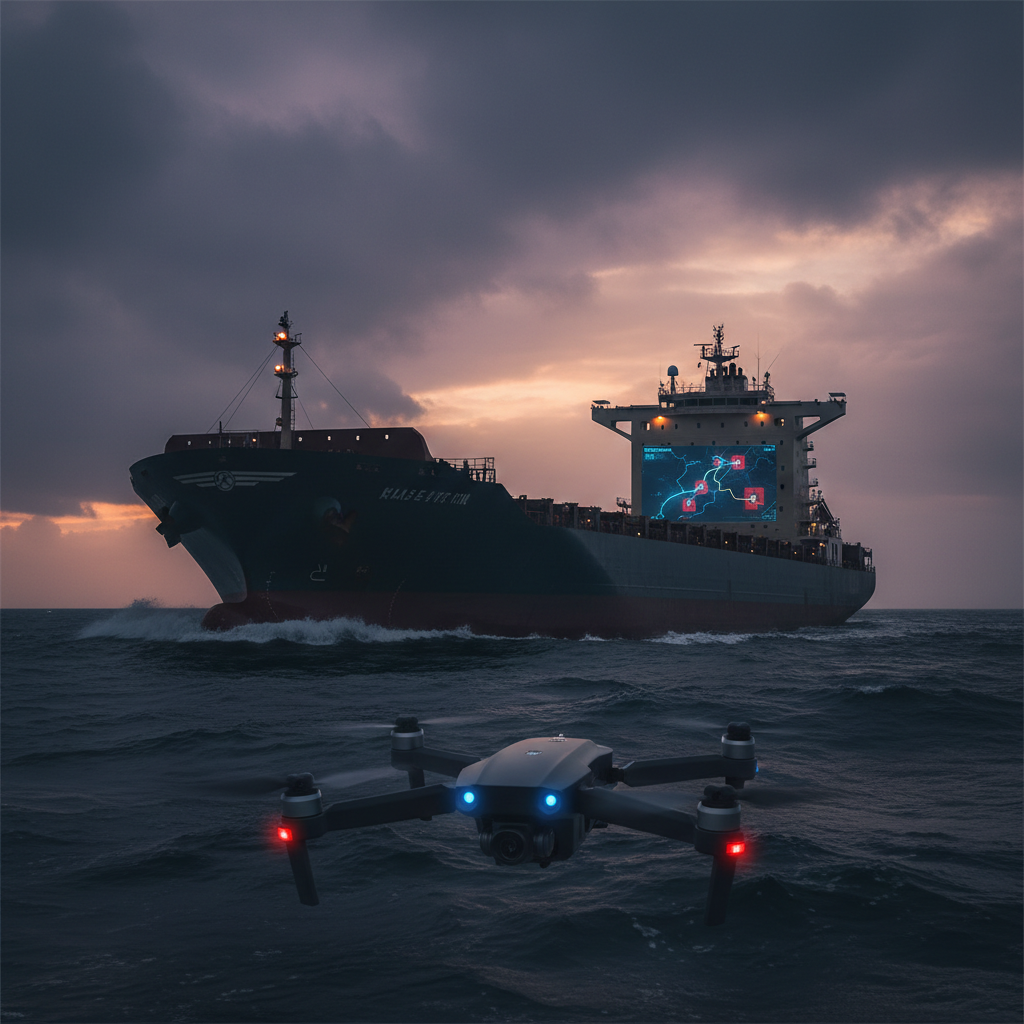
Disruption of Critical Maritime Corridors
The global supply chain relies heavily on predictable and secure transit routes. Recent geopolitical events, specifically drone activities reported off the coasts of Romania and Bulgaria, exemplify how localized conflicts can rapidly disrupt international trade. These incidents contribute to a broader pattern of increasing insecurity in vital maritime corridors, particularly within the Black Sea region, historically crucial for agricultural commodities, energy, and manufactured goods.
The direct threat posed by drone strikes introduces immediate and tangible risks to commercial shipping, extending beyond physical damage to create an environment of uncertainty. This forces ship owners and operators to re-evaluate route safety, effectively constricting accessible maritime space. Consequently, shipping companies must either reroute vessels, implement enhanced security, or withdraw services entirely, impacting transit times, operational efficiency, and costs. For an MGS shipment-visibility control tower, monitoring these evolving threat landscapes and their immediate impact on vessel positioning and route adherence is paramount. Our platform provides real-time data, enabling stakeholders to understand which vessels are affected, which routes are becoming untenable, and where alternative pathways might be required for proactive decision-making.
Escalating Insurance Premiums and Operational Refusal
Heightened geopolitical risk in maritime zones directly impacts the insurance landscape. As reported, the risk associated with operating in certain areas has escalated to a point where ship owners are increasingly refusing to accept war risk. This refusal represents a fundamental breakdown in traditional risk-sharing mechanisms.
When routes are deemed too hazardous, the availability of willing carriers diminishes, driving up freight rates for remaining operators. War risk insurance premiums can skyrocket, adding significant costs to voyages and making certain trade lanes economically unviable. This financial burden is ultimately passed down the supply chain, affecting importers, exporters, and consumers through higher prices. Beyond financial implications, the refusal to accept war risk can lead to operational paralysis, with vessels unable to secure necessary coverage, causing bottlenecks and delays. For time-sensitive cargo, these delays can result in spoilage or production line stoppages. The MGS platform, by providing granular visibility into vessel status, port congestion, and real-time insurance implications, empowers logistics managers to identify potential operational refusals early, assess financial impact, and explore alternative transport solutions before critical delays materialize.
Supply Chain Re-routing and Capacity Strain
When established maritime corridors become too risky or expensive, supply chains are forced to adapt through extensive re-routing. Vessels that once traversed the Black Sea, for example, may now take longer, more circuitous routes, potentially circumnavigating entire regions or utilizing alternative ports and hinterland networks.
This re-routing significantly increases transit times, leading to higher fuel consumption, increased operating costs, and extended lead times. Longer voyages also tie up valuable vessel capacity, reducing overall global shipping capacity. Diverting traffic to alternative ports can strain existing infrastructure, causing congestion and further delays. Furthermore, increased reliance on rail or road for segments of a journey can lead to capacity shortages in these modes, driving up costs and extending transit times. The cumulative effect is a less efficient, more costly, and less predictable global transport system. For MGS users, understanding the real-time implications of these re-routings is crucial. Our platform tracks vessels across new, complex routes, monitors ETAs with greater accuracy despite diversions, and provides early warnings of potential congestion at alternative ports, enabling businesses to adjust inventory and distribution strategies proactively.
Impact on Regional and Global Trade Flows
The ripple effects of geopolitical disruptions extend beyond immediate operational challenges, fundamentally altering regional and global trade flows. When key maritime corridors are compromised, trade relationships and economic dependencies are severely tested. Regions heavily reliant on specific export or import channels, such as grain-exporting nations bordering the Black Sea, face significant economic pressures, leading to lost market share and increased import costs.
Disruption of agricultural exports from a major producing region can lead to global food price inflation, impacting food security. Similarly, interruptions to critical raw material supply chains can cause production slowdowns in manufacturing industries. This creates a domino effect where disruptions propagate rapidly through interconnected supply networks. Persistent instability can deter long-term investment, shifting trade patterns and fostering a more fragmented global economy. Companies may de-risk by diversifying sourcing or establishing regional production hubs, often with increased costs. The MGS platform, by offering end-to-end visibility across diverse supply chain nodes, helps businesses identify vulnerabilities and assess the impact of geopolitical events on their entire network, informing strategic decisions about sourcing, inventory, and market access.
The Imperative of Real-time Shipment Visibility
In an era defined by unpredictable geopolitical events, real-time shipment visibility is an absolute necessity. A sophisticated shipment-visibility control tower, such as MGS, provides the critical intelligence required to navigate these complex challenges.
MGS offers unparalleled transparency into the location and status of every shipment. When a maritime corridor is high-risk or airspace restricted, our platform immediately flags affected shipments, providing precise details on their current position, ETA, and potential deviations. This real-time data allows logistics managers to assess immediate impact, identify alternative routes, or initiate contingency plans without delay.
Beyond tracking, MGS integrates various data streams, including geopolitical risk assessments, weather, and port congestion. This holistic view enables predictive analysis, allowing businesses to anticipate disruptions. By monitoring escalating tensions, companies can proactively reroute vessels, adjust inventory, or communicate potential delays, mitigating financial and reputational damage.
Finally, an MGS control tower facilitates rapid, informed decision-making. In a crisis, quickly understanding the scope of an issue, evaluating solutions, and communicating effectively is paramount. Our platform provides tools for scenario planning, impact analysis, and collaborative communication, transforming reactive responses into strategic advantages. By empowering businesses with comprehensive, real-time insights, MGS helps maintain supply chain resilience, minimize operational costs, and ensure the continuous flow of goods amidst challenging geopolitical landscapes.
Source: Container News — https://container-news.com/the-sea-stays-open-but-shipping-starts-saying-no/